
Industry News
If you are evaluating lifting equipment for a factory or construction site, a gantry crane is likely to be one of your first options. Gantry cranes perform vertical lifting and horizontal movement without relying on the building’s structural framework. Their lifting capacity ranges from a few hundred kilograms in small workshops to thousands of tons in shipyards and steel mills, covering an extremely wide spectrum.
This article will guide you through the key scenarios where gantry cranes deliver the most value, the differences between the main types, and how to determine the appropriate configuration based on your specific needs.
A gantry crane is a type of bridge crane that two legs support, with its running rails mounted on the ground or on an elevated platform. Unlike an overhead crane, which the main structure of a building suspends, a gantry crane supports itself entirely. This allows users to install it indoors or use it entirely in outdoor environments.
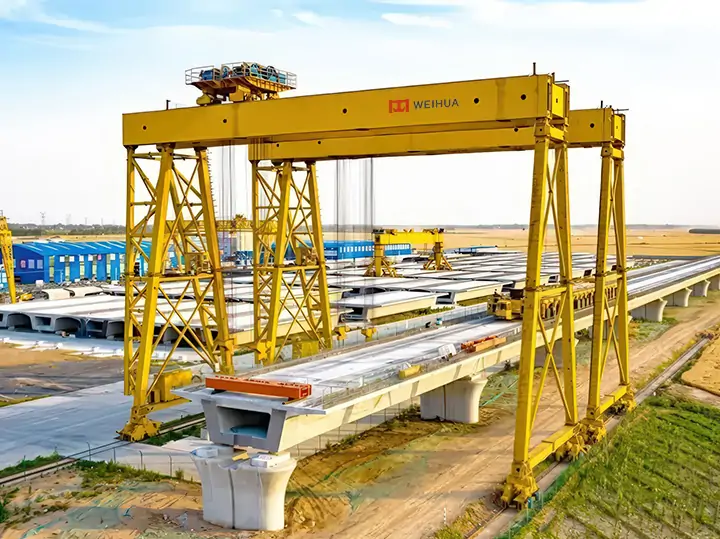
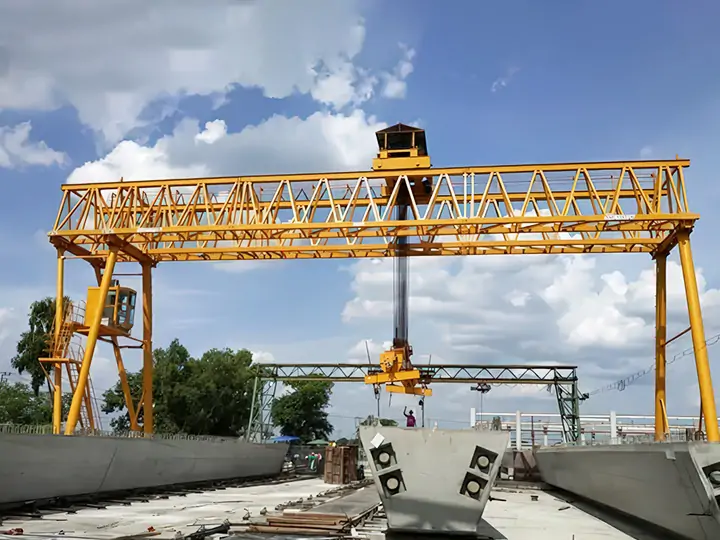
Precast Girder Lifting Gantry Crane
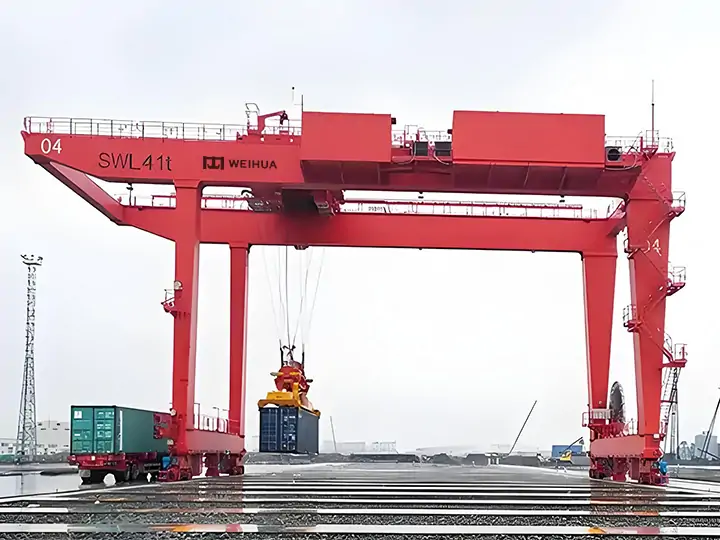
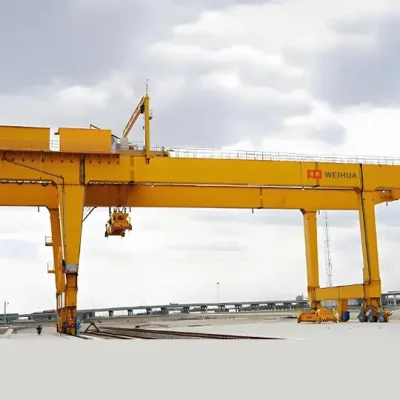
Rail Mounted Gantry Crane
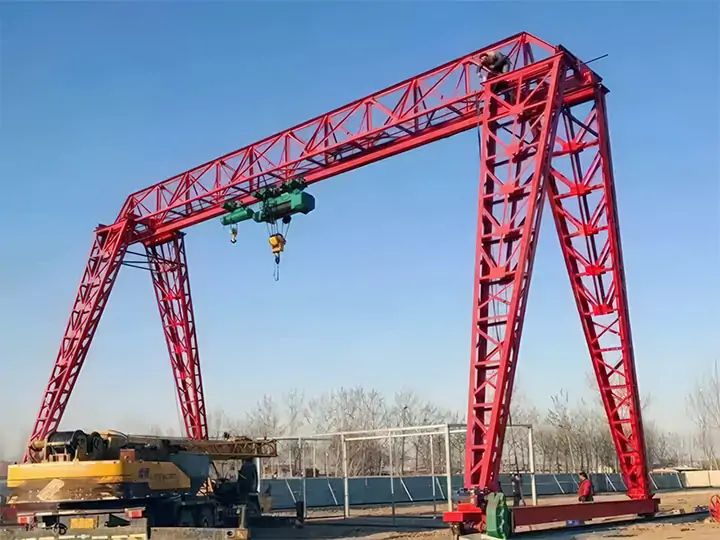
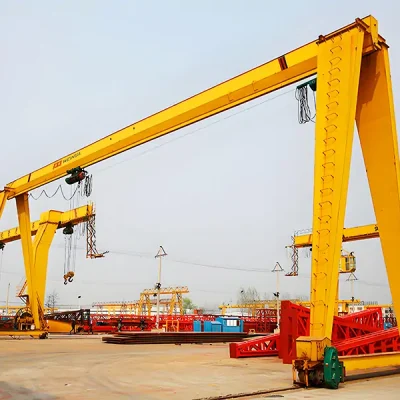
MH Truss Single Girder Gantry Crane
A standard gantry crane consists of four core components that work in concert:
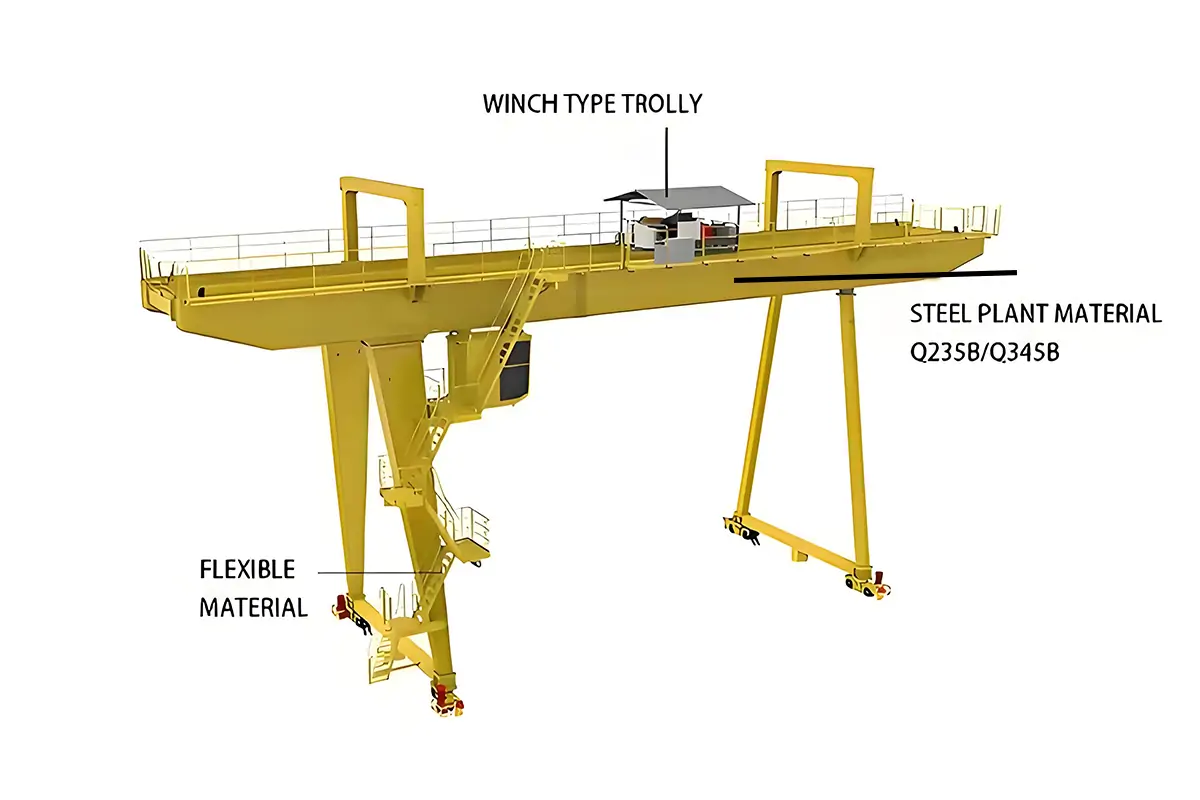
The trolley moves left and right along the main girder, while the entire crane travels forward and backward along the ground track. The combination of these two axes allows the hook to reach any position within its working range. When designing the drive system for gantry cranes, Weihua Cranes places a strong emphasis on smooth operation and precise positioning—which is critical when handling precision or high-value cargo.
Standard gantry cranes have a wide range of rated lifting capacities:
| Capacity Range | Typical Application |
| 1–20 tonnes | Workshop assembly, small fabrication |
| 20–100 tonnes | Steel processing, precast concrete, logistics |
| 100–500 tonnes | Shipbuilding, large infrastructure projects |
| 500+ tonnes | Heavy marine lifting, nuclear facility work |
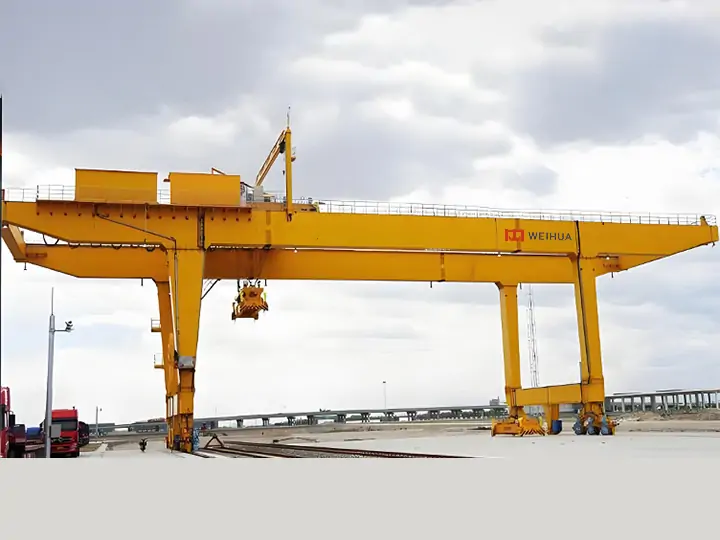
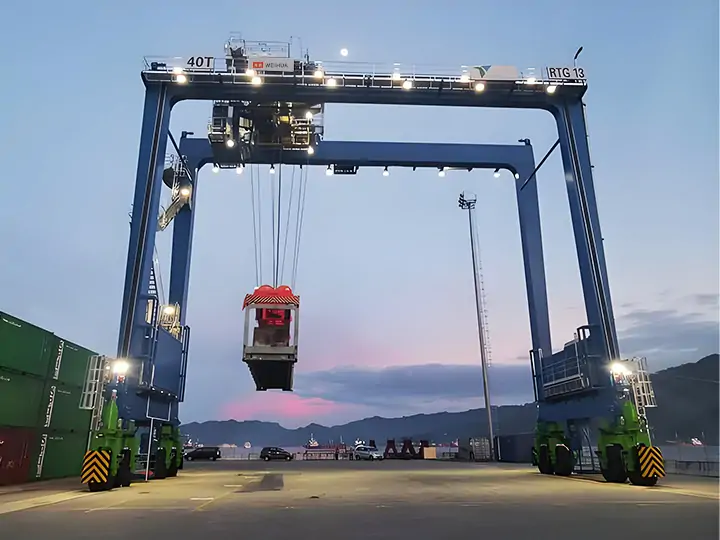
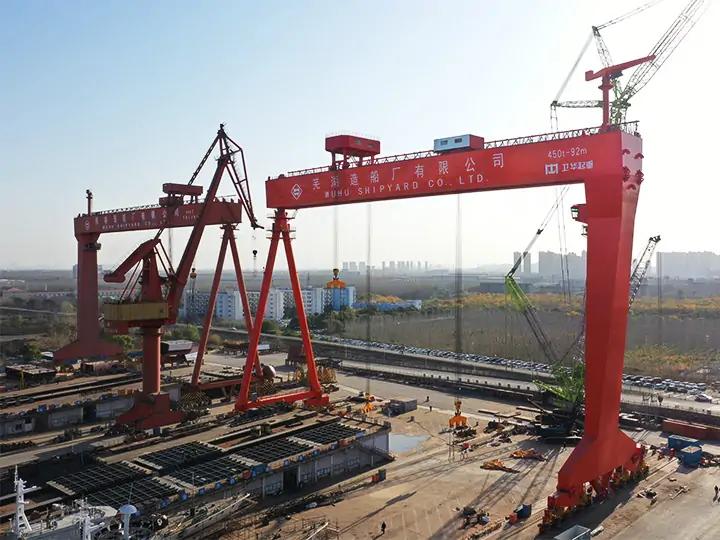
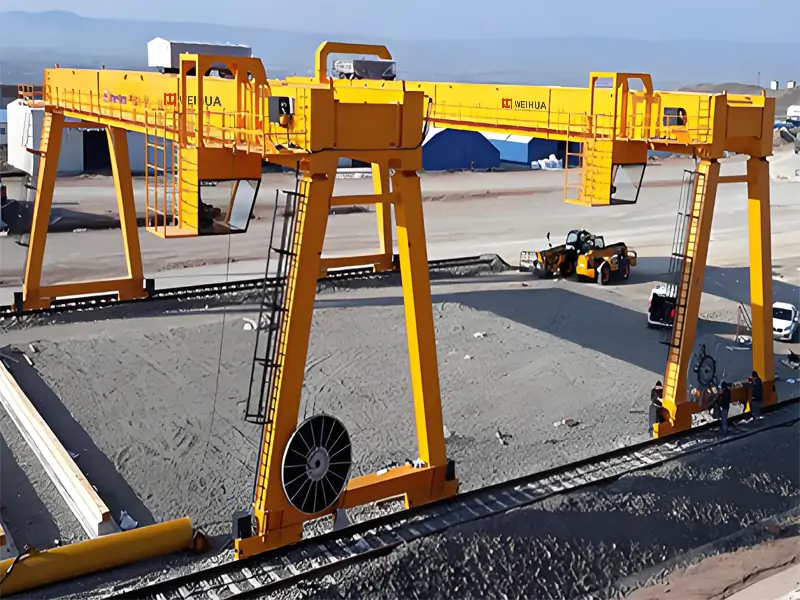
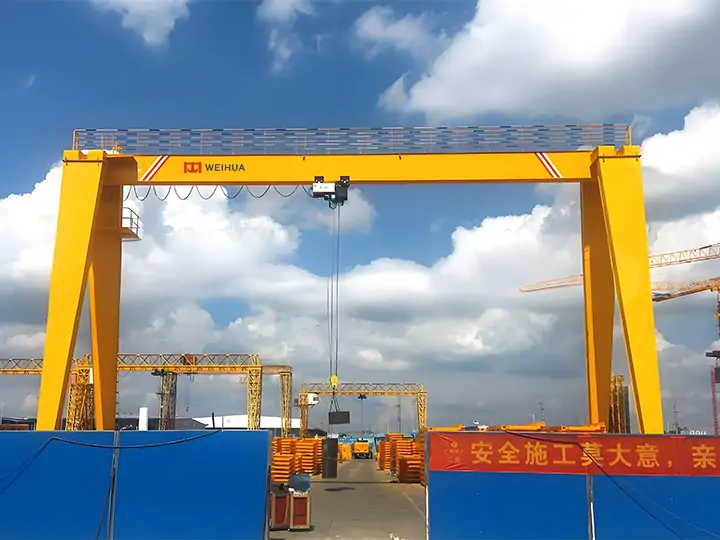
Shipyards represent the most demanding application environment for gantry cranes. The lifting of ship sections and entire ship components requires extremely high precision, and the equipment must operate outdoors year-round. In large shipyards, gantry cranes can have spans of 60–130 meters and lifting capacities of 300–900 tons. They are equipped with variable frequency drives and anti-sway systems to counteract wind loads. RTGs and RMGs used in port yards are specifically designed for efficient container stacking and retrieval operations; the Weihua port crane series meets the efficiency requirements of high-throughput terminals.
Steel production lines place extremely demanding requirements on lifting equipment: steelmaking shops require the handling of molten steel ladles in high-temperature zones, while rolling mills frequently transfer steel coils and billets. Such scenarios typically require ISO Duty Classes M6–M8, heat-resistant protection for furnace areas, and precise positioning capabilities. The gantry crane systems supplied by Weihua for steel mills comply with the ISO 4301 classification standard, ensuring that the equipment is well-suited to actual operating conditions.
Warehouse and distribution facilities are increasingly adopting 5–30-ton gantry cranes to handle oversized or irregularly shaped cargo that forklifts cannot manage. Equipped with wireless remote controls as standard, these cranes enable single-operator use and have shorter installation times than permanent overhead cranes, making them ideal for facilities that do not wish to undertake major structural renovations.
Gantry cranes are used on construction sites to handle precast components, bridge girders, and tunnel segments. Bridge Girder Launcher represent the most technically demanding type, used for the precise positioning of entire girder sections. Weihua has supplied customized gantry crane systems for high-speed rail construction and long-span bridge projects in multiple countries.
Mining equipment maintenance workshops and power plant turbine halls are common applications for gantry cranes. Nuclear power applications have the most stringent requirements; equipment must be accompanied by complete material certificates, weld inspection records, and load test reports to ensure full traceability throughout the entire process.
Not all gantry cranes are the same. The choice of configuration has a significant impact on performance, cost, and suitability.
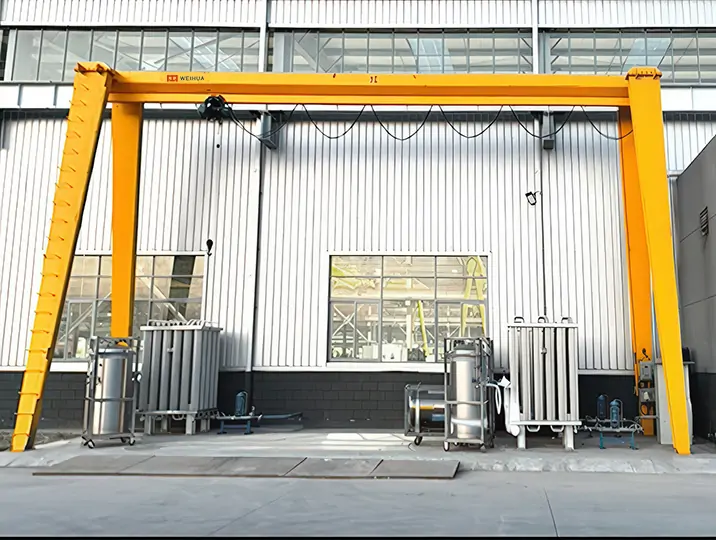
Single Beam Hoist Gantry Crane

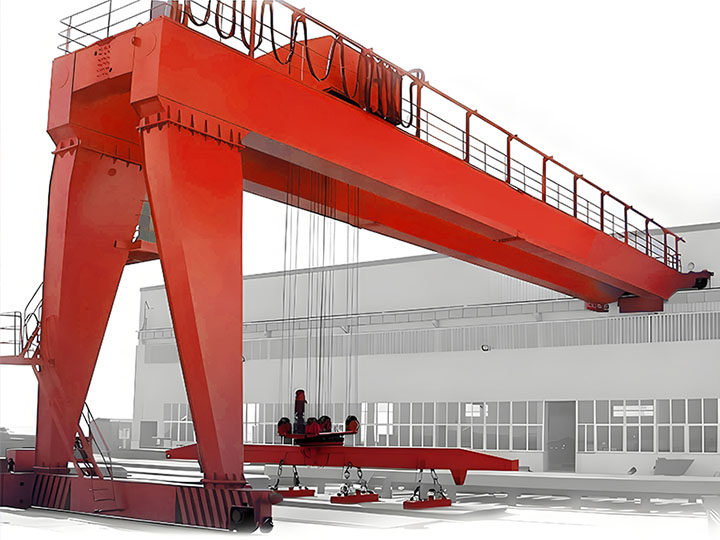
Double-Girder-Gantry-Crane
| Feature | Single-Girder | Double-Girder |
| Typical capacity | Up to 20 tonnes | 20–900+ tonnes |
| Hook height | Lower headroom | Higher under-beam hook height |
| Cost | Lower initial cost | Higher cost, longer lifespan |
| Maintenance access | Limited | Full-width walkway for maintenance |
| Application fit | Light to medium duty | Medium to heavy duty |
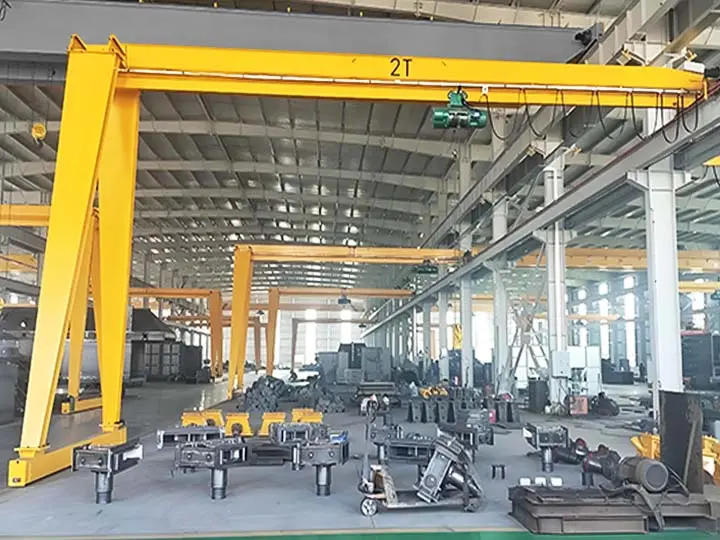
Full gantry cranes feature support legs on both sides that travel along ground-level rails. Conversely, a semi-gantry crane has support legs resting on the ground on one side, while a suspended rail mounted to a wall supports the other side. When ground-level space on one side of a facility is limited, a semi-gantry crane offers a more suitable choice.
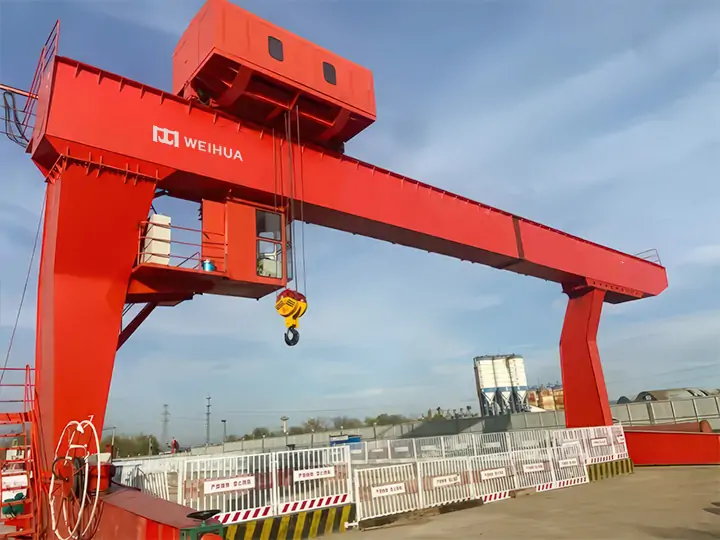
Full Gantry Crane
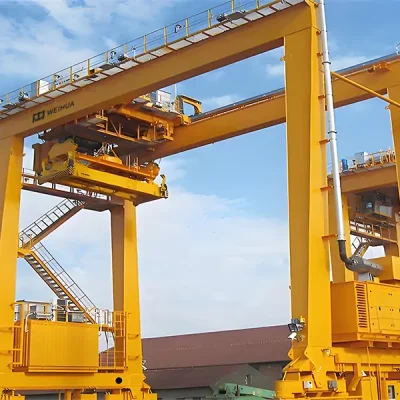
RTG cranes are used in container terminals where the crane needs to move between different yard lanes. They offer flexibility but require more maintenance on the tyre and steering systems. RMG cranes run on fixed rails, offering higher precision, lower energy consumption, and better suitability for automation.
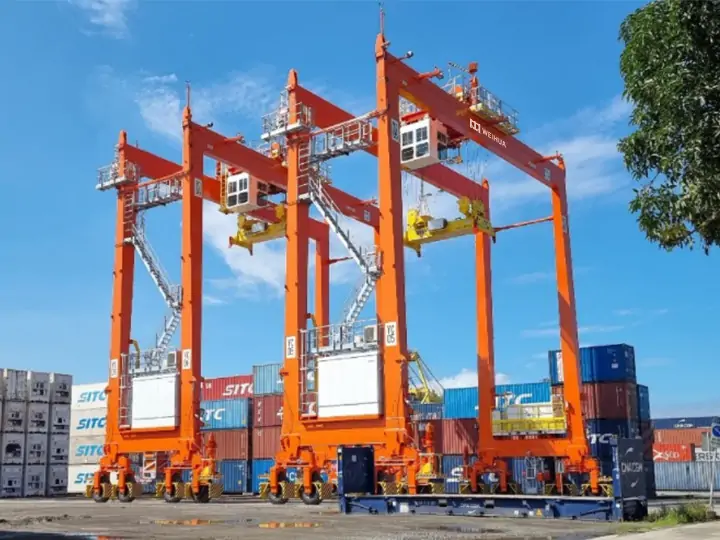
RTG Crane
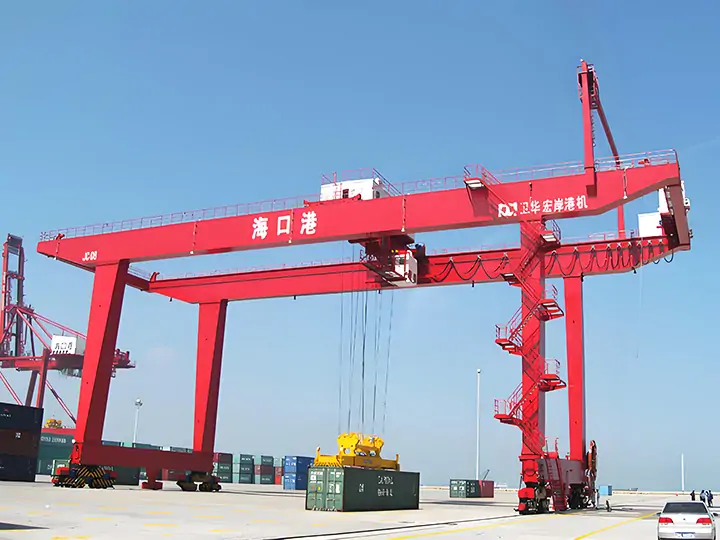
RMG Crane
Before requesting quotes from suppliers, the following parameters are the most critical metrics that must be clarified.
The ISO 4301 standard (or equivalent FEM classification) defines the intensity of crane usage. Equipment operating under light loads in a single daily shift differs fundamentally in design requirements from equipment operating continuously at full load across three shifts. Selecting a duty cycle that is too low will result in premature wear and tear or even unexpected failure.
Weihua’s engineering team typically inquires about your estimated annual lifting cycles and average load factor to recommend the appropriate duty class.
Outdoor gantry cranes require anti-corrosion coatings, sealed electrical cabinets, and wind-load-resistant designs. High-temperature environments in furnace areas require thermal insulation measures. Coastal or marine environments require stainless steel fasteners and additional sealing for electrical components. These factors should be clearly specified in the initial specifications.
Span refers to the distance between the centerlines of the two running rails. Lifting height is the maximum distance from the ground to the hook when it is in its lowest position. Both should be determined based on the actual dimensions of the work area and the height of the tallest load.
Most gantry cranes use three-phase AC power, combined with variable frequency drives to achieve smooth speed control. Wireless remote control systems support single-operator control in most applications. For automated or semi-automated operations, users can integrate gantry cranes with SCADA or warehouse management systems.
Gantry cranes for professional industrial use must comply with internationally recognized standards:
ISO 4301 — Classification of cranes by duty cycle
ISO 9927 — Requirements for periodic inspections
FEM 1.001 — European standard for crane design
CE Certification — Basic requirement for selling equipment within the European Economic Area
EAC Certification — Market access requirement for Russia and the Eurasian Economic Union
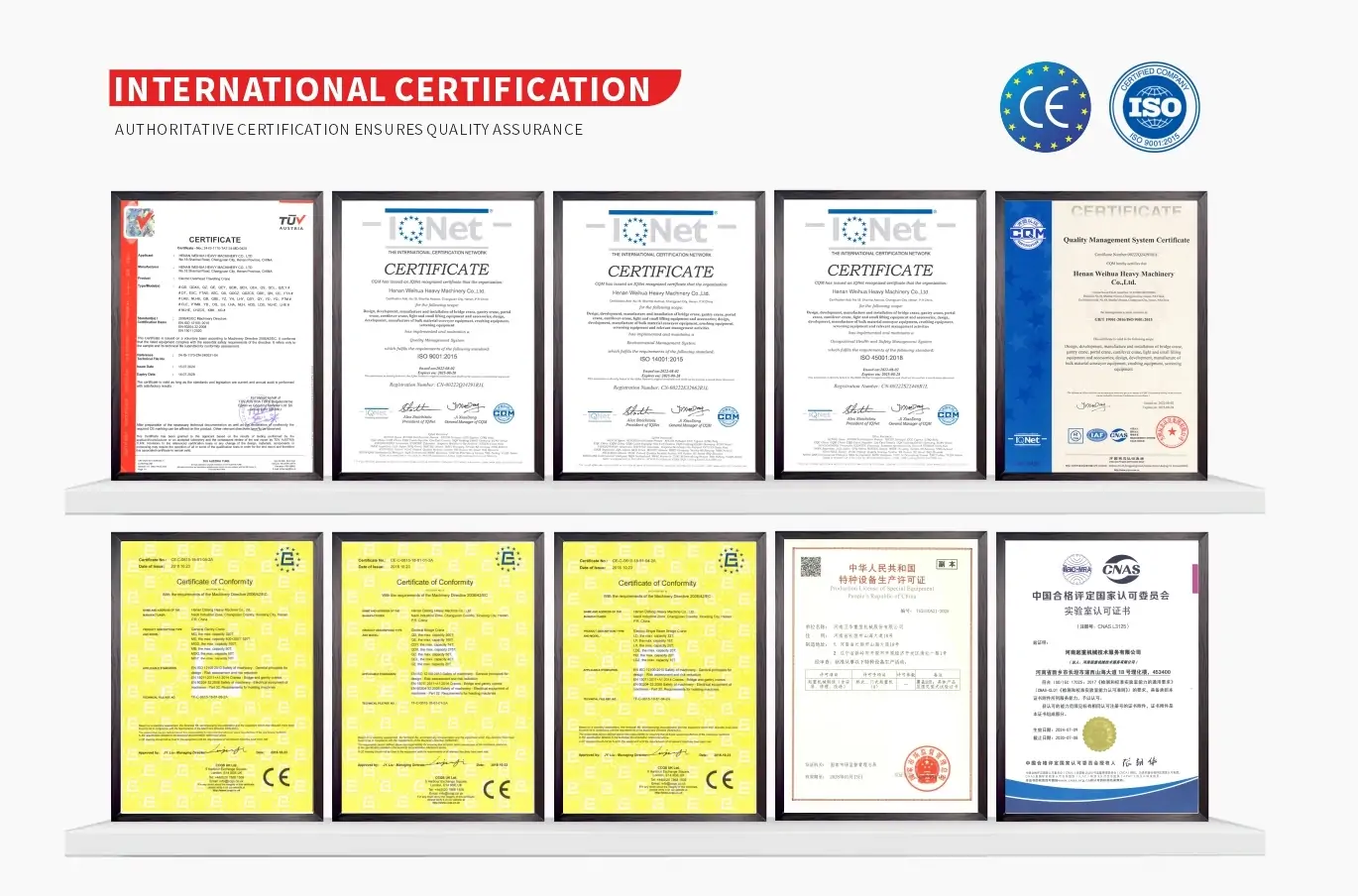
Weihua Cranes holds CE certification and is certified under the ISO 9001 Quality Management System, with products exported to over 80 countries and regions. Buyers should request a complete compliance documentation package from the supplier, including design calculations, load test certificates, and material traceability records.
Before contacting a supplier, please clarify four key parameters: maximum lifting capacity, required span, lifting height, and expected duty cycle. Only with clear specifications can manufacturers recommend configurations that truly match your operational conditions, thereby avoiding long-term cost losses resulting from incorrect model selection.
Weihua Cranes is one of China’s largest crane manufacturers, offering a full range of gantry cranes from 1 ton to over 900 tons. The company holds complete CE and ISO compliance documentation, and its products are exported to more than 80 countries. We recommend involving the engineering team in discussions early in the project planning phase; the earlier the selection process begins, the more accurate the solution will be.
Free Quote Now
Proper sizing and good maintenance enable a gantry crane to operate reliably for 20–30 years. Its service life primarily depends on three factors: correctly matching the duty cycle, performing routine maintenance according to standards, and timely replacing wear-prone components such as wire ropes, end beams, and electrical contacts.
Yes. Gantry cranes feature specific designs for outdoor operation in various configurations. Outdoor cranes require anti-corrosion coatings, sealed electrical cabinets, and wind-resistant structural designs; under specific climatic conditions, they may also need to equip with a cab heating system.
An RTG mounts on rubber tires rather than fixed rails, making it a mobile gantry crane widely used in container terminals where movement across traffic lanes is required.While highly flexible, RTGs require more maintenance for tires and steering systems compared to rail-mounted equipment.
The pricing of gantry cranes depends on lifting capacity, span, duty cycle, special feature configurations (such as variable frequency drives, anti-sway systems, and explosion-proof components), and the degree of customization. Generally, for the same lifting capacity, heavy-duty double-girder models are significantly more expensive than standard single-girder models.
Routine maintenance includes: daily pre-operation inspections (hoist hooks, wire ropes, brakes, travel limit switches); monthly lubrication of mechanical transmission components; quarterly inspections of structural components and electrical systems; and annual third-party professional inspections in accordance with ISO 9927. Manufacturers such as Weihua provide detailed recommended maintenance schedules with the equipment.
Date:
Submit Request
