
Industry News
Choosing the wrong gantry crane comes at a cost far greater than just the purchase price. Downtime losses, safety hazards, and costly retrofits—these issues all stem from a lack of understanding of how gantry cranes work. Gantry cranes are among the most common heavy-duty material handling equipment in factories, ports, and warehouses, but how exactly do they operate? Which specifications truly determine whether a crane is suitable for your specific application?
Starting with structural principles and incorporating real-world application scenarios, this article provides a systematic answer to these questions. Whether you are purchasing for the first time or replacing existing equipment, reading this article will help you avoid unnecessary detours.
The core operating principle of a gantry crane is actually quite straightforward: a rigid gantry frame supports the crossbeam, and the trolley and hoisting mechanism mounted on the crossbeam handle material handling in three-dimensional space.
A complete gantry crane consists of the following key components:

Weihua Group designs its gantry crane product line—ranging from 3-ton single-girder models to heavy-duty double-girder cranes exceeding 500 tons—in strict accordance with the ISO 4301 crane classification standard, ensuring structural safety margins under various operating conditions.
The lifting capacity of a gantry crane results from the superposition of movements in three directions:
| Motion Direction | Driven By | Typical Speed Range |
| Vertical (Lifting) | Hoisting Mechanism | 0.5–20 m/min |
| Lateral (Cross Travel) | Hoisting Trolley | 5–40 m/min |
| Longitudinal (Long Travel) | Crane Travel Drive | 10–60 m/min |
The coordinated movement of the three axes enables the gantry crane to move cargo precisely from point A to point B. Modern variable-frequency speed control systems can maintain positioning accuracy within ±10 mm, significantly reducing the reliance on operator experience.
Many buyers focus solely on the rated lifting capacity while overlooking the integrity of the load transfer path. In reality, the force applied to the hook is transmitted sequentially through:
Hook → Pulley block → Drum → Hoist frame → Trolley frame → Main girder → Outriggers → Track → Foundation
Insufficient design margin in any single link can become a weak point in the entire machine. This is why Weihua incorporates finite element analysis (FEA) during the structural design phase to simulate and verify key indicators such as main girder deflection and weld fatigue life.
Once you understand how they work, the first step in selecting a gantry crane is to match the equipment type to the actual working conditions.
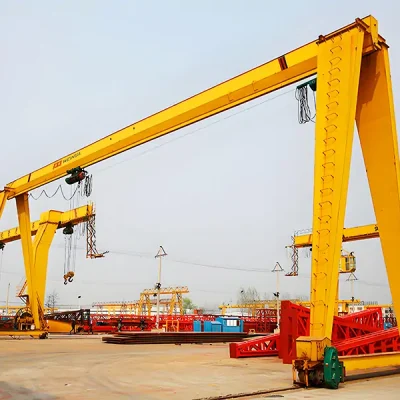
Single-girder gantry crane: Lightweight and cost-effective, suitable for light-duty material handling of less than 5 tons and for small-to-medium-sized factories with limited budgets. The lifting height generally does not exceed 10 meters.
Free Quote Now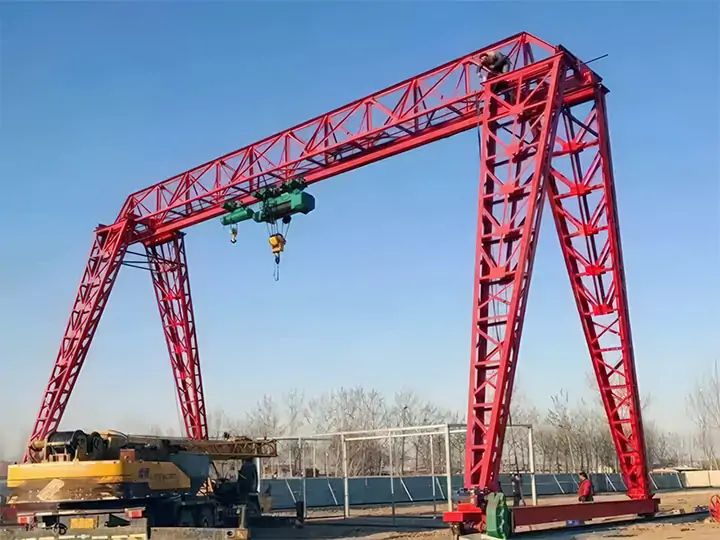
MH Truss Single Girder Gantry Crane
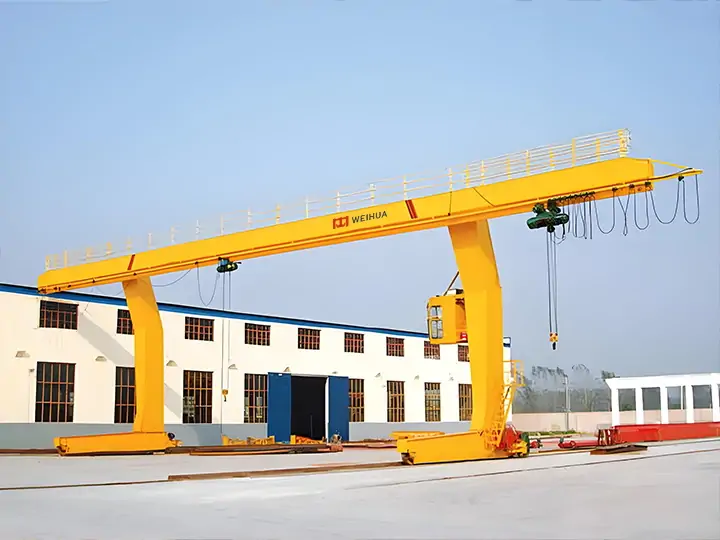
L Type Single Girder Gantry Crane
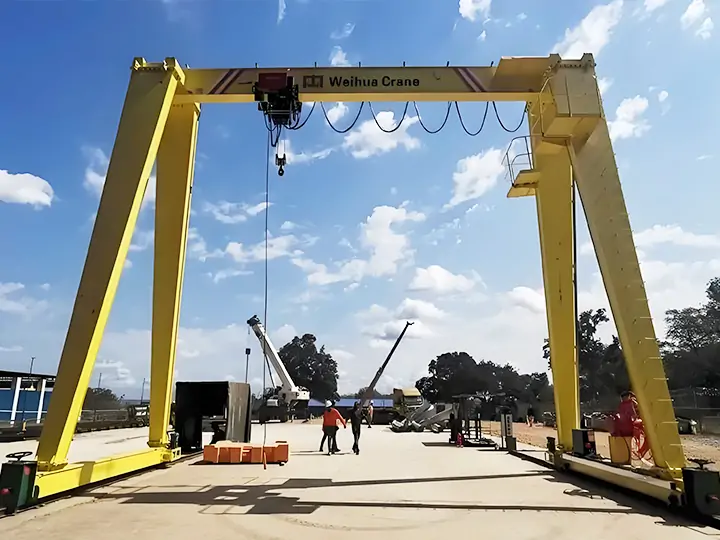
MH box single girder gantry crane
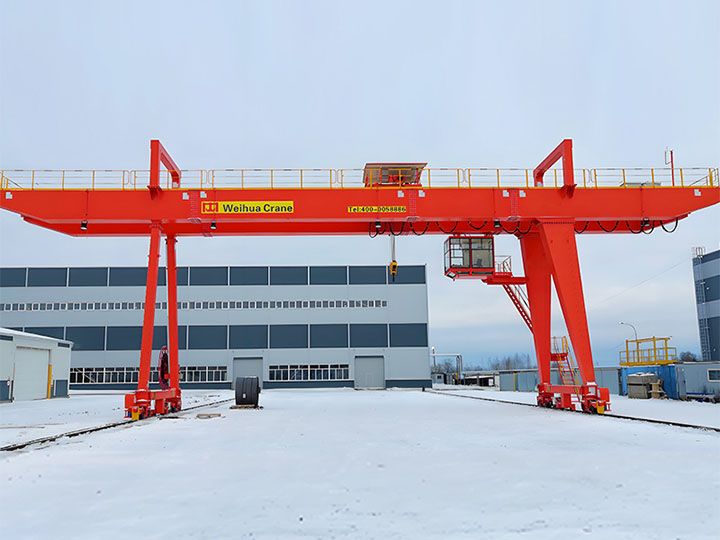
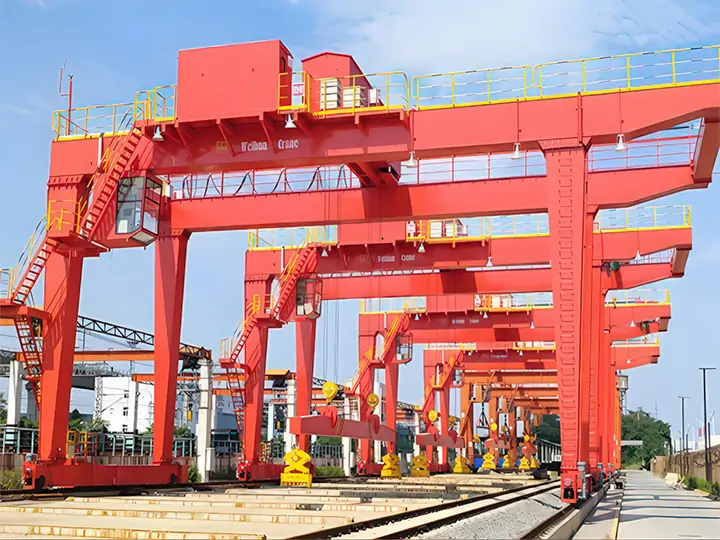
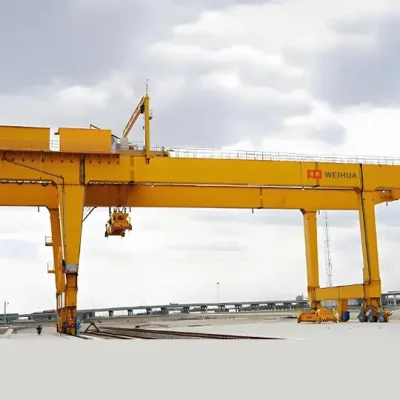
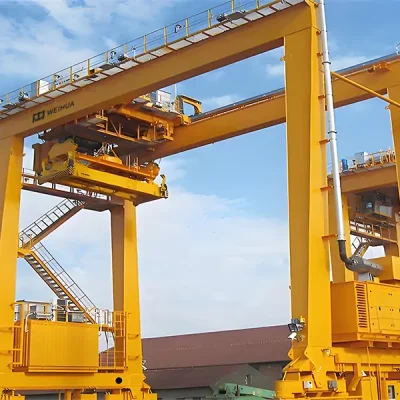
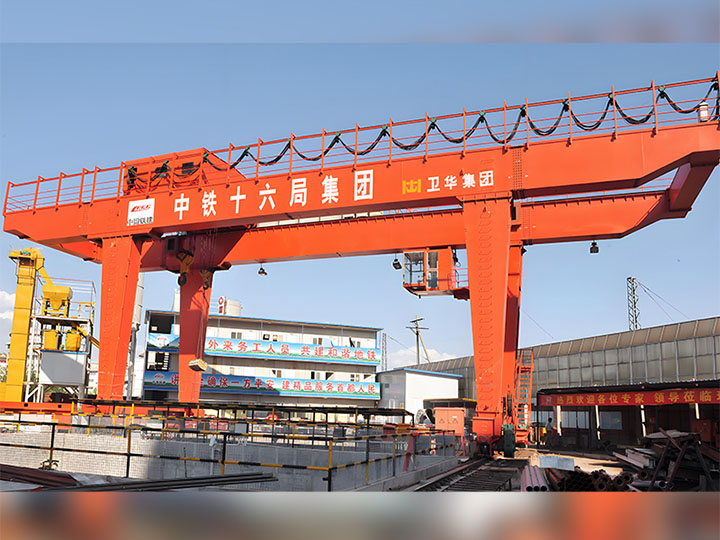
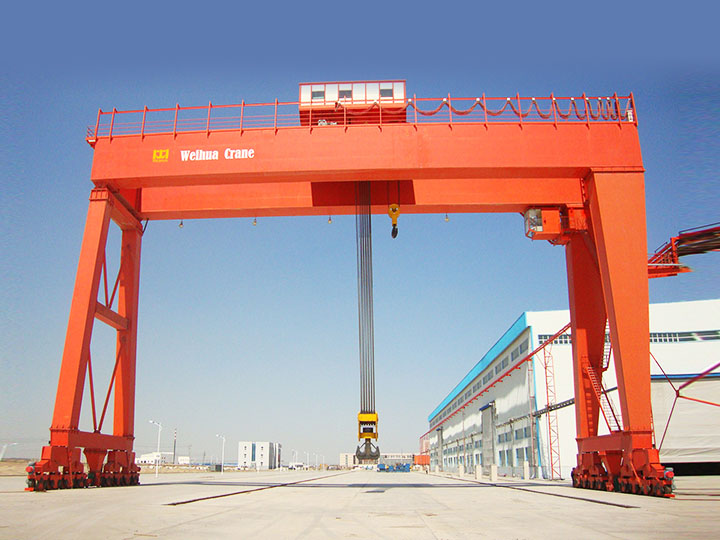
Double-girder gantry cranes: Featuring high load-bearing capacity and excellent rigidity, these cranes support large spans and heavy lifting capacities (typically ranging from 20 tons to several hundred tons). They are the mainstream choice for heavy industry, shipyards, and large-scale warehousing facilities.
Free Quote Now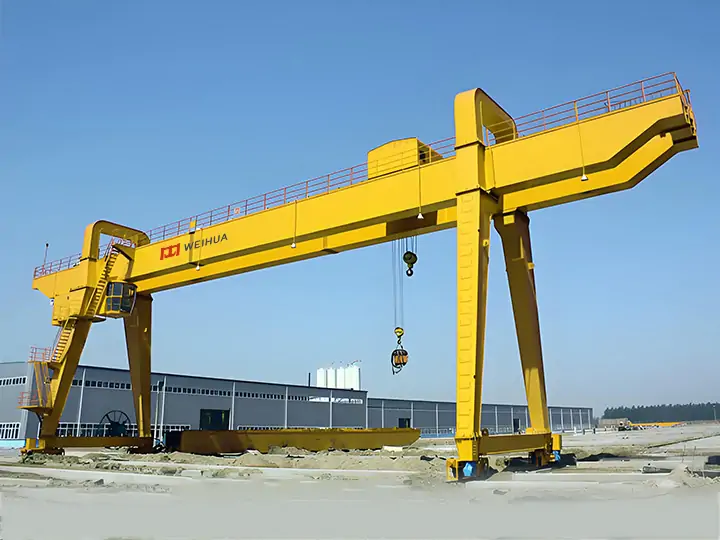
A type double girder gantry crane
European Double Girder Gantry Crane
Semi-gantry cranes: With one side supported by legs and the other side anchored to a wall or resting on a building structure, these cranes are suitable for factory settings with limited space, balancing aisle clearance with operational coverage.
Free Quote Now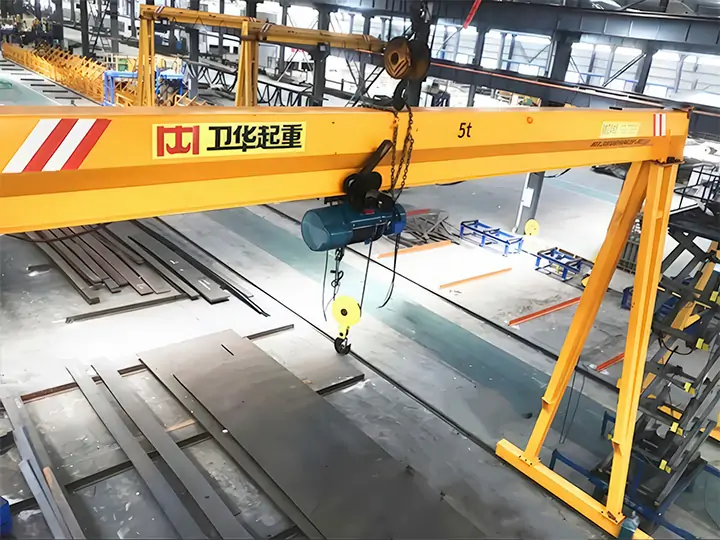
BMH Single Girder Semi Gantry Crane
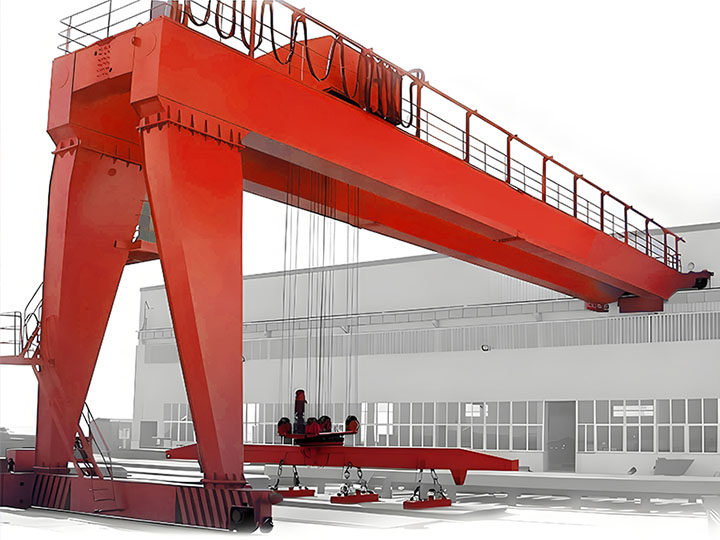
BMG Double Girder Semi Gantry Crane
| Environment | Recommended Configuration | Key Considerations |
| Indoor Storage | Standard, IP54 protection | Check headroom and column spacing |
| Outdoor Yard | Anti-corrosion coating, wind-resistant design | Account for local maximum wind speed |
| Port / Waterfront | Heavy-duty structure, salt-spray treatment | IP65 or higher recommended |
| Metallurgical / High-Temp | Heat-resistant insulation, radiation shielding | Electrical components require special selection |
The technical specifications provided at the time of purchase often offer a clearer picture than sales presentations.
1.Safe Working Load (SWL): The maximum weight of the actual load being lifted; it is recommended to allow a 15%–20% margin of safety based on theoretical requirements.
2.Span: The distance between the centerlines of the two rails. This directly determines the operational coverage area and is a key input for main girder deflection design.
3.Lifting Height: The distance from the lowest to the highest position of the hook. This must be determined by considering both the height of the material pile and the vehicle clearance.
4.Duty Class: Classified according to ISO 4301 or FEM standards, ranging from A1 (Very Light Duty) to A8 (Extra Heavy Duty). For frequent operations, A5 or higher is recommended.
When choosing a brand, it’s not just about reputation—it’s about quality systems and after-sales support.
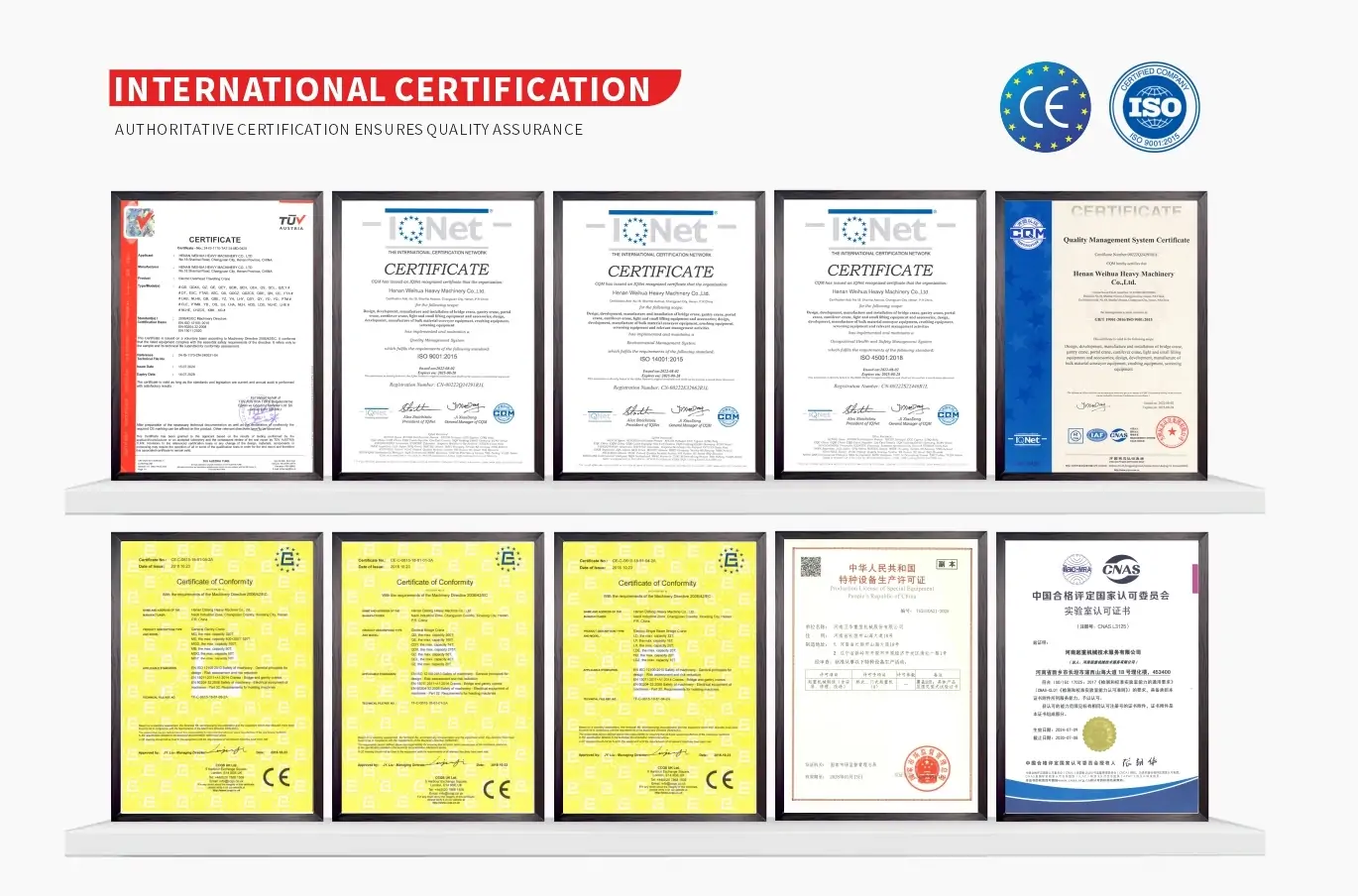
CE Certification: A mandatory requirement for entering the EU market, covering the Machinery Safety Directive 2006/42/EC
EAC Certification: Market access requirement for Russia and CIS countries
ISO 9001: Quality Management System certification, ensuring production consistency
GB/T 3811: Chinese National Standard for Crane Design
Weihua Group holds both CE and EAC certifications. With products exported to over 40 countries and regions worldwide, the company possesses a comprehensive system to support quality compliance.
Beyond the hardware itself, after-sales service often determines the total cost of ownership over the equipment’s entire lifecycle. Before making a purchase, we recommend clarifying the following points:
Response time for spare parts inventory (whether critical components are in stock)
Whether on-site commissioning and operator training are included in the contract
Annual maintenance plans and service level agreements (SLAs) for fault response
Understanding how a gantry crane works is the foundation of the selection process—not the end goal. Grasping these principles empowers you to take the lead during procurement negotiations and technical evaluations. From the three-axis motion mechanism to load transfer paths, and from structural types to key technical parameters, every piece of knowledge translates into more precise selection decisions.
Weihua Group has specialized in the field of lifting equipment for over 30 years, providing one-stop services ranging from solution design and equipment manufacturing to on-site installation. If you are currently evaluating a procurement plan for a gantry crane, we invite you to contact our technical team for a complimentary operational analysis.
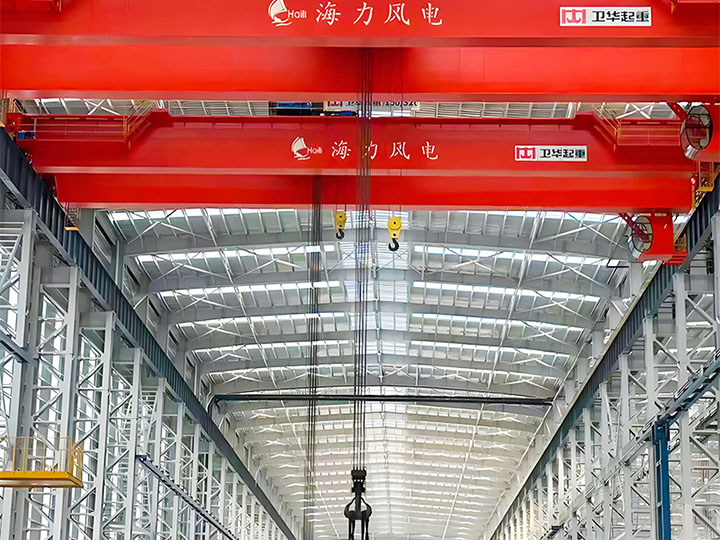
A gantry crane runs on ground-level rails using its own supporting legs, requiring no structural support from a building. In contrast, an overhead bridge crane operates on rails mounted atop the walls or dedicated columns of a factory building. Gantry cranes offer greater flexibility and perform exceptionally well in outdoor environments or locations where no permanent factory structure exists.
To proceed, please provide at least the following details: maximum lifting capacity, span, lifting height, operating frequency, operating environment (indoor/outdoor/temperature range), power supply conditions, and any specific requirements regarding the materials to be handled.
VFD control enables stepless speed regulation, resulting in smoother starts and stops. It offers energy savings of 15%–30%, reduces thermal stress on the motor, and extends the overall mechanical service life. It is considered a standard configuration for applications involving precision assembly or frequent, heavy-duty operations.
According to the ISO 4301 standard, an A5-class gantry crane typically has a designed service life of 20 years or 250,000 operating cycles; however, the actual service life depends on the intensity of the operating conditions and the quality of maintenance performed.
Yes, we do. Weihua provides a comprehensive range of customization options, allowing us to tailor the span, lifting height, control method, and special protection ratings to suit the client's specific operating conditions. We also provide detailed operational analysis and equipment selection reports to assist our clients.
Date:
Submit Request
