
| Продукт | Rail Mounted Gantry Crane (RMG) |
| Приложение | Railway Container Yard, Rail-to-Yard Transshipment |
| Страна-экспортер | Mongolia |
| Порт / Клиент | Ulaanbaatar Railway (Улаанбаатар төмөр зам) |
| Грузоподъемность | 35 t (main hoist) / 10 t (auxiliary) |
| Пролет | 23.5 m |
| Высота подъема | 15 m |
| Рабочее дежурство | A7 |


Ulaanbaatar Railway operates one of Mongolia's most important inland logistics hubs, handling container and general cargo moving along the China–Mongolia–Russia rail corridor. As container volumes on this route grow, the yard needs equipment that can move boxes directly between railcars and the storage stack without extra handling steps.
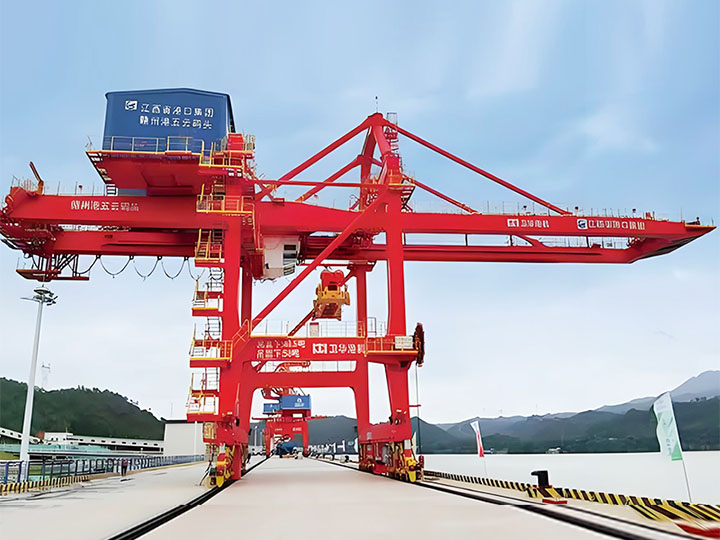
WEIHUA's rail mounted gantry crane is now in service at the Ulaanbaatar Railway container yard, spanning the rail tracks to lift and stack containers directly from railcar to yard — reducing the intermediate handling that mobile or wheeled equipment typically requires.
Mongolia has no direct sea access, so heavy equipment like a rail mounted gantry crane typically reaches customers there via road or rail through China's northern border crossings — most commonly through Erenhot (Inner Mongolia) into Zamyn-Üüd on the Mongolian side, then onward by rail or highway to Ulaanbaatar.
For oversized components like a crane's main girder, this usually means shipping the structure as a single pre-assembled section on a heavy low-bed trailer, rather than breaking it down for standard containerized freight — reducing on-site assembly time once the unit reaches the yard. This cross-border route is the same corridor Ulaanbaatar Railway itself depends on for container traffic moving between China, Mongolia, and Russia, making it a natural fit for equipment supporting that same trade flow.


Mongolia's continental climate presents real design considerations for outdoor lifting equipment — winter temperatures in Ulaanbaatar regularly fall below -20°C, and the open steppe terrain around rail yards exposes equipment to strong seasonal winds with little natural windbreak. Gantry cranes operating in this environment are typically specified with low-temperature-rated steel structures, cold-resistant lubricants and seals, and enhanced wind-resistance design for the gantry legs and travel mechanism — standard engineering practice for RMG cranes deployed across similar high-latitude, landlocked markets such as Mongolia, Kazakhstan, and northern China.
These are general design considerations relevant to equipment operating in this climate zone, rather than confirmed specifications unique to this particular unit.
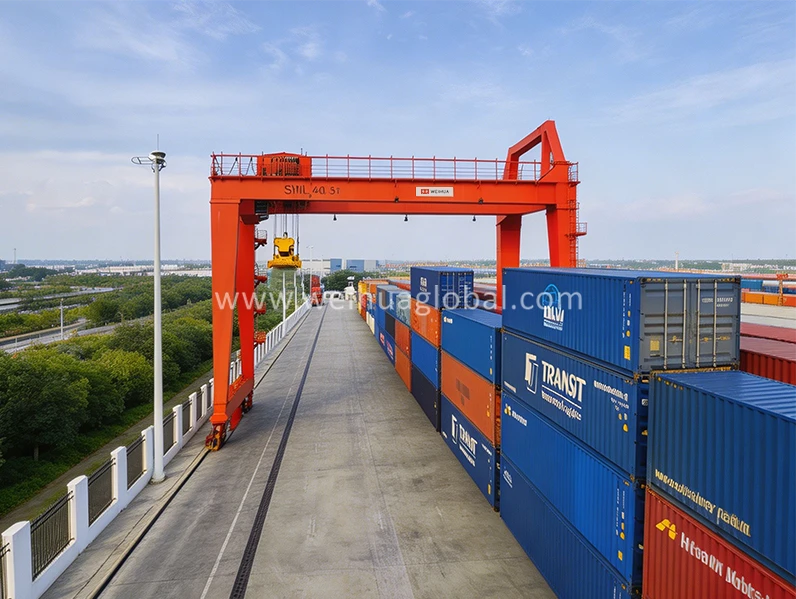
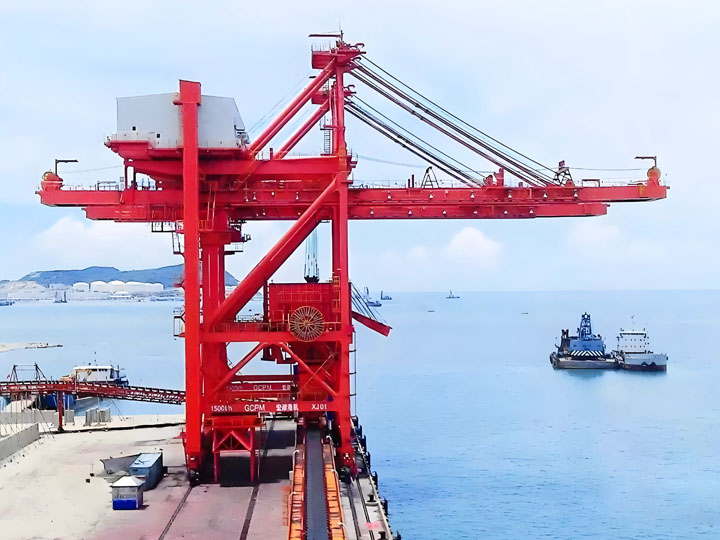
Кран RMG

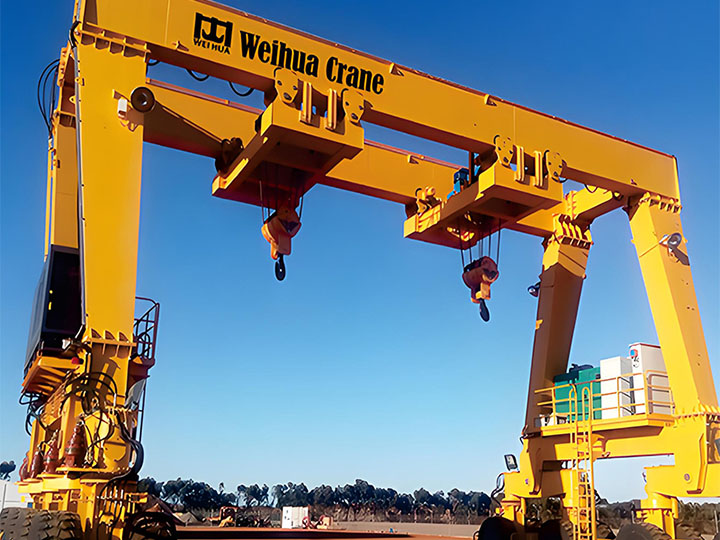
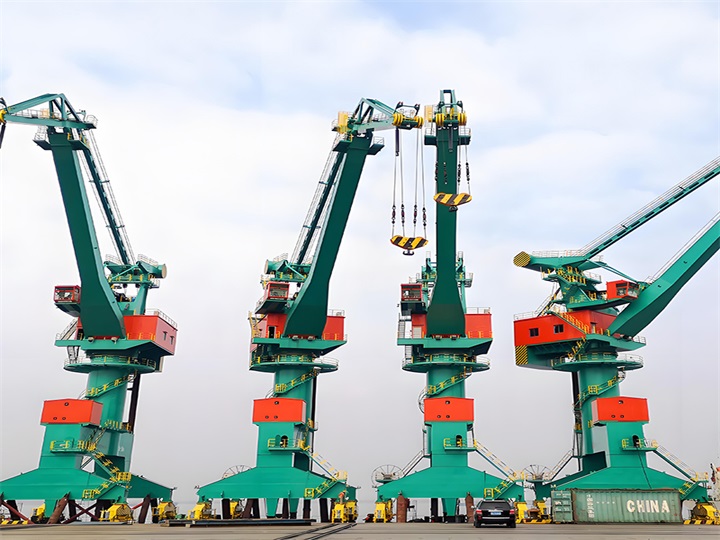
RTG Crane
| Factor | RMG (Rail Mounted) | RTG (Rubber-Tyred) |
| Travel path | Fixed rail track | Free-roaming on tyres |
| Positioning accuracy | Higher — track-guided | Lower — driver-steered |
| Best suited for | Rail sidings, intermodal yards, port rail interfaces | General container yards without fixed rail infrastructure |
| Duty cycle | Built for continuous, high-frequency lifts | Better suited to flexible, mixed-use yards |
| Automation readiness | Easier to automate (fixed path) | Requires additional guidance systems |
For a rail-fed yard like Ulaanbaatar's, where containers arrive and depart by train, the RMG's fixed-path design over the tracks shortens the handling chain and supports higher lift frequency than tyred equipment operating in the same footprint.
| Параметр | Спецификация |
| Грузоподъемность | 35t (main hoist) / 10t (auxiliary hoist) |
| Пролет | 23.5m |
| Высота подъема | 15м |
| Container stacking | 1-over-4, standard ISO containers |
| Rail gauge | Site-matched to yard track spacing |
| Рабочая смена | A7 |
| Control mode | Cab operation with remote-ready option |
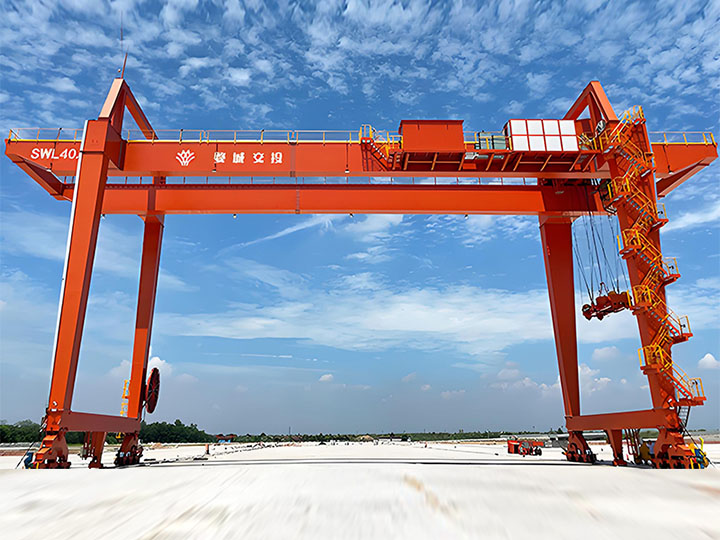
| Структура | Box-girder, double-beam gantry with rail-mounted end trucks |


The crane's main girder was shop-fabricated and painted as a single assembled unit before transport, then moved to site on a heavy low-bed trailer escorted by a mobile crane for positioning support during loading and unloading — standard practice for oversized girder sections on this scale. On-site erection followed WEIHUA's standard installation and commissioning process, and the completed unit is now in daily operation at the customer's container yard.
A rail mounted gantry crane (RMG) lifts and stacks shipping containers in yards where the crane runs on fixed rail tracks, typically positioned directly over railcar sidings — allowing containers to move straight from train to storage stack or truck.
An RMG travels on fixed rail tracks and offers higher positioning accuracy for repetitive, high-frequency lifting. An RTG runs on rubber tyres and offers more flexibility to reposition across a yard without fixed infrastructure.
This unit is rated for 35 tons on the main hoist and 10 tons on the auxiliary hoist, with a 23.5m span and 15m lifting height, engineered to match the yard's rail gauge and stacking requirements.
Since Mongolia has no direct sea access, oversized components typically move by road or rail through China's Erenhot–Zamyn-Üüd border crossing, then onward to Ulaanbaatar — the same corridor Ulaanbaatar Railway relies on for its own container traffic.
This unit is in operation at Ulaanbaatar Railway's container yard in Mongolia, supporting container transshipment along the China–Mongolia–Russia rail corridor.
"Rail-connected inland terminals like Ulaanbaatar are becoming more important as regional trade shifts toward rail. Our rail mounted gantry cranes are built for that transition — straddling the tracks directly so containers move from train to yard with fewer handling steps." — Weihua Group, Overseas Business Division
WEIHUA Group is a global manufacturer of cranes and material handling equipment, supplying overhead cranes, gantry cranes, and container handling equipment — including RMG and RTG cranes — to ports, rail terminals, and industrial customers worldwide. WEIHUA equipment is currently in operation across more than 130 countries and regions.
Отправить запрос
