
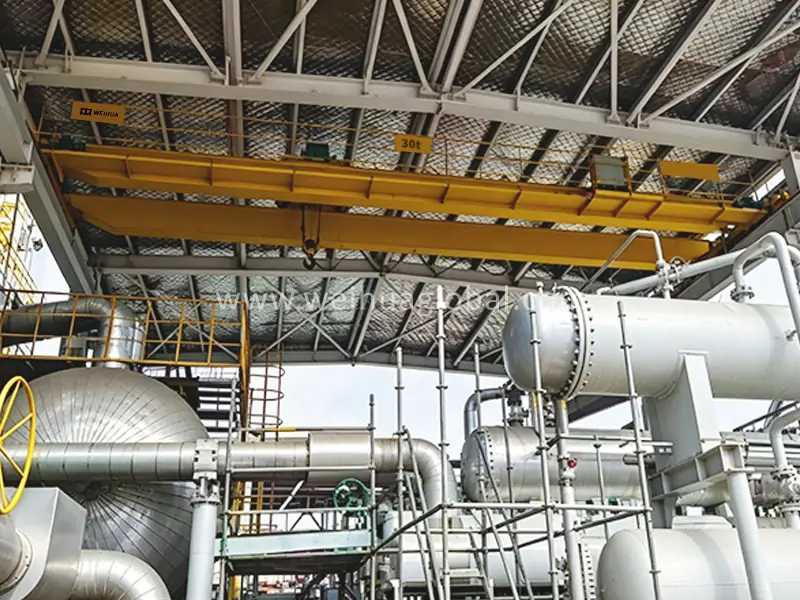
When a chemical processing facility in Mexico needed to upgrade its material handling capacity inside a hazardous production area, standard industrial cranes were simply not an option. The presence of flammable solvents and combustible vapors meant the customer required a 30 ton explosion proof overhead crane engineered specifically for Class I hazardous locations. This project case walks through how our team designed, manufactured, and commissioned a double girder explosion proof overhead crane for this Mexico chemical plant project — from initial requirements to final handover.
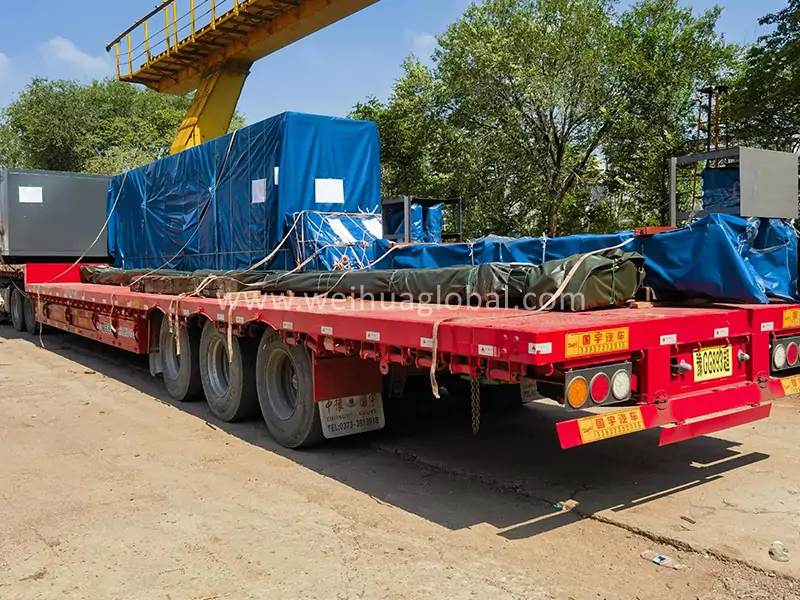
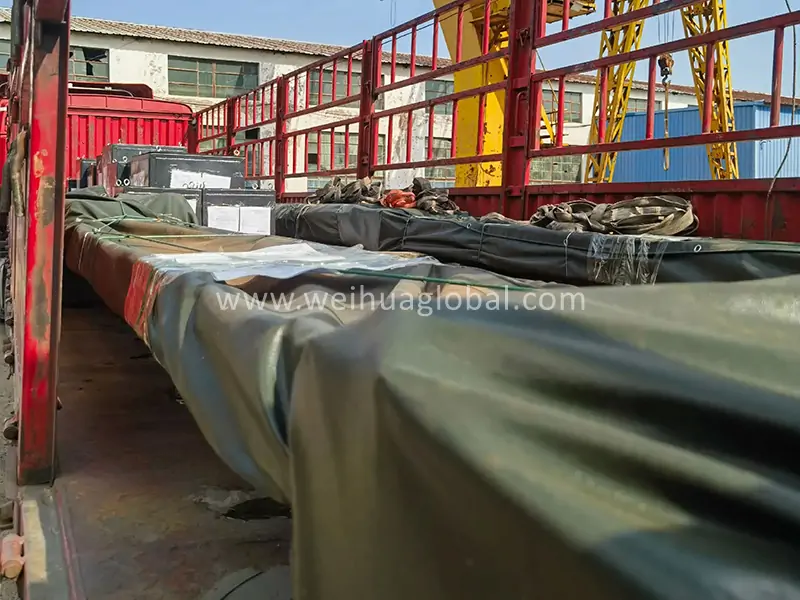
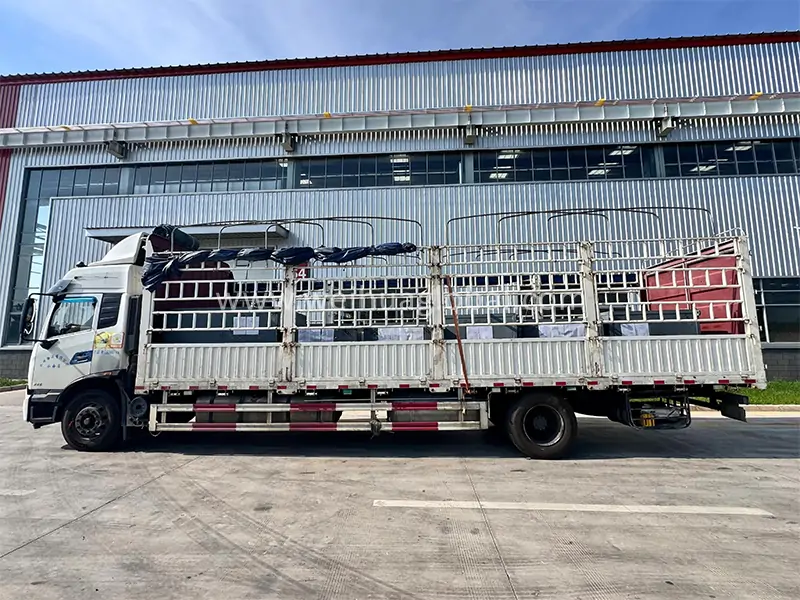
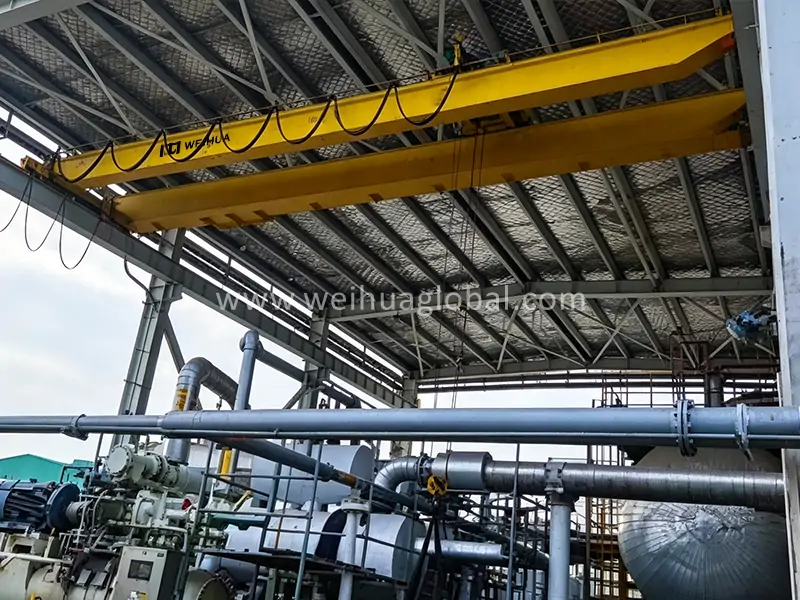
The end user operates a mid-sized chemical processing plant in Mexico that produces specialty chemicals involving flammable liquids and gases. As part of a workshop expansion, the plant needed a 30 ton explosion proof overhead crane to lift reactors, pressure vessels, and heat exchangers during both installation and routine maintenance.
Because the crane would operate inside an area classified as hazardous, an ordinary bridge crane could not be used — any spark from electrical contacts, motor brushes, or friction between metal components could ignite flammable vapors. The customer specifically requested a double girder explosion proof overhead crane built to recognized ignition-protection standards, along with full documentation for import and safety compliance in Mexico.
This project reflects a broader trend across Latin America: as chemical, petrochemical, and pharmaceutical facilities modernize, demand for certified explosion proof overhead cranes for hazardous industrial installations continues to grow.
Before finalizing the design, our engineering team reviewed the customer's actual working conditions rather than relying on standard catalog parameters. Key requirements included:
These real working conditions — not just tonnage and span — shaped the final crane specification.
Based on the site survey and customer requirements, the following configuration was proposed and approved:
| Parâmetro | Especificação |
| Capacidade de elevação | 30 t |
| Span | 22,5 m |
| Altura de elevação | 12 m |
| Classe de serviço | A5 (M5) |
| Fonte de alimentação | 440V / 60Hz (customized to local grid) |
| Explosion Proof Grade | Ex d IIB T4 |
| Modo de controle | Wireless remote control + pendant backup |
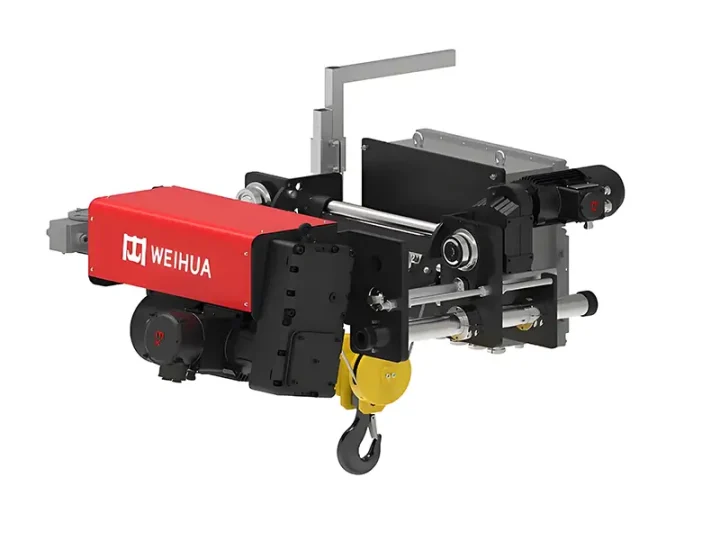
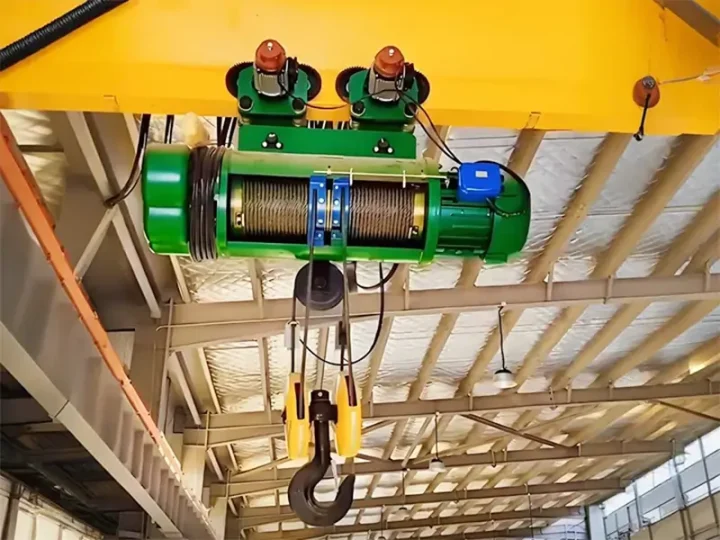
| Tipo de Talha | Explosion proof wire rope hoist |
| Speed Control | Variable frequency drive (VFD) |
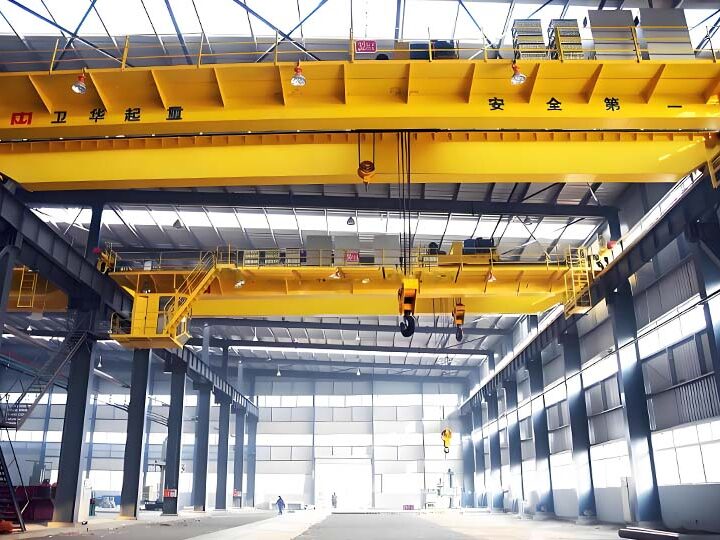
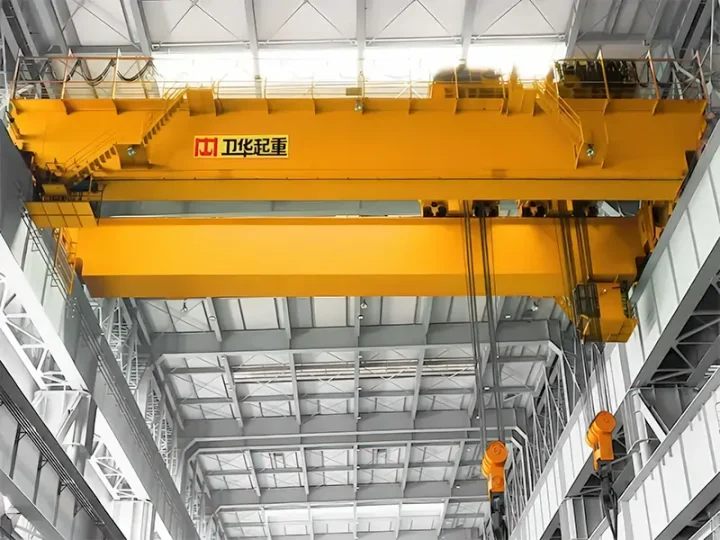
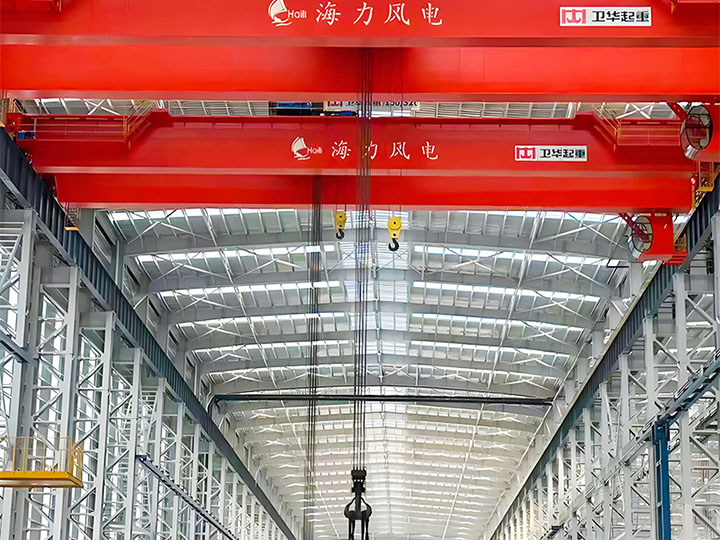
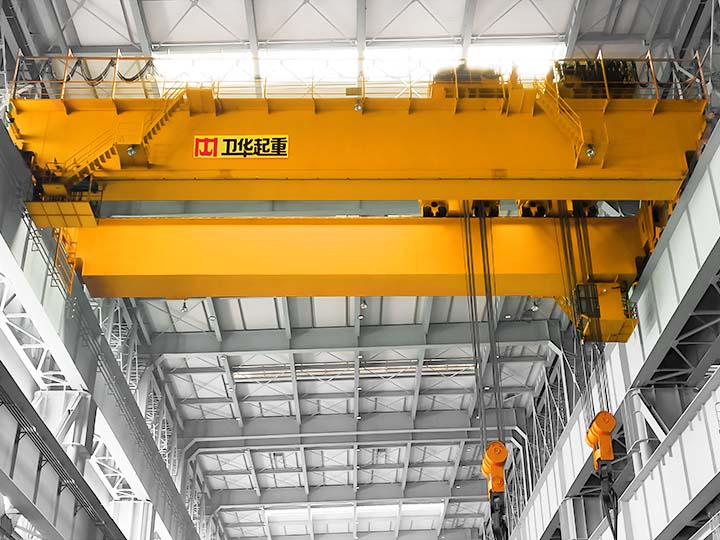
O ponte-guindaste biviga structure was selected over a single girder design to provide the rigidity needed for a 30 ton lifting capacity across a 22.5 m span, while keeping the trolley low-profile enough to fit within the workshop's limited headroom.
Because this crane would operate in a hazardous chemical environment, every electrical and mechanical component was selected or modified to prevent ignition sources. The explosion protection package included:
Every component in this list was chosen specifically because standard industrial crane parts are not rated for use in hazardous areas — a detail that is often overlooked in generic crane inquiries but is critical for chemical plant safety compliance.
Real project execution rarely goes exactly according to the original plan. Three challenges stood out during this project:
Challenge 1: Limited installation headroom
The existing workshop structure left less vertical clearance than typical for a 30 ton double girder crane. Solução: A low-headroom trolley design was used, reducing the distance between hook and crane bridge without compromising lifting height.
Challenge 2: Corrosive chemical atmosphere
Airborne chemical residue in the plant accelerates corrosion on standard coatings. Solução: An upgraded anti-corrosion paint system was applied to the bridge, end trucks, and exposed steel structure, extending the crane's service life in the chemical processing environment.
Challenge 3: Intermittent but demanding duty cycle
Maintenance lifting is irregular but involves heavy, precise movements around sensitive process equipment. Solução: A combination of M5 duty classification and VFD-controlled hoisting and traveling speeds gave operators the fine control needed for safe positioning near reactors and piping.
Once the design was finalized, the project moved through the following stages:
Following installation, the customer reported measurable operational improvements:
Chemical and petrochemical plants routinely handle flammable gases, solvent vapors, and combustible dust. In these environments, even a small electrical spark or a metal-on-metal friction spark from a standard crane can act as an ignition source. This is why regulatory frameworks classify certain plant areas as hazardous locations and require equipment — including overhead cranes — to be explosion-proof rated for that specific zone.
A conventional overhead crane simply cannot be used safely inside these areas. An explosion proof overhead crane is purpose-built with sealed motors, flameproof enclosures, and anti-static grounding to prevent any ignition risk while still delivering the lifting capacity a chemical plant needs for equipment installation and maintenance.
Mexico-based chemical and industrial companies increasingly source explosion-proof lifting equipment from experienced Chinese manufacturers for several reasons:
An explosion proof overhead crane is a lifting device engineered with sealed, flameproof, or intrinsically safe electrical components to prevent ignition of flammable gases, vapors, or dust in hazardous industrial areas such as chemical plants.
Depending on the destination market, cranes can be built to Ex d / Ex e protection concepts, IECEx certification, ATEX certification for European markets, or Class I Division 1/2 requirements for North American applications.
Yes. Span, lifting height, duty class, voltage, control method, and explosion protection grade can all be customized based on the customer's site conditions and hazardous area classification.
Chemical plants, petrochemical facilities, oil and gas terminals, pharmaceutical manufacturing, paint and coating production, and grain or flour processing facilities with combustible dust are common industries requiring explosion proof lifting equipment.
Delivery time depends on the level of customization, but projects of this scale typically require several weeks for engineering, manufacturing, and factory testing before shipment.
Installation guidance, commissioning support, and technical documentation can be provided for international projects, either through local partner teams or remote technical support during installation.
Explosion proof cranes typically cost more than standard overhead cranes due to specialized motors, control cabinets, and protective components, but the added cost reflects the safety requirements of operating in a hazardous chemical environment.
For spans over roughly 15–18 meters at 30 tons capacity, a double girder structure generally provides better rigidity and a lower headroom trolley option compared to a single girder design.
Enviar pedido
