
Weihua exported two 41 ton rail mounted gantry cranes (RMG) to Kuwait for container and cargo handling at a port. The cranes run on fixed rails above the container yard. Each crane uses a container spreader to stack containers and to load or unload container trucks. The main structure was fabricated in China and shipped in bolted sections for on-site assembly.
| Objet | Détails |
| Produit | Rail Mounted Gantry Crane (RMG), container type |
| Rated capacity | 41 t |
| Quantity | 2 units |
| Destination | Kuwait |
| Application | Port container and cargo handling |
| Customer | Port operator in Kuwait (name not disclosed) |
| Fabricant | Groupe Weihua |
| Delivery | Main structure shipped in bolted sections |
An RMG stacks and retrieves shipping containers in a container yard and transfers them to and from container trucks. It travels on fixed rails, so its path is precise and repeatable. It is powered through a cable reel, which suits continuous yard work and keeps energy cost per move predictable.
For port cargo handling, this gives a terminal three practical benefits:
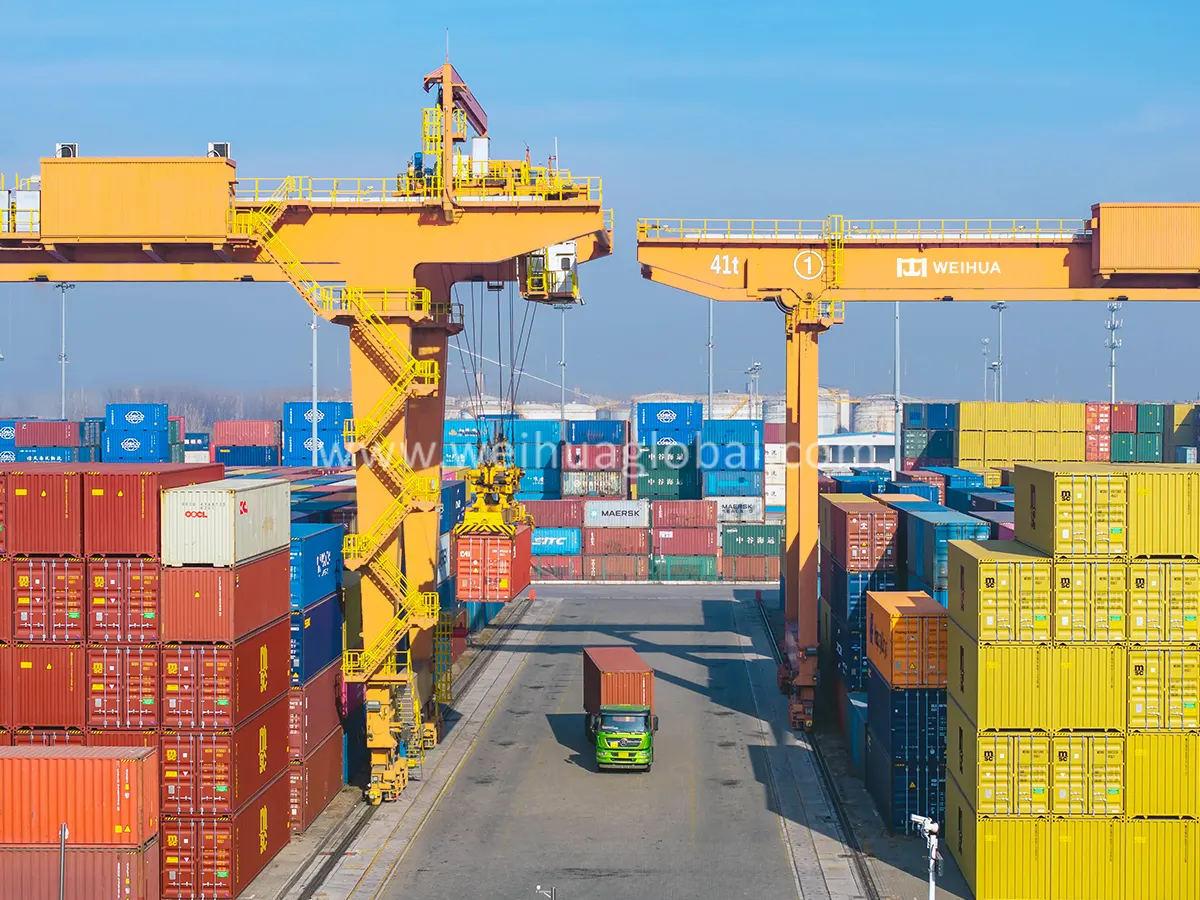
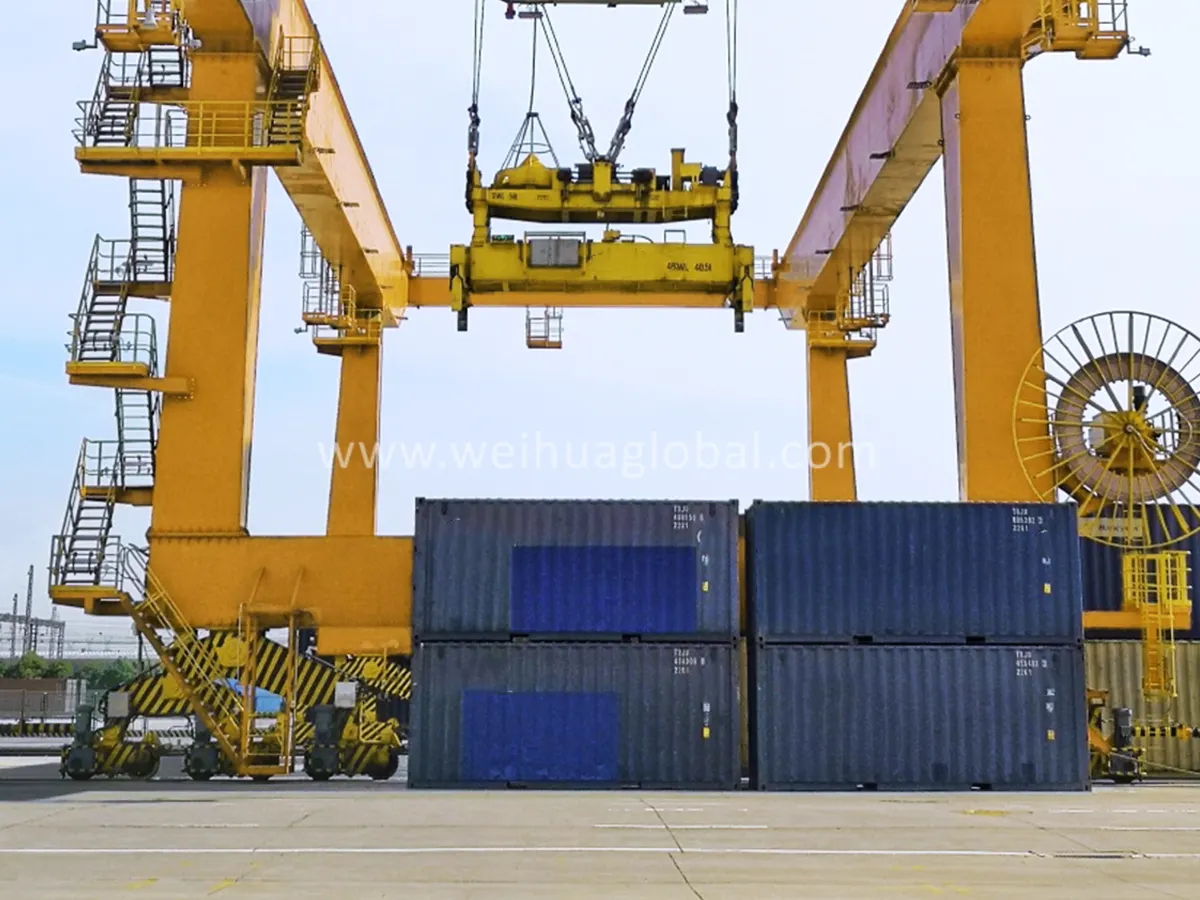
The crane is a portal-type gantry with a box-section main girder, a trolley and a container spreader. Power reaches the moving crane through a cable reel on the structure. Staircases and walkways run along the legs and girder for maintenance access. The structure is finished in Weihua’s high-visibility yellow-orange paint, which also helps with visibility in a busy yard.
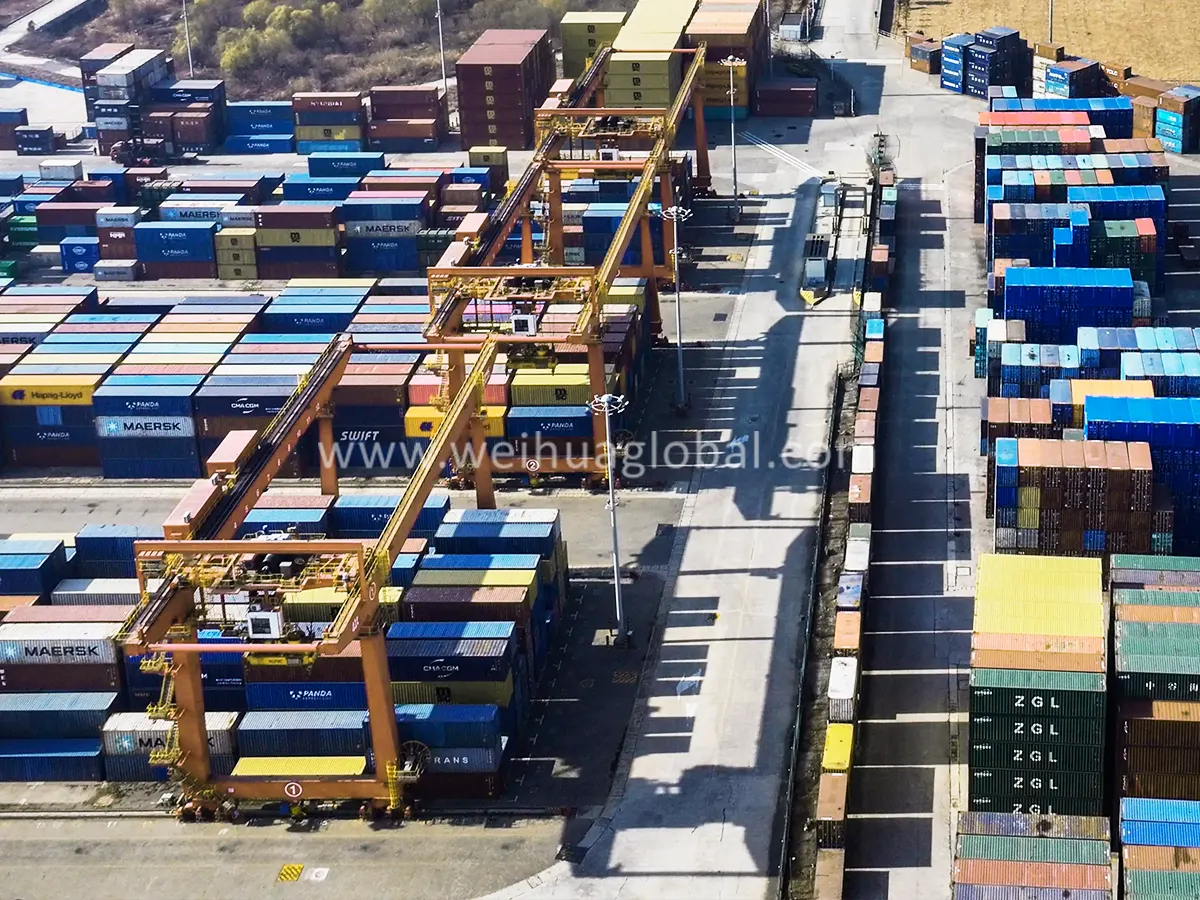
The two cranes carry numbers 1 and 2 on their structures. They run on rails through the container blocks, with truck lanes beside the stacks.
Span, lifting height and speeds are set for each project from the yard layout. The table shows typical values for a 40 t class container RMG.
| Paramètres | Typical range |
| Rated capacity | 40 t class, under the spreader |
| La portée | 20–40 m, set by yard block width |
| Hauteur de levage | 10–18 m, set by stacking height |
| Obligation de travail | A6–A7 for high-frequency port duty |
| Alimentation électrique | Cable reel, voltage and frequency per local grid |
| Lifting device | ISO container spreader, 20 ft / 40 ft |
Typical values for reference. Final parameters are set for each project.
Span and lifting height decide how much of your yard the crane can use, so confirm them before you request a quote.
Span. Span is the distance between the two rail centres. It is set by the number of container rows you want under the crane, plus the truck lane. A wider span stacks more rows per crane but needs a heavier girder and stronger rail foundations.
Lifting height. Lifting height must clear the tallest stack plus the container being moved. A standard high-cube container is about 2.9 m tall. For a “1 over 4” stacking plan, the lifted container passes over four stacked tiers, so the hook height has to cover five container tiers plus the spreader and a safety margin. That is why a 40 t class RMG for four-high stacking typically needs a hook height of around 15 m.
Duty class. Cranes that work every shift handle many lifts per hour. High-frequency port work usually calls for A6 to A7 duty, which affects motors, brakes, wheels and gearboxes.
Rail and foundation. Wheel loads from the crane pass into the rails and the ground, so the rail beam and foundation must be checked against the crane’s wheel load data.
Ports along the Arabian Gulf combine high temperatures, airborne dust and salty humid air. When you order a crane for this region, specify these points up front:
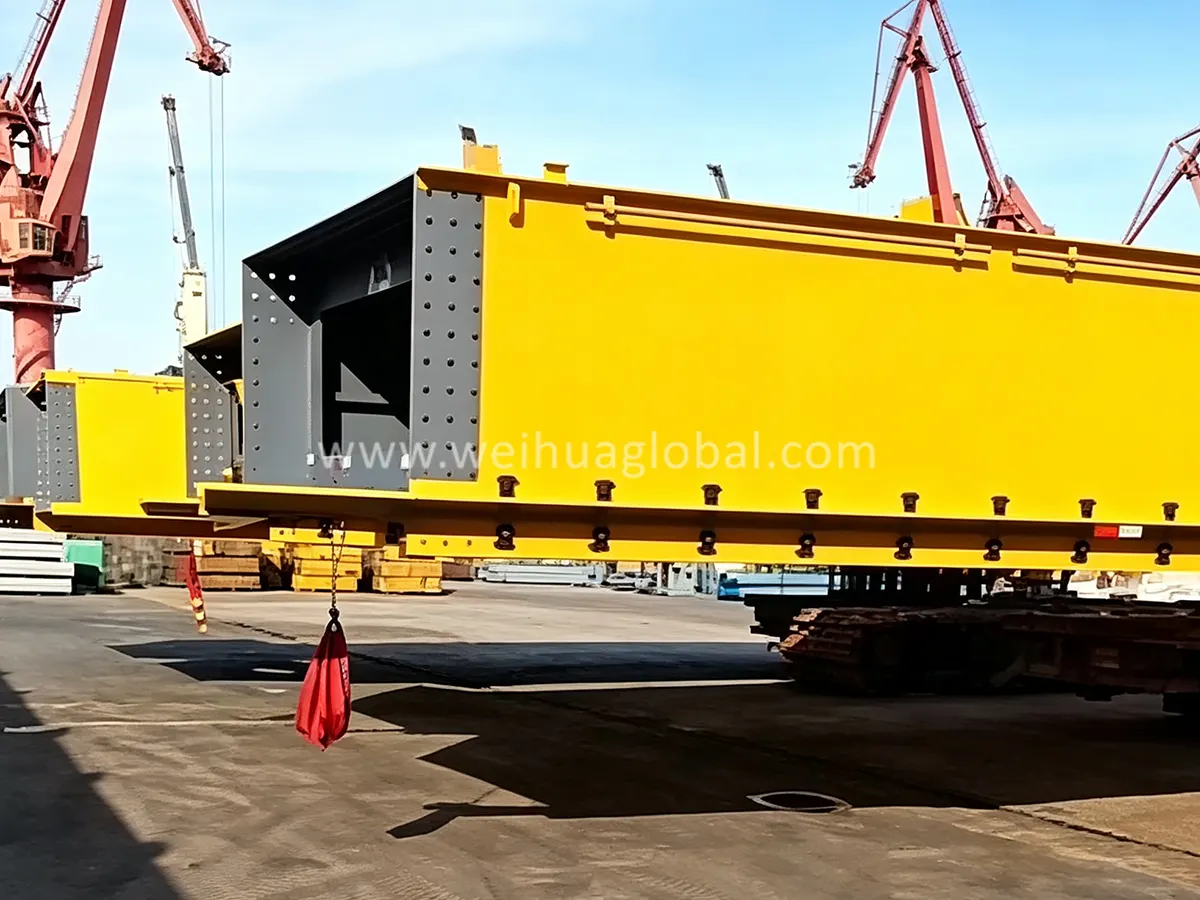
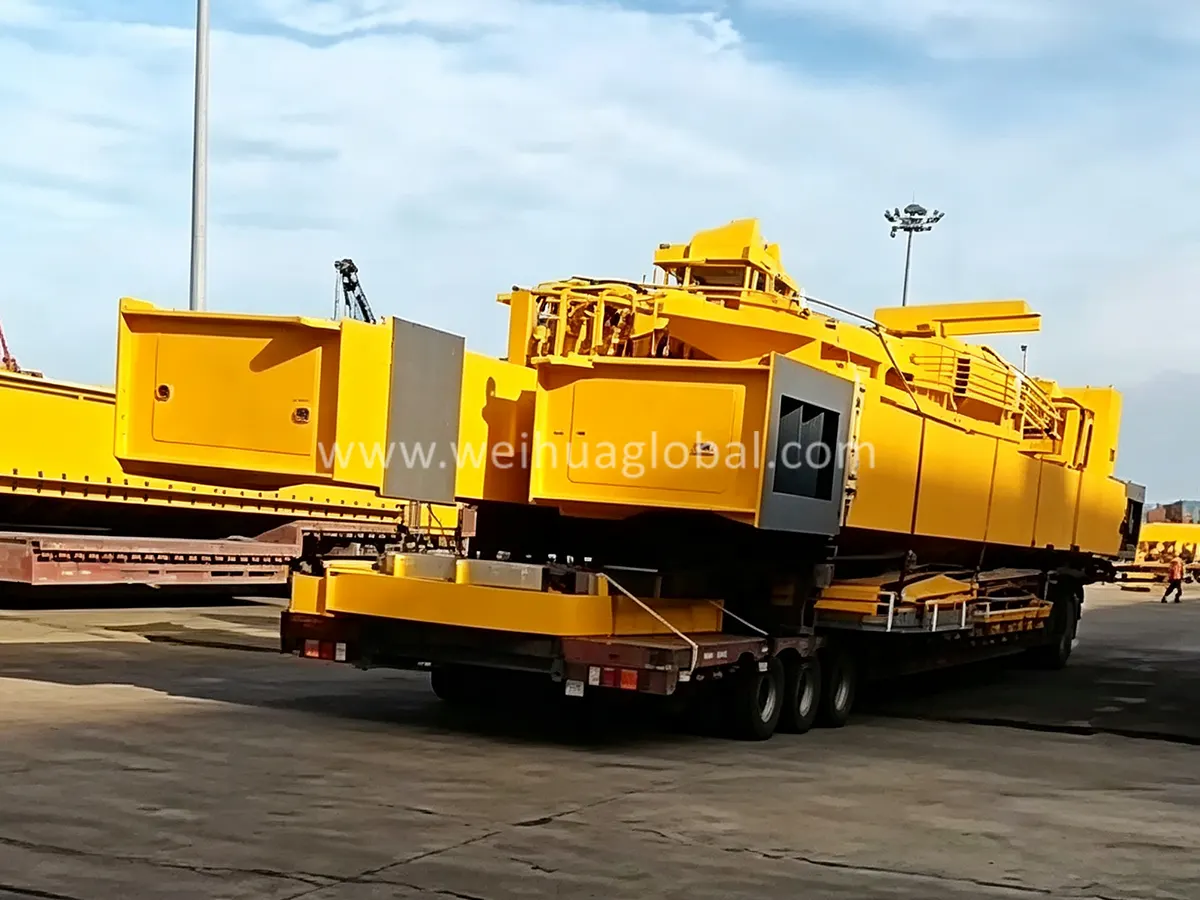
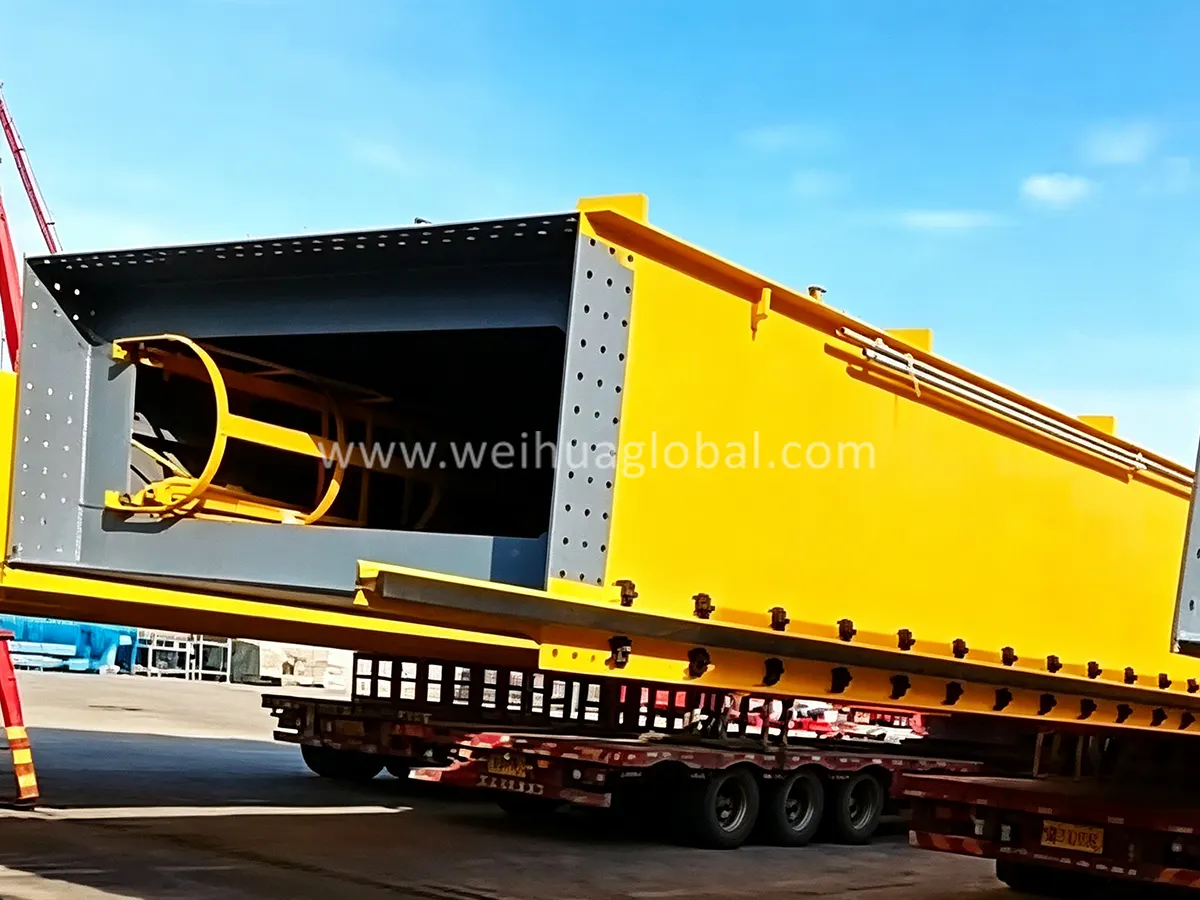
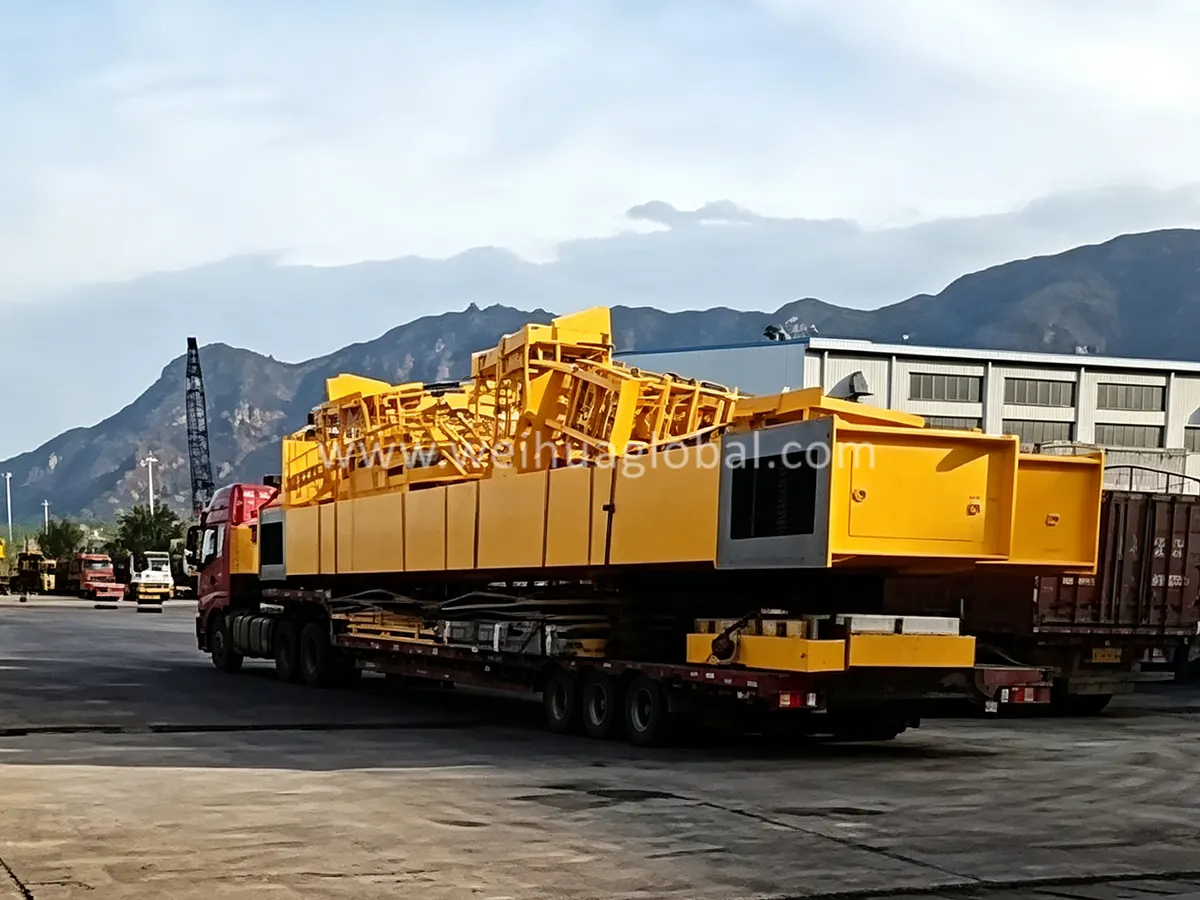
A crane of this size cannot travel in one piece. The girder is built in sections with bolted splice plates, so the crane can be assembled at the destination port with little on-site welding.
Legs, trolley and other assemblies are loaded separately and secured on heavy-duty trailers for road transport to the loading port.
“Port yards need cranes that run all day with predictable handling cycles. For this Kuwait project, we delivered 41-ton rail mounted gantry cranes in transport sections, so the customer can assemble them on site.”
— Weihua Group, Overseas Business Division
Sectional shipment makes transport easier, but the crane still needs careful assembly on site. A typical process looks like this:
This is a typical sequence, not the recorded timeline of this project.
| RMG (Rail Mounted) | RTG (Rubber Tyred) | |
| Travel | Fixed rails | Rubber tyres, can change blocks |
| Puissance | Cable reel (electric) | Diesel generator or electric |
| Yard use | Dense blocks, fixed layout | Flexible layout, more yard width |
| Best for | High-volume, fixed yard blocks | Changing layouts, multiple blocks |
Choose an RMG when the yard layout is fixed and handling volume is high. Choose an RTG when the crane must move between blocks.
What is a 41 ton rail mounted gantry crane used for?
It stacks and moves shipping containers in port and rail yards, and loads or unloads container trucks.
What is the difference between an RMG and an RTG?
An RMG runs on fixed rails with electric power. An RTG runs on rubber tyres, so it can change blocks but needs more yard space.
Can Weihua ship gantry cranes in sections for overseas projects?
Yes. Large girders are built in sections with bolted splice plates for road transport and on-site assembly.
What information do I need to send for an RMG quote?
Container types, yard block width, stacking height, duty requirement and the local power supply.
Send us your container type, yard span, stacking height, duty requirement and local power supply. Our engineers will recommend a crane configuration and send a quote.
Devis gratuit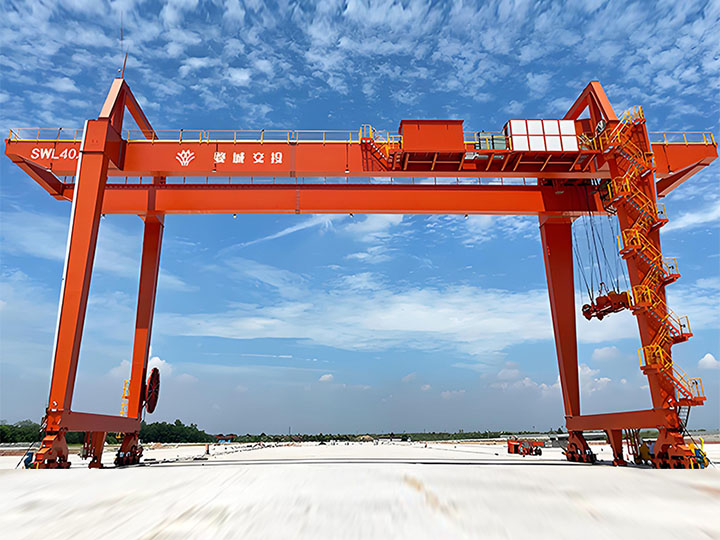
Soumettre une demande
