
When a machinery manufacturing plant in Poland needed to add lifting capacity to an existing workshop without the cost of a full civil construction project, a standard overhead crane wasn't the most practical fit. Instead, our engineering team proposed a 10 ton single girder semi gantry crane designed to work with the building's existing runway beam. This project case covers how the crane was specified, built, and installed to support machine assembly operations at the customer's Poland facility.
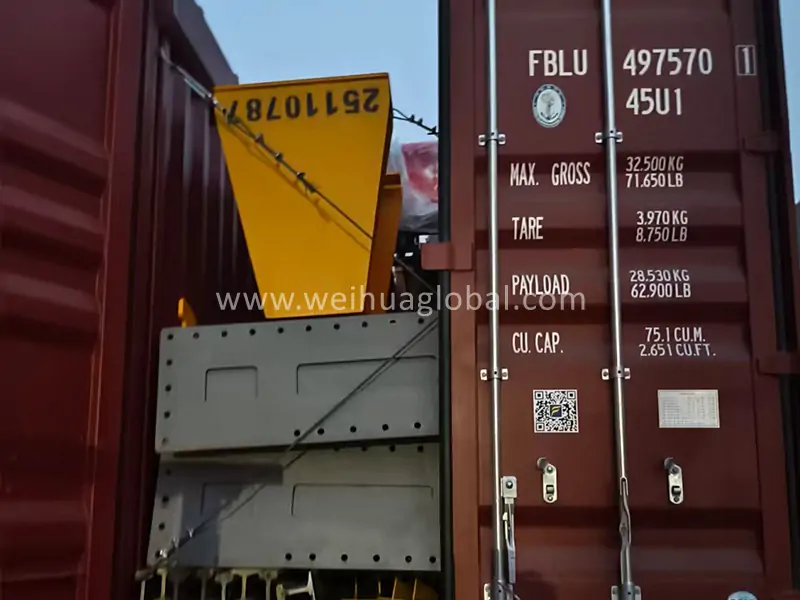
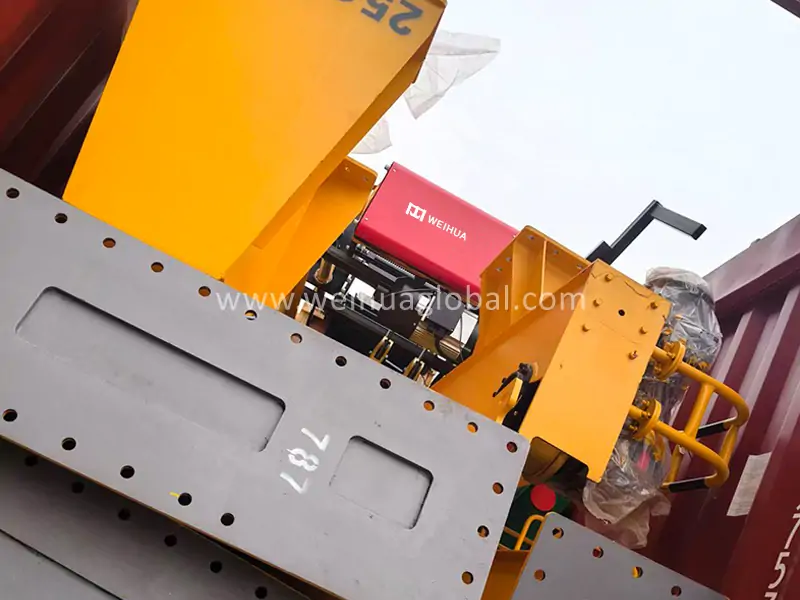
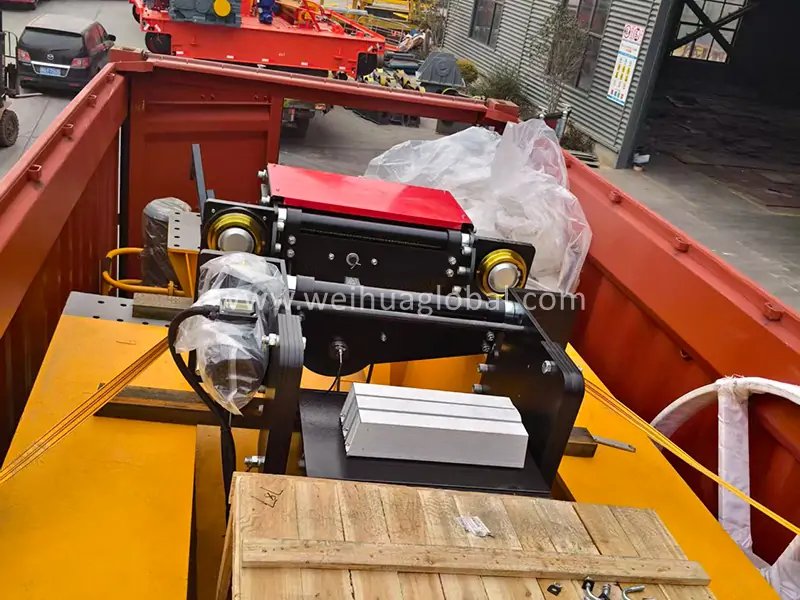
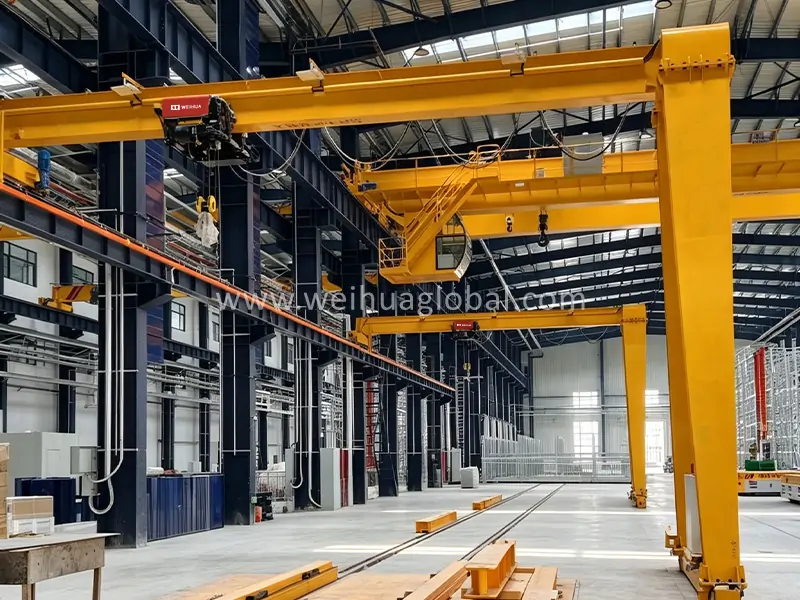
The end user manufactures industrial machinery components and needed additional lifting coverage in a section of their production workshop. The plant already had one elevated runway beam installed along a workshop wall, but no crane covering the floor area on the opposite side.
Rather than building a second full runway system — which would have required additional structural steel and civil work — the customer asked for a single girder semi gantry crane that could use the existing runway beam on one end and run on floor-mounted rails on the other. This material handling solution allowed the plant to extend lifting coverage across the workshop at a fraction of the cost of a fully elevated crane system, making it a practical choice for machinery manufacturing plants working with limited budgets or existing building constraints.
Before finalizing the crane design, the actual production workflow in the workshop was reviewed in detail. The customer's key requirements included:
These conditions pointed directly to a semi gantry configuration rather than a fully elevated double-runway crane.
Challenge 1: Limited workshop floor space
The workshop layout left a narrow footprint for the gantry leg and floor rail. Solution : The span and travel path were optimized around existing workshop columns and equipment, keeping the gantry leg clear of the main assembly area.
Challenge 2: Frequent, repetitive machine assembly cycles
Assembly work required frequent starts, stops, and fine positioning of heavy components. Solution : A high-duty (A4) electric hoist paired with VFD control gave operators smoother, more precise control during repeated lifting cycles.
Challenge 3: Integrating with the existing runway beam
The new crane needed to safely share load with an existing structural runway beam not originally designed for this specific crane. Solution : The semi gantry structure was engineered so that one end rides on the existing runway while the load path and beam capacity were verified against the new crane's specifications before installation.
Based on the site survey and the customer's production requirements, the following crane configuration was finalized:
| Objet | Spécifications |
| Capacité | 10 tonnes |
| Type de grue | Monopoutre Semi Gantry Crane |
| La portée | 16 m |
| Hauteur de levage | 8 m |
| Palan | Electric wire rope hoist |
| Classe de service | A4 |
| Control | Pendant control + radio remote control |
| Alimentation électrique | 400V / 50Hz |
The single girder design was chosen over a double girder structure because it offered sufficient capacity for the 10 ton load at this span, while keeping equipment weight and cost lower — an important factor for a semi gantry crane that also carries a floor-mounted support leg.
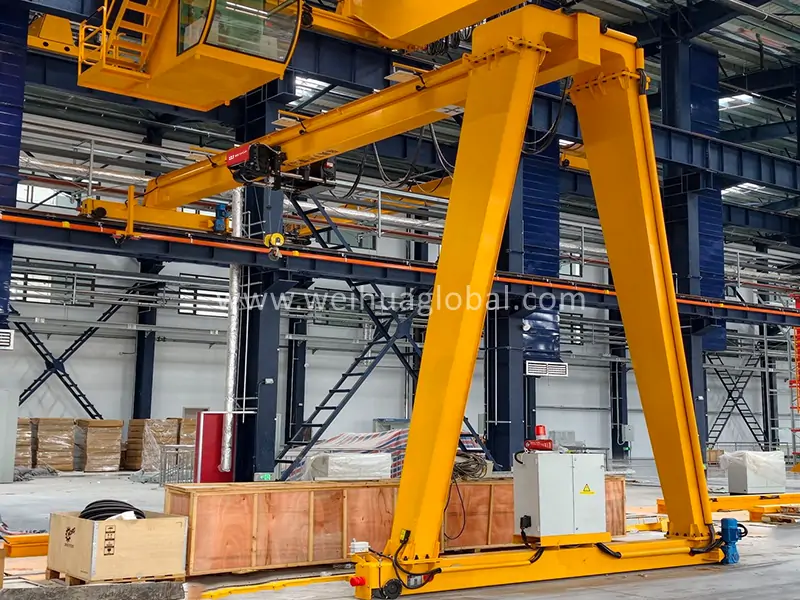
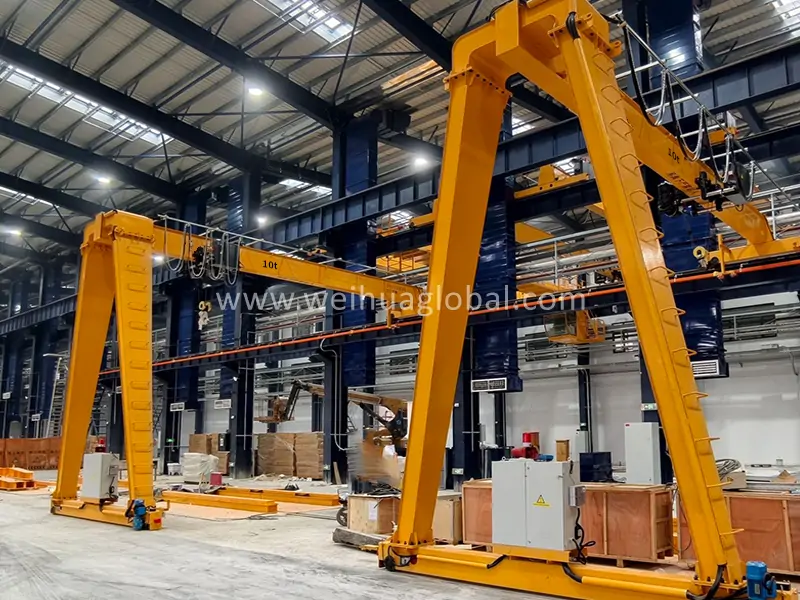
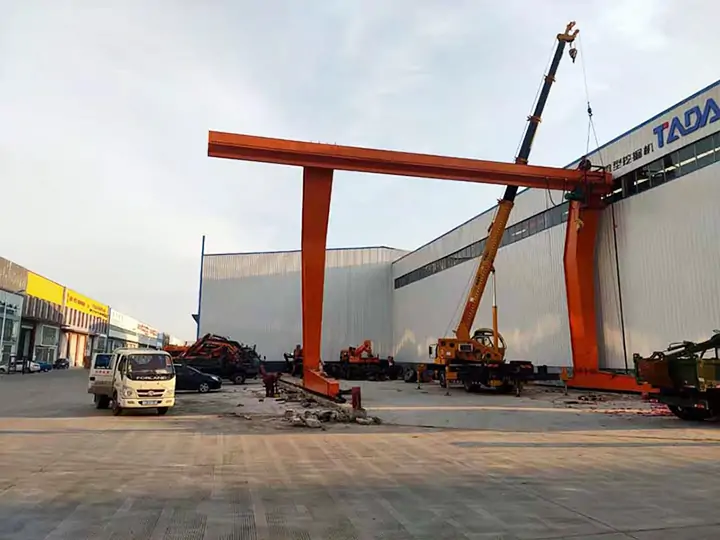
A full overhead crane system requires a runway beam on both sides of the workshop. Since the customer's building already had one runway beam in place, building a second elevated runway would have added unnecessary structural cost. A grue semi-portique solved this by combining two support methods in a single structure:
This approach is a common and cost-effective solution for machinery manufacturing plants and workshops that already have partial crane infrastructure in place. Compared to a full gantry crane spanning the entire floor, this configuration also required less floor-level rail installation, reducing both material cost and installation time.
The crane was configured with the following features to match the customer's assembly workshop conditions:
The project moved through the following stages from factory to final handover:
After installation, the customer reported the following practical improvements:
Beyond this project, single girder semi gantry cranes are widely used across similar industrial settings, including:
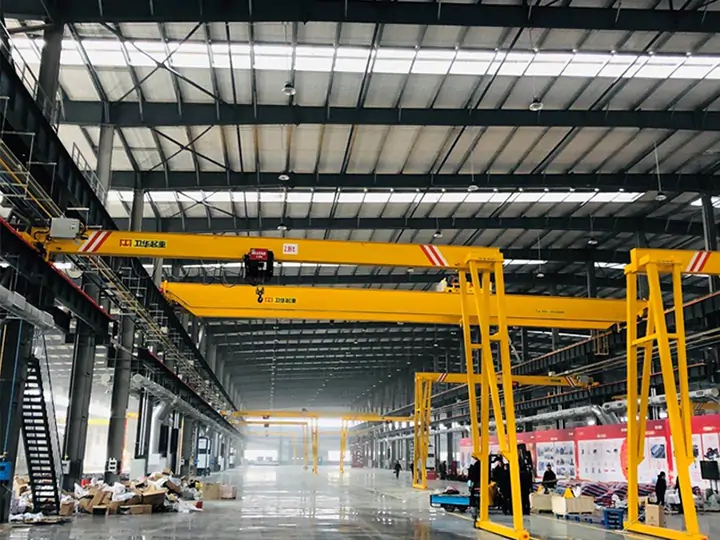
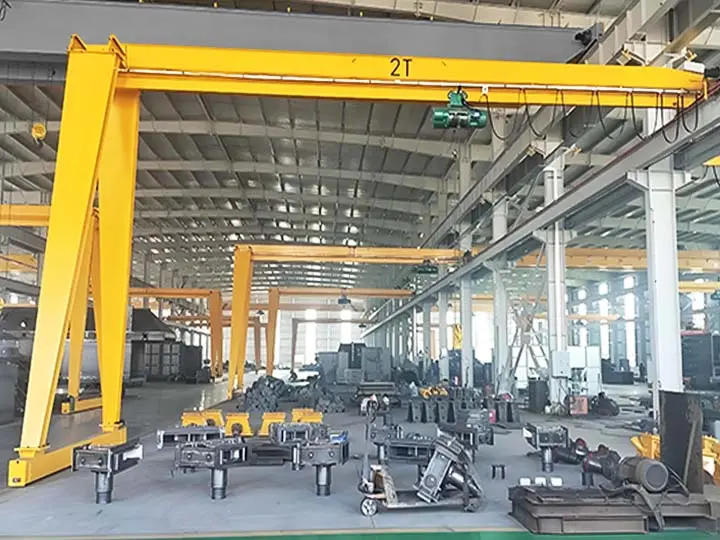
Their ability to combine an existing runway beam with floor-mounted rail support makes semi gantry cranes a practical option wherever a workshop has partial crane infrastructure already in place.
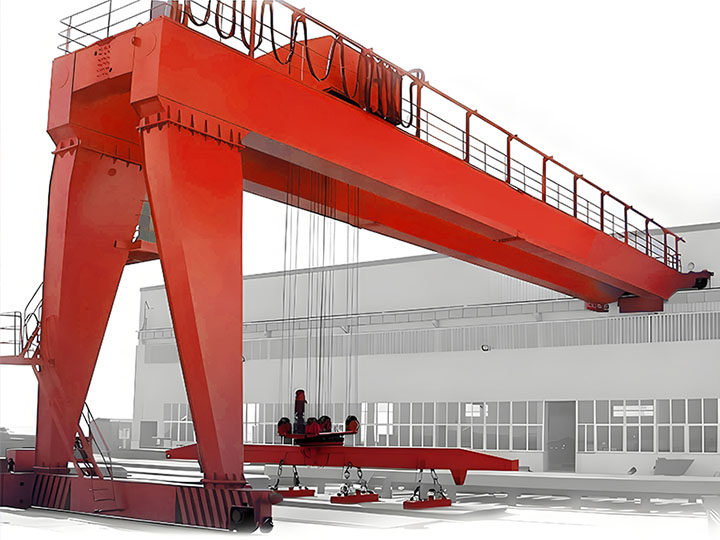
A semi gantry crane is a type of overhead lifting equipment where one end of the bridge runs on an elevated runway beam and the other end is supported by a floor-mounted rail and gantry leg, rather than having runway beams on both sides.
A single girder design is typically lighter and more cost-effective than a double girder structure for light-to-medium capacities, such as 10 tons, making it a practical choice when structural loading needs to be kept lower on one side of the crane.
Machinery manufacturing, mold and tooling production, steel fabrication, maintenance workshops, and warehousing operations commonly use semi gantry cranes, particularly where a building already has partial runway infrastructure.
Span depends on building layout and structural conditions, but 10 ton semi gantry cranes are commonly built with spans in the range of 10 to 20 meters, adjusted to fit the specific workshop.
Yes, provided the existing runway beam's load capacity is verified by structural review to confirm it can safely support the new crane's operating loads.
Yes. Span, lifting height, duty class, control method, and gantry leg configuration can all be adjusted to match a workshop's specific layout and lifting requirements.
Certification requirements vary by destination market and can include CE marking for the European Union, along with relevant structural and electrical compliance documentation requested by the customer.
Manufacturing and delivery timelines depend on the level of customization, but projects of this scale typically require several weeks for engineering, fabrication, and factory testing before shipment.
Soumettre une demande
