
Notícias
Choosing between European and traditional pontes rolantes is one of the most important capital decisions in the material handling industry. Through analyzing purchasing data from over 200 industrial facilities, we found that although European cranes have a 15-25% higher initial cost than traditional overhead cranes, their total cost of ownership over ten years is 30-40% lower. Why such a significant cost difference? This guide provides practical cost analysis for overhead crane purchasers to help you make informed decisions.
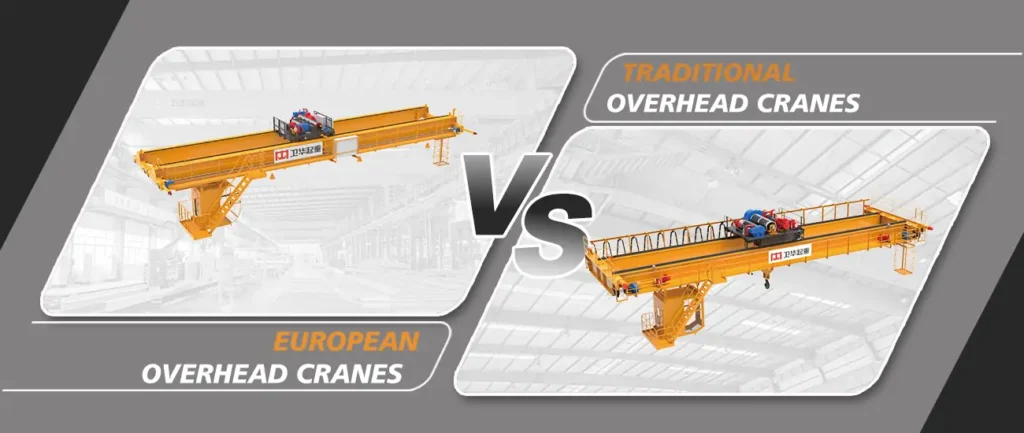
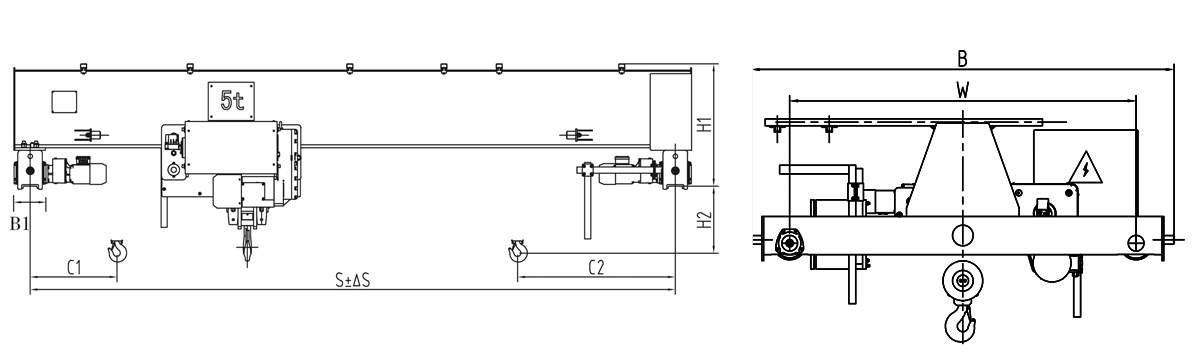
European overhead travelling cranes emphasize compact structure and material optimization. Through advanced steel materials, precise load calculations, and computer-optimized geometry, they reduce self-weight while maintaining structural integrity, resulting in a weight 30-50% lighter than traditional bridge cranes. Modular component design allows for the replacement of entire components during maintenance, rather than repairing individual parts, shortening maintenance time.
Low headroom design is another major feature. European designs minimize the distance between the hook and the load, requiring less vertical clearance in buildings. In renovation projects, this advantage can avoid expensive roof modifications.
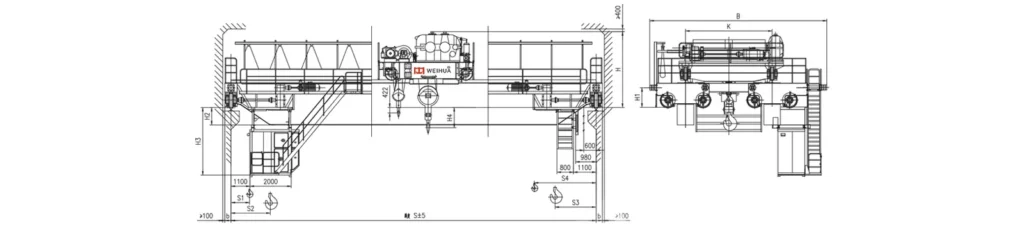
Traditional overhead cranes follow American engineering standards, emphasizing robust structures and ample safety factors. Heavier structural components provide durability in demanding environments. Single-purpose design simplifies initial design but reduces flexibility for future modifications. Standard headroom configurations require more vertical building space.
A typical 10-ton European overhead eot crane (60-foot span) costs $42,500-$60,000, while a traditional design costs $32,500-$47,500—a 20-30% premium. However, the cost difference for the complete project is significantly smaller:
| Cost Item | European-Style Crane | Traditional Crane |
| Base Equipment | $42,500–$60,000 | $32,500–$47,500 |
| Runway Beams | $22,500–$32,500 | $30,000–$42,500 |
| Instalação | $12,500–$20,000 | $15,000–$25,000 |
| Total Investment | $86,500–$128,500 | $90,000–$138,000 |
The lower wheel pressure of European overhead cranes typically eliminates the need for structural reinforcement, offsetting the equipment's premium price. European bridge cranes with a low headroom design can save $40-80 per square foot in building height costs.
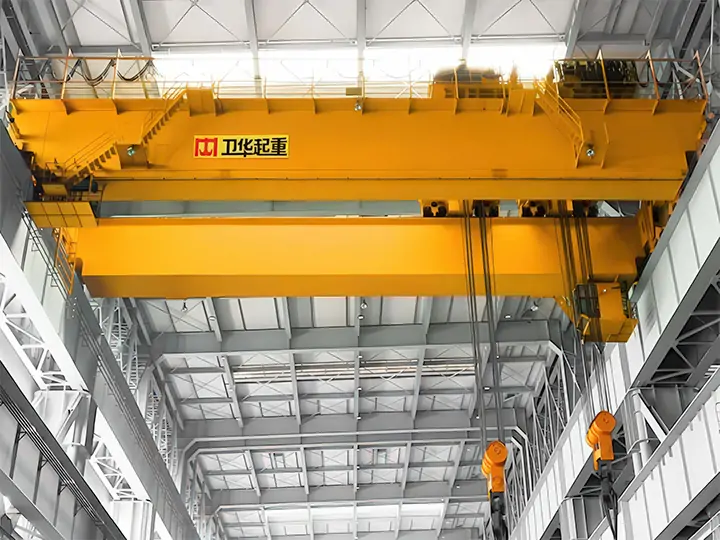
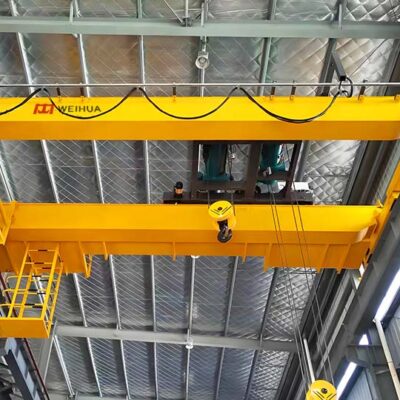
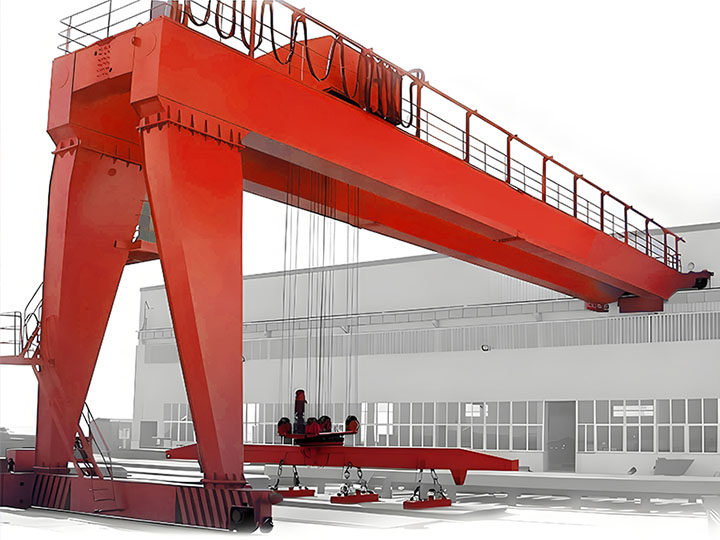
Ponte rolante tradicional de duas vigas
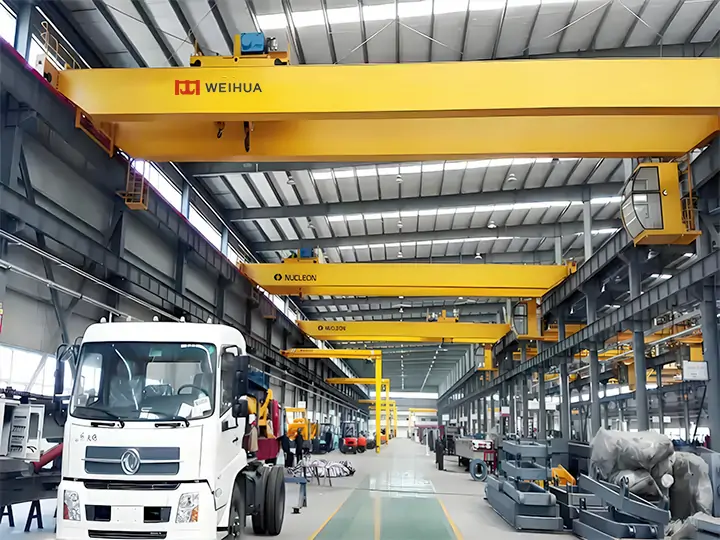
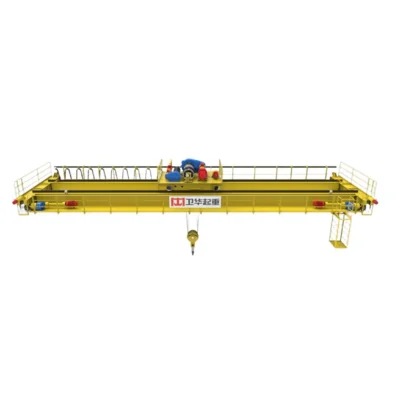
Ponte rolante europeia de duas vigas
For a 10-ton capacity, 60-foot span overhead crane:
• European-style overhead crane equipment package price: $42,500 - $60,000
• Traditional overhead crane equipment package price: $32,500 - $47,500
The equipment price difference is 20-30%, but the difference in total project cost narrows to only 3-7%.
European cranes have lower wheel loads, typically allowing for lighter beam specifications, saving $2,500-$5,000 in structural steel costs. Existing buildings may accommodate European overhead cranes without track upgrades, whereas traditional bridge cranes would require reinforcement.
Building height can lead to significant cost differences. European low-headroom designs are suitable for buildings with 20-24 feet of clear height, while traditional bridge cranes may require 26-30 feet. In new construction, this translates to an additional building cost of $10-20 per square foot. For a 10,000 square foot facility, the difference amounts to $100,000-$200,000.
European overhead cranes are 25-40% more energy-efficient than traditional bridge cranes during normal operation. This is due to the optimized motor size and standard variable frequency drives in European-style cranes. A 10-ton European overhead crane operating two shifts a day consumes approximately 15-18 kilowatt-hours, while a comparable traditional crane consumes 22-28 kilowatt-hours. Based on an industrial electricity price of $0.12/kWh, this results in annual savings of $400-700.
European bridge cranes require quarterly inspections, each lasting 3-4 hours, with average annual routine maintenance costs of $2,400-3,200. Traditional cranes require similar inspection frequency but for longer durations, 5-7 hours each time, resulting in annual maintenance labor costs of $1,500-2,500.
The sealed bearing design of European-style cranes reduces lubrication points by 60-70%. A typical European-style crane has 8-12 lubrication points, while a traditional crane has 25-35. This saves 15-20 hours annually, worth $1,000-1,800.
Unplanned downtime results in the highest operating costs. According to industry reliability data, European-style overhead cranes experience an average of 8-12 hours of unplanned downtime per year, while traditional overhead cranes experience 18-25 hours of unexpected downtime. For a manufacturing plant that loses $1,000-$2,000 per hour of downtime, European-style overhead cranes can save $7,000-$15,000 annually in downtime costs.
European overhead cranes demonstrate a longer average service life due to reduced structural stress. Properly maintained European-style cranes typically operate for 25-30 years before requiring major overhauls. Traditional cranes typically have a service life of 20-25 years under similar conditions.
Production changes often require crane capacity or span modifications. The modular design of European-style cranes allows for upgrading the electric hoist without replacing the entire system. Increasing lifting capacity from 10 tons to 15 tons costs $7,000-$12,000 for European-style cranes, while traditional cranes typically cost $15,000-$20,000.
European-style cranes offer superior resale value. A European-style crane with a 10-year service life can be resold for 35-45% of its replacement cost, compared to 20-30% for traditional cranes, reflecting modern control technology and broader market demand.
Most facilities reach their break-even point in 18-26 months, while high-utilization equipment can achieve break-even within 12-15 months.
Over a ten-year period, European-style cranes save $90,000-$200,000 compared to traditional bridge cranes. These savings come from:
Recommended situations for choosing European-style overhead cranes:
• Medium to heavy-duty operations (over 1,500 operating hours per year)
• Facilities where downtime costs exceed $1,000 per hour
• Existing buildings with limited headroom (20-24 feet)
• Planned future capacity expansion or span changes
• Availability of skilled maintenance personnel
Traditional overhead cranes may be more suitable for:
• Light-duty operations (less than 1,500 operating hours per year)
• Remote locations with limited service support
• Facilities with existing traditional crane infrastructure
• Applications requiring maximum structural robustness
• Projects with limited budgets and low impact of downtime
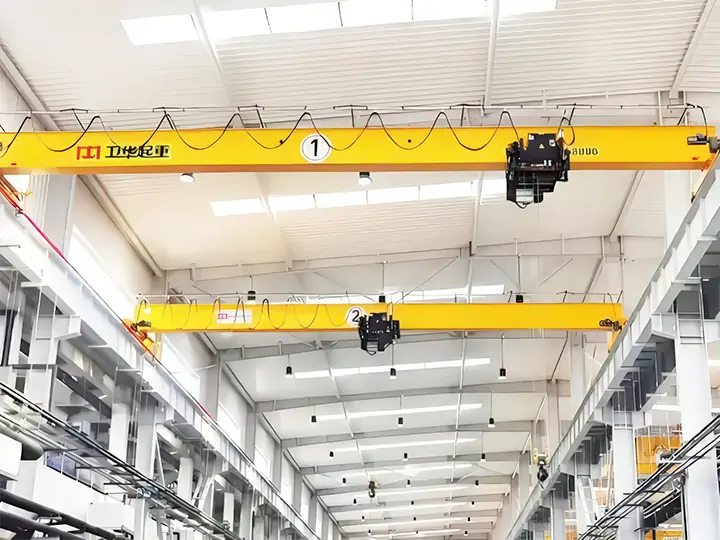
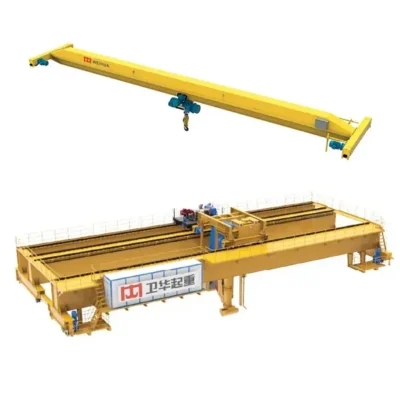
Ponte rolante europeia de uma viga
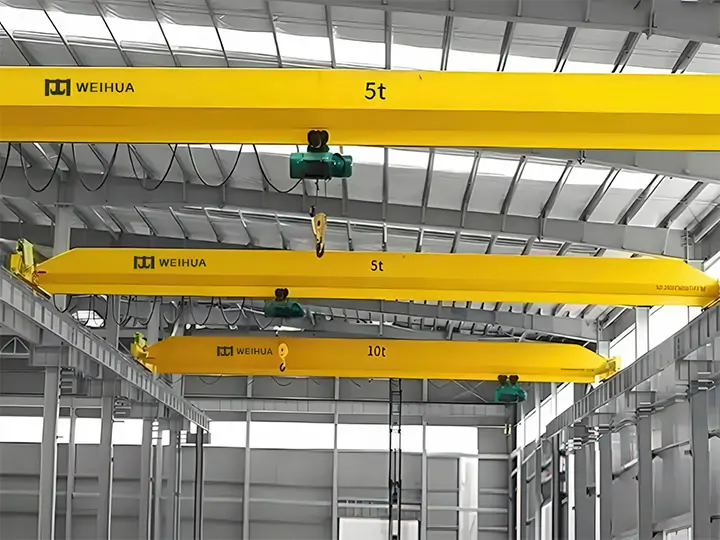
The choice between European overhead cranes and traditional overhead cranes depends on your specific operating environment. While European bridge cranes have a higher initial investment, they typically recoup their costs within two years through improved efficiency, reliability, and longer service life, significantly reducing the total cost of ownership over their lifespan. However, traditional cranes remain viable for light-duty applications or in areas where the relevant infrastructure is already established.
Grupo Weihua is a leading bridge crane manufacturer in China, specializing in providing customers with lifting solutions that offer the best total cost of ownership (TCO). We understand that purchasing a bridge crane involves not only considering the initial investment but also focusing on the total lifecycle cost over ten or even twenty years. With over 20 years of R&D and manufacturing experience, Weihua offers a full range of products, including European-style bridge cranes, traditional electric bridge cranes, and low-headroom configurations. Our engineering team will tailor the most cost-effective lifting solution for you based on key factors such as your facility's headroom, usage frequency, and downtime costs.
Orçamento gratuito agoraOur advantages:
Whether you need a highly efficient European bridge crane or a robust and durable traditional overhead crane, Weihua can provide you with professional cost analysis and return on investment (ROI) assessments to help you make the smartest purchasing decision.Contact us today to get customized bridge crane solutions and detailed total lifecycle cost comparison analysis.
Enviar pedido
