
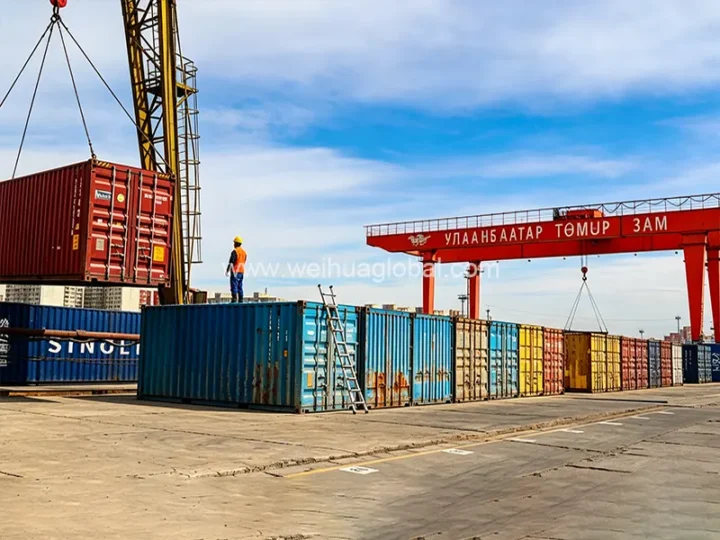
Gantry Cranes
A container yard gantry crane stacks, retrieves and transfers ISO containers between trucks, trains and storage blocks in a port, dry port, rail terminal or logistics yard. Weihua manufactures the two main types: the Rubber Tyred Gantry Crane (RTG), which travels on tyres and moves freely between yard blocks, and the Rail Mounted Gantry Crane (RMG), which runs on fixed rails for rail-guided positioning in fixed-layout terminals.
Both types handle 20 ft, 40 ft and 45 ft containers with a container spreader, and both can be configured to your span, lifting height, stacking layers and power supply.
Free Quote Now| RTG Rubber Tyred Gantry Crane | RMG Rail Mounted Gantry Crane | |
| Lifting capacity | 35–70 ton | 30.5–50 ton |
| Span | 23.47 m / 26 m | 35 m (reference); matched to your yard and rail layout |
| Lifting height | 15.5 m / 18.5 m | 12.5–18.3 m |
| Working class | A6 / A7 | A6–A7 |
| Container sizes | 20 ft, 40 ft, 45 ft | 20 ft, 40 ft, 45 ft |
| Travel | Rubber tyres, no rails | Fixed ground rails |
| Power supply | Diesel generator set or three-phase AC 380 V 50 Hz | Three-phase AC 380 V 50 Hz |
Parameters are reference values from our product pages. Final specifications depend on your yard layout and project requirements.


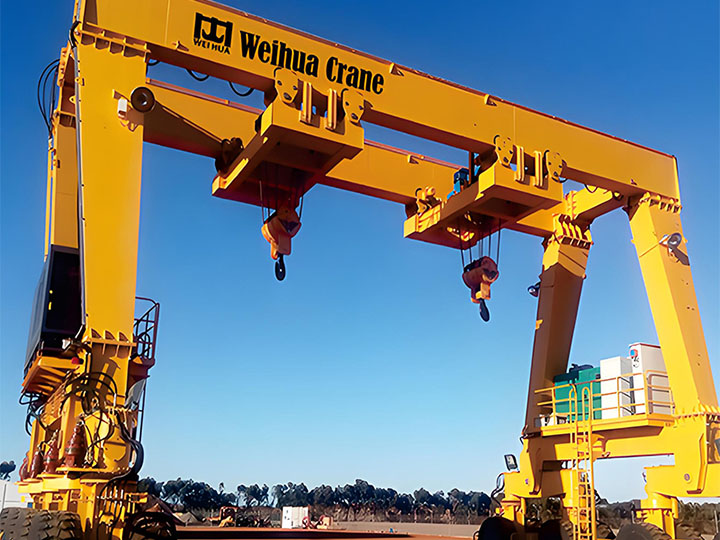
The RTG is built for container stacking in yards that need mobility. Rubber tyres let it move between rows and blocks without laying tracks, and it can cross multiple rows of containers without repositioning.
Typical applications: seaport container yards, container terminals, large logistics centers.
[View RTG Rubber Tyred Gantry Crane] → https://www.weihuaglobal.com/product/rtg-rubber-tyred-gantry-crane-manufacturer/
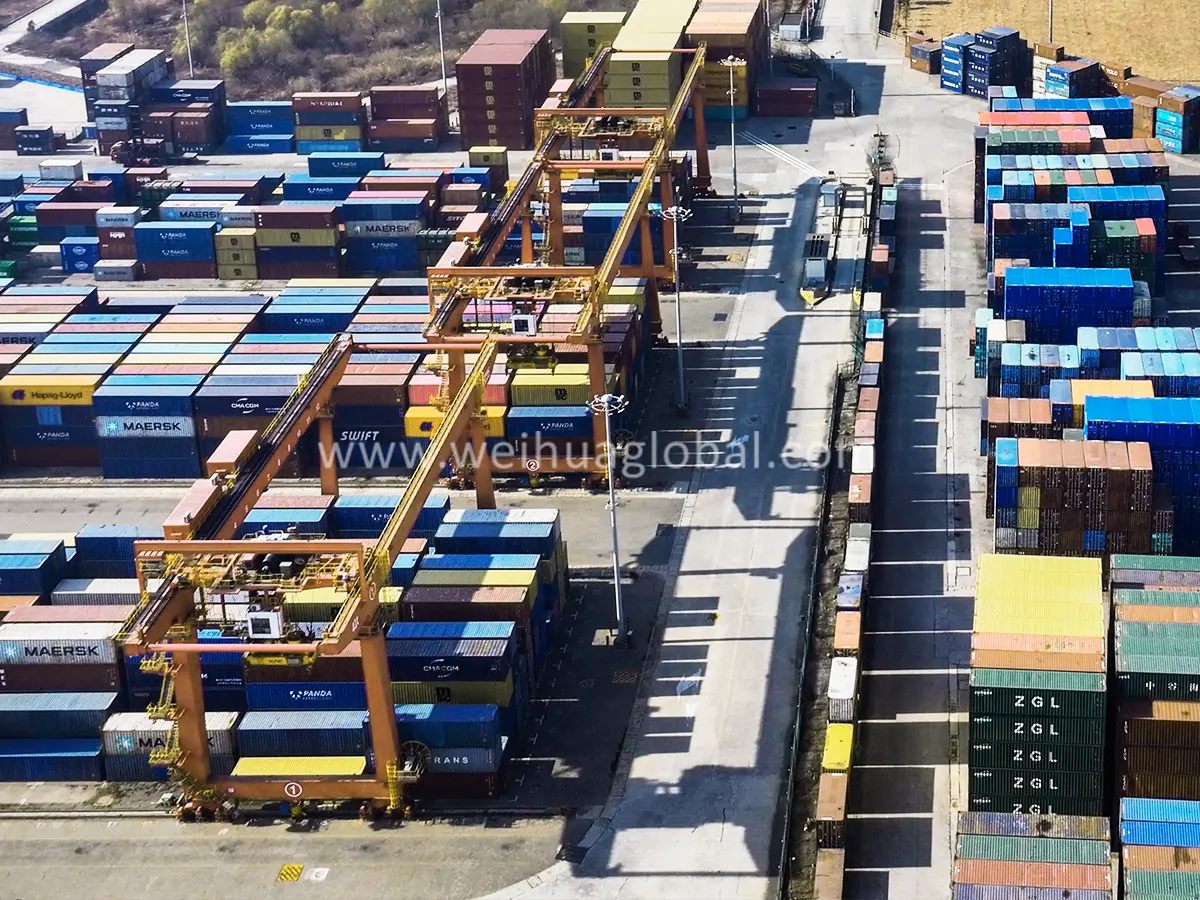
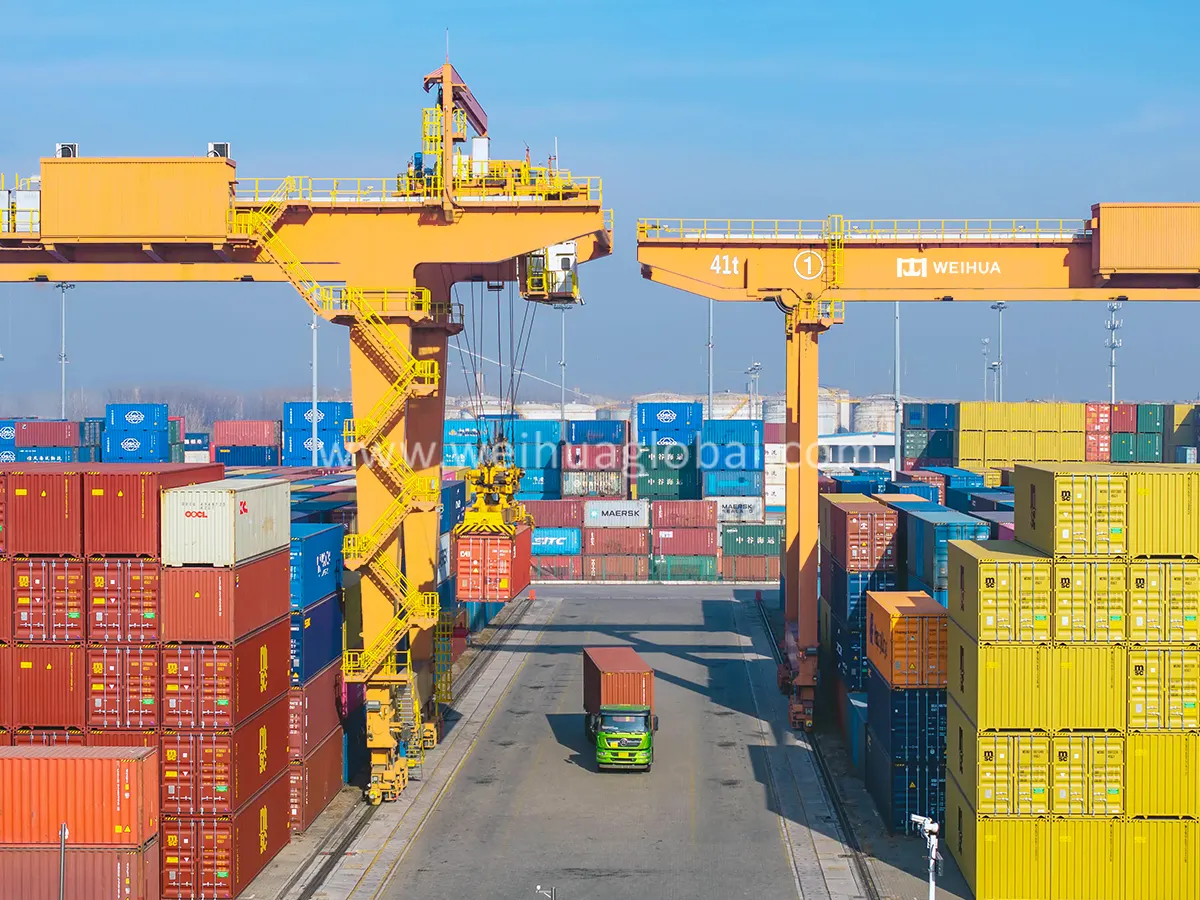
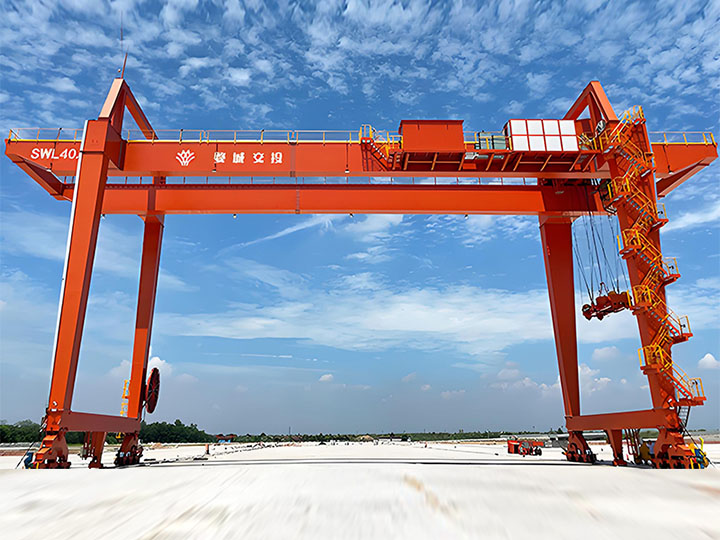
The RMG runs on fixed rails and suits terminals with a defined container yard and rail-transfer lanes. Its box or truss main beam is supported by rigid outriggers, and it can span multiple railway tracks.
Typical applications: inland container terminals, dry ports, railway container yards, intermodal logistics hubs.
[View Rail Mounted Gantry Crane] → https://www.weihuaglobal.com/product/rail-mounted-gantry-crane-manufacturer/
| Selection factor | RTG | RMG |
| Travel system | Rubber tyres | Fixed rails |
| Yard flexibility | Moves between yard blocks; adapts to changing layouts | Follows fixed rail routes |
| Infrastructure | Needs load-bearing yard pavement; no crane rails | Needs rail foundations and crane rails |
| Positioning | Steering and positioning systems | Rail-guided |
| Rail transfer | Possible, layout-dependent | Well suited; spans multiple tracks |
| Best fit | Flexible or phased yards, changing layouts | Fixed layouts, rail-connected terminals |
Choose an RTG when you need to move between yard blocks or the layout may change. Choose an RMG when the layout is fixed and rail-guided positioning and rail-to-yard transfer matter.
In our 40-ton inland terminal project in South America, an RMG was selected over a rubber-tyred alternative for its structural stability, lower long-term maintenance cost and rail-guided positioning in a fixed terminal layout.
For a deeper comparison, read our guide: RTG vs RMG Crane: Difference and Selection Guide.
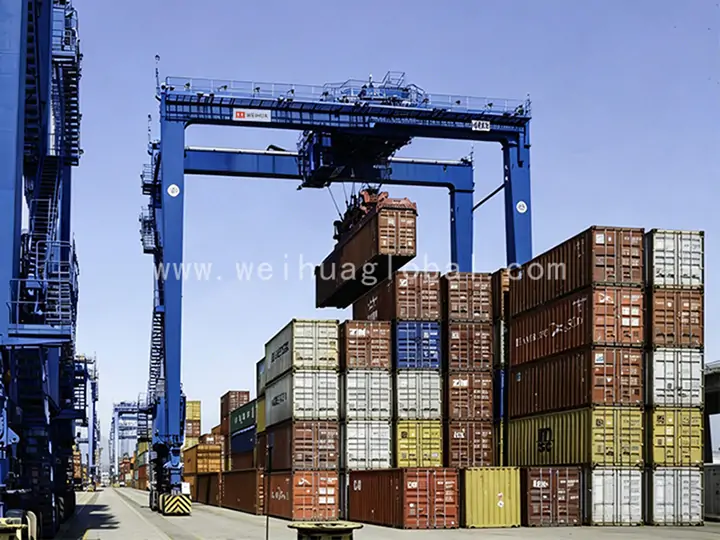
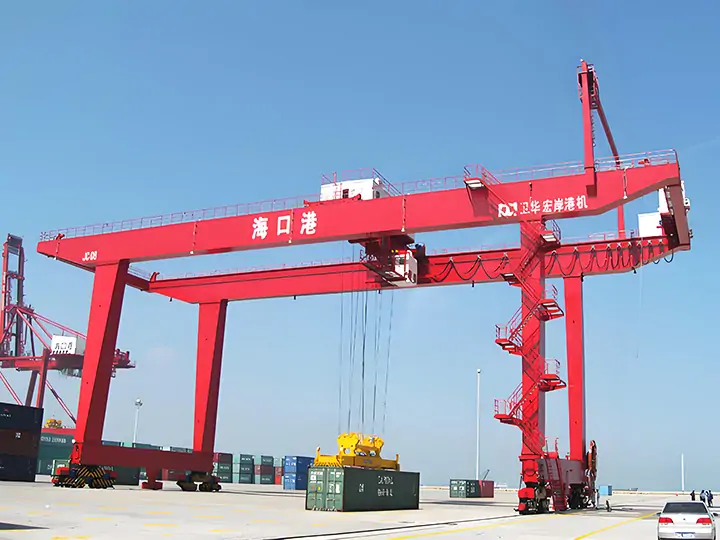
RMG Crane
| Your situation | Suggested crane |
| Yard layout may change; you want to avoid rail foundations | RTG |
| Fixed container block with defined travel lanes | RMG |
| Rail-to-yard container transfer at a dry port or rail terminal | RMG |
| You need to move between several yard blocks | RTG |
| You are planning remote operation or automation upgrades | RMG |
The crane positions itself over the target container by gantry travel and trolley travel. The spreader locks onto the container's corner castings and lifts it to a safe height. The crane then moves the container to the stack, truck or rail wagon and lowers it into place, and returns for the next cycle.
Three numbers decide the crane: the heaviest container, the number of rows, and the stack height.
| Parameter | 35 t | 41 t | 70 t |
| Rated lifting capacity (t) | 35 | 41 | 70 |
| Base distance (m) | 7 | 7 | 7.5 |
| Span (m) | 23.47 / 26 | 23.47 / 26 | 23.47 / 26 |
| Lifting height (m) | 15.5 / 18.5 | 15.5 / 18.5 | 15.5 / 18.5 |
| Stack layers | 4 / 5 | 4 / 5 | 4 / 5 |
| Container specification | 20', 40', 45' | 20', 40', 45' | 20', 40', 45' |
| Hoisting speed, full / empty (m/min) | 20 / 40 | 25 / 50 | 25 / 50 |
| Trolley travelling (m/min) | 70 | 70 | 70 |
| Wheel numbers | 8 | 8 / 16 | 16 |
| Power supply | Diesel generator set or three-phase AC 380 V 50 Hz |
Ambient temperature: -10 °C to 50 °C.
| Parameter | 30.5 t | 35 t | 40.5 t | 50 t |
| Capacity under spreader (t) | 30.5 | 35 | 40.5 | 50 |
| Working duty | A6 | A6 | A6 | A6 |
| Span (m) | 35 | 35 | 35 | 35 |
| Base (m) | 16 | 16 | 16 | 16 |
| Lifting height (m) | 15.4 | 15.4 | 18.3 | 18.3 |
| Hoisting speed, full load (m/min) | 12 | 12 | 18 | 18 |
| Trolley travelling (m/min) | 60 | 60 | 70 | 70 |
| Gantry travelling (m/min) | 45 | 45 | 45 | 45 |
| Crane rail | P50 | P50 | P50 | QU80 |
| Power supply | Three-phase AC 50 Hz 380 V |
The tables above are for reference. Span, lifting height, cantilever arrangement and power supply are matched to your project.
For terminals that need a machine that carries and stacks containers without a fixed gantry, Weihua also supplies the Container Straddle Carrier. For quay-side handling, see our Ship to Shore Quay Crane and the full Port Cranes range.
[View All Cases] → https://www.weihuaglobal.com/case/
A container yard crane should be configured around your yard, not selected by rated capacity alone. Send us the following and our engineers will recommend a crane configuration:
Henan Weihua Heavy Machinery Co., Ltd. (Weihua Group), based in Changyuan City, Henan, China, has manufactured cranes since 1988 and exports to more than 170 countries and regions.
For installation, commissioning and after-sales support, see our Service page.
A container yard gantry crane is lifting equipment that stacks, retrieves and transfers shipping containers in a port, dry port, rail terminal or logistics yard. The two main types are the RTG, which travels on rubber tyres, and the RMG, which travels on fixed rails.
An RTG moves between yard blocks on tyres and needs no crane rails, so it suits flexible yards. An RMG runs on fixed rails with rail-guided positioning, so it suits fixed-layout terminals and rail transfer. The right choice depends on your yard layout, infrastructure and operating needs.
Our RTG covers 35–70 ton, with 23.47 m or 26 m span and 15.5 m or 18.5 m lifting height. Our RMG covers 30.5–50 ton, with a 35 m reference span and 12.5–18.3 m lifting height. Spans and heights are matched to your yard layout.
The RTG runs on a diesel generator set or three-phase AC 380 V 50 Hz power. The RMG runs on three-phase AC 380 V 50 Hz power. Tell us your site power conditions when you inquire.
Send the crane type (if known), container sizes and maximum gross weight, container rows or rail layout, required stacking height, power supply, and your yard drawing if available.
Planning a new container yard, upgrading an inland terminal or replacing handling equipment? Send us your project requirements and our team will recommend an RTG or RMG configuration. We will reply within 24 hours.
Please feel free to leave a message. We will reply in 24 hours.
Submit Request
