
Industry News
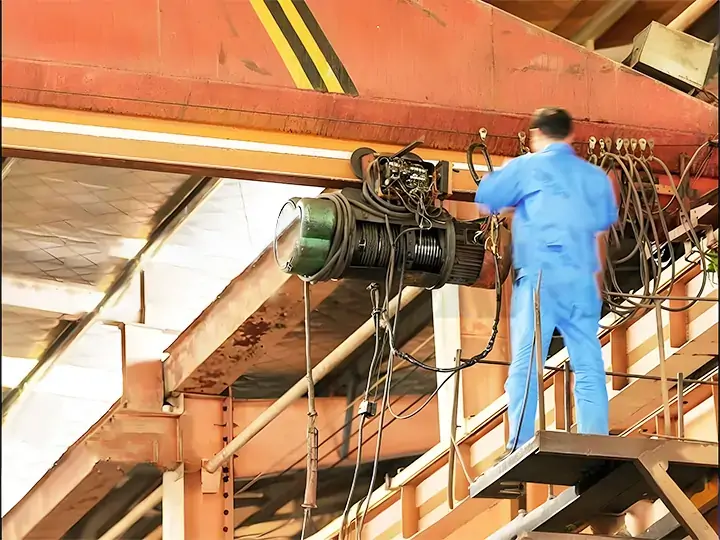
Overhead cranes are commonly used material handling equipment in factories, warehouses, ports, and other locations, capable of efficiently lifting and moving heavy loads. However, like any mechanical system, overhead cranes are subject to wear and tear, leading to malfunctions and operational problems. Regular maintenance is crucial for maintaining the durability and optimal performance of overhead cranes. This article will explore some valuable maintenance tips to help you keep your overhead crane in top condition.
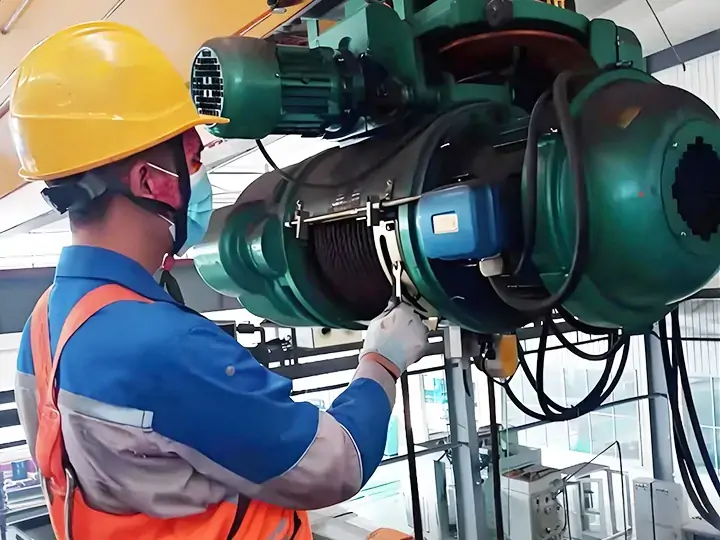
Daily pre-operation checks: Inspect for visible damage, test brakes and limit switches, check the condition of the wire ropes, and verify the control system.
Monthly routine maintenance: Inspect wheels, pulleys, and structural components, confirm lubrication status, and check electrical wiring and connections.
Annual comprehensive overhaul: A thorough inspection by professional personnel, in-depth assessment of critical components, and load testing to ensure compliance with safety standards.
Maintenance in case of abnormalities: If the equipment exhibits abnormal noises, vibrations, brake failure, or other unusual conditions, operation should be stopped immediately, and the equipment should be inspected by qualified technicians.
| Inspection Item | Check Points | Acceptable Standard | Result (√/×) | Remarks |
| 1. Work Area | Clearance of operating path | Path clear of obstacles | ||
| 2. Steel Structure | Visual check for deformation/cracks | No visible damage | ||
| 3. Hook Assembly | 1. Hook body cracks 2. Safety latch 3. Rotation | No cracks, latch intact, rotates smoothly | ||
| 4. Wire Rope/Chain | Broken wires, kinks, wear | No broken wires, no kinks | ||
| 5. Brakes | No-load brake test | Responsive, no slipping | ||
| 6. Safety Devices | 1. Emergency stop 2. Limit switches 3. Alarm | All functional | ||
| 7. Electrical System | 1. Controller operation 2. Cables/power rails | Keys responsive, cables intact | ||
| 8. Runway Rails | Cleanliness check | Free of debris/oil | ||
| 9. Lubrication | Daily lubrication points | Properly lubricated | ||
| Inspector | Date | Signature |
| Inspection Item | Check Points | Acceptable Standard | Result | Action Taken |
| 1. Structural Connections | Main/end girder bolts | Bolts tight | ||
| 2. Wheel Assembly | 1. Flange wear 2. Wheel cracks | Within limits, no cracks | ||
| 3. Runway Rails | 1. Rail clamps 2. Rail joints | Clamps tight, joints normal | ||
| 4. Drive System | 1. Gearbox leaks 2. Couplings 3. Gear mesh | No leaks, connections good | ||
| 5. Brake System | 1. Lining thickness 2. Brake drum surface | Thickness OK, surface clean | ||
| 6. Electrical System | 1. Control panel cleaning 2. Contactor contacts 3. Terminals | Clean, contacts good, terminals tight | ||
| 7. Wire Rope | Diameter measurement | Within wear limits | ||
| 8. Hook | Critical section inspection | No cracks/deformation | ||
| 9. Complete Lubrication | Per lubrication chart | All points lubricated | ||
| Maintained By | Date | Signature |
| Inspection Item | Check Points | Test Method | Acceptable Standard | Result |
| 1. NDT Testing | Critical welds (girders) | Ultrasonic/Magnetic Particle | No cracks/defects | |
| 2. Structural Deformation | 1. Girder camber 2. Girder side bend | Precision measurement | Meets national standards | |
| 3. Corrosion Check | Overall corrosion | Visual + thickness gauge | Within limits | |
| 4. Gearbox Inspection | Gear/bearing wear | Open inspection | Wear within tolerance | |
| 5. Wheels & Rails | 1. Wheel alignment 2. Rail gauge/level | Precision measurement | Meets installation specs | |
| 6. Sheaves & Drums | Groove wear, wall thickness | Measurement | Within wear limits | |
| 7. Electrical System | 1. Motor insulation 2. Safety device calibration | Instrument testing | Meets code requirements | |
| 8. Load Testing | 1. No-load test 2. Rated load test 3. Static test (125%) 4. Dynamic test (110%) | Actual load testing | All performance达标 | |
| 9. Corrosion Protection | Complete painting | Visual inspection | Coating complete/even | |
| 10. Documentation | Complete test report | Document review | Complete and accurate | |
| Inspection Agency | Date | Approved By |
| Trigger Condition | Immediate Checks | Required Actions |
| Abnormal Noise/Vibration | 1. Drive components 2. Structural connections | Stop immediately, tag out, report for repair |
| Brake Failure/Slipping | 1. Brake mechanism 2. Control system | Do NOT use, repair immediately |
| Wire Rope Issues | 1. Broken wires 2. Diameter reduction | Replace defective rope |
| Electrical Faults | 1. Circuit breakers 2. Wiring connections | Power off, professional repair |
| Rail Problems | 1. Rail alignment 2. Wheel wear | Adjust rails, replace wheels |
| Leakage | Hydraulic/oil/air systems | Locate source, repair |
Inspection Frequency:
Daily: Before each shift
Monthly: Once per month
Annual: Yearly (or as required by regulations)
Result Handling:
√: Acceptable, normal operation
×: Unacceptable, immediate action required
All unacceptable items must be corrected and rechecked
Record Keeping:
All inspection records: Minimum 3 years
Annual inspection reports: Permanent retention
Personnel Requirements:
Daily: Certified crane operator
Monthly: Qualified maintenance technician
Annual: Certified inspection agency
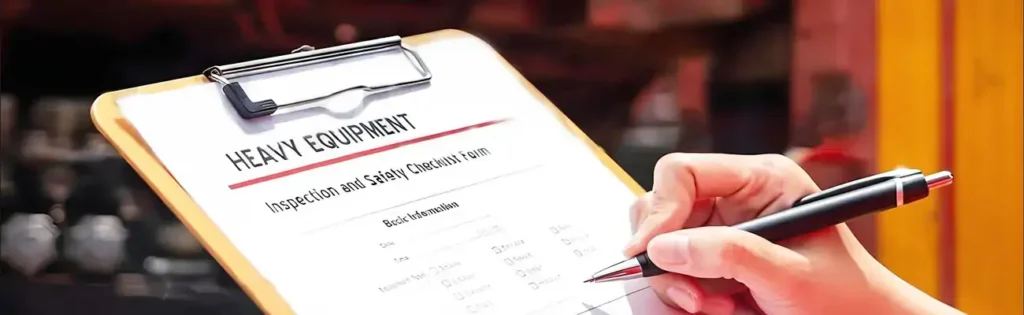
Standardized regular maintenance and inspections are essential for the long-term safe and efficient operation of overhead cranes. We recommend that you download and save this bridge crane maintenance form and post it in the equipment control room for daily maintenance and inspection work.
If you encounter any problems during crane maintenance, the Weihua Group technical team is always a reliable source of support. We use our professional expertise to assist you and work together to ensure the stable operation of your equipment.
Q1: How often should an overhead crane be maintained?
Daily inspection: Performed by the operator before each shift; Monthly maintenance: Performed monthly by professional maintenance personnel; Annual comprehensive inspection: Performed annually by a qualified inspection agency.
Q2: What are the main purposes of maintenance?
Preventing accidents, protecting personnel and equipment safety; Reducing downtime and extending service life; Meeting OSHA and other regulatory requirements to avoid penalties.
Q3: Which components require priority inspection?
Six core components: Load-bearing components: wire ropes/chains, hooks; Safety devices: limit switches, brakes, emergency stop devices; Structural components: main beam, end beam, track; Transmission system: reducer, coupling, wheels; Electrical system: controller, cables, safety circuit; Lubrication system: condition of all lubrication points.
Q4: Who should be responsible for the daily inspection of the crane?
Daily inspection: Certified crane operator; Monthly maintenance: Factory maintenance technicians; Annual inspection: Qualified third-party inspection agency; Special maintenance: Manufacturer or professional maintenance company.
Q5: How should maintenance records be managed?
Daily records: Filled out by the operator, reviewed by the team leader.
Monthly archives: Compiled by the maintenance department, kept for 1 year.
Annual report: Issued by the inspection agency, permanently archived.
Electronic backup: A digital management system is recommended.
Submit Request
