
Новости
The price of two 10-ton gantry cranes can differ by 40-60%. The true value lies in the working class, component quality, safety certifications, and total cost of ownership. Understanding these factors will help you make a wise investment, rather than simply choosing the lowest bid.
The working class of a gantry crane determines its operating intensity. FEM classifications range from M1 (occasional use) to M8 (continuous heavy-duty use). An M5 class 10-ton gantry crane is 25-35% more expensive than an M3 class one due to the need for reinforced components and higher-quality motors.
CMAA Service Class Impact:
| Grade | Daily Usage Duration | Приложение | Price Impact |
| A | <2 hours | Обслуживание | Baseline |
| C | 3-5 hours | Machining | +15-25% |
| D | 8+ hours | Manufacturing | +30-45% |
| F | 24 hours | Steel Mill | +55-75% |
Gantry cranes used in steel mills require M6-M8 class specifications. For warehouses, M3-M4 class gantry cranes are sufficient. Class D gantry cranes require motors with a 60% duty cycle, while Class B cranes only require 25%. Matching the duty cycle to actual usage prevents over-investment and premature failure.
1. Gantry Crane Drive System and Structure
The lifting drive system accounts for 30-40% of the total cost. High-quality gantry crane manufacturers use hardened alloy gears (tolerance <0.01mm), while economical manufacturers use standard steel. European gearboxes are 40-50% more expensive, but have a lifespan of 15-20 years, compared to only 8-10 years for general alternatives.
High-quality gantry crane manufacturers use Q345B high-strength steel for the main beam (yield strength 345 MPa). Economical manufacturers use Q235B (235 MPa), requiring thicker sections and increasing self-weight. IE3 motors save $500-1,500 in electricity costs annually on a 10-ton gantry crane operating 8 hours a day.
2. Gantry Crane Control System
A VFD system with PLC is $3,000-15,000 more expensive than a basic contactor system, but provides smooth operation, precise positioning, and 15-25% energy savings through energy recovery during lowering.
Сертификация CE (Machinery Directive 2006/42/EC), EAC, and OSHA/ASME compliance increase the cost of gantry cranes by 8-15%, but ensure legal operation and insurance validity.
Advanced safety systems include:
- Electronic weighing sensors (0.5-1% accuracy) to prevent overload
- Anti-collision sensors ($2,000-$8,000) to eliminate damage
- Load sway control and positioning, increasing the base cost by 10-20%
Gantry cranes used in foundries require the addition of heat-resistant components, increasing the cost by 15-25%. If the gantry crane is used in a hazardous environment, adding an explosion-proof system will increase the cost by 30-50%.
Suitable for light to medium material handling, with a span of 10-35 meters. Features a box-type main girder structure and is equipped with an electric hoist or chain hoist. Ideal for warehousing, logistics, and small manufacturing workshops. Offers low initial investment and easy maintenance, making it an ideal choice for M3-M4 duty cycles.
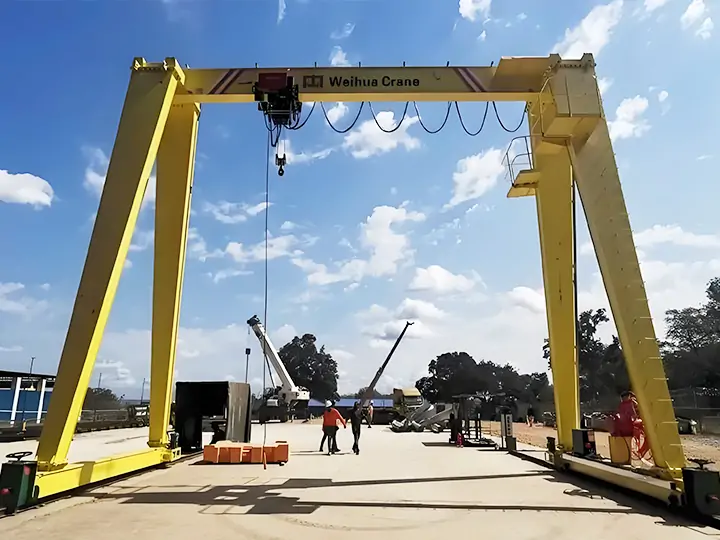
Козловой кран MH с однобалочной конструкцией
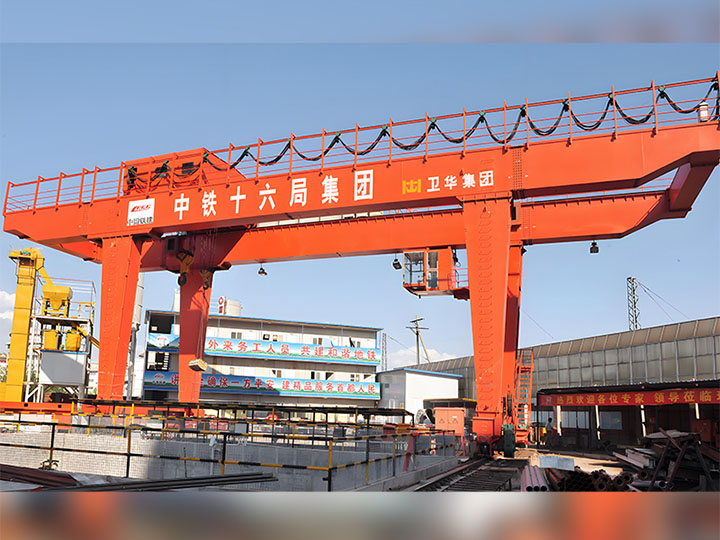
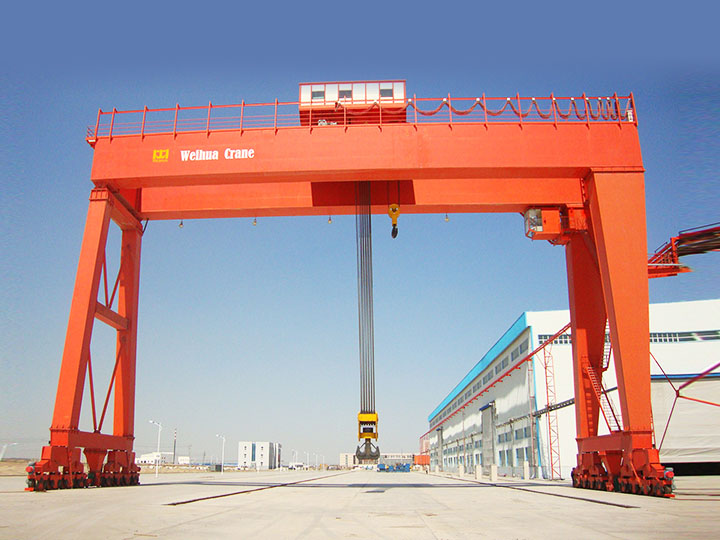
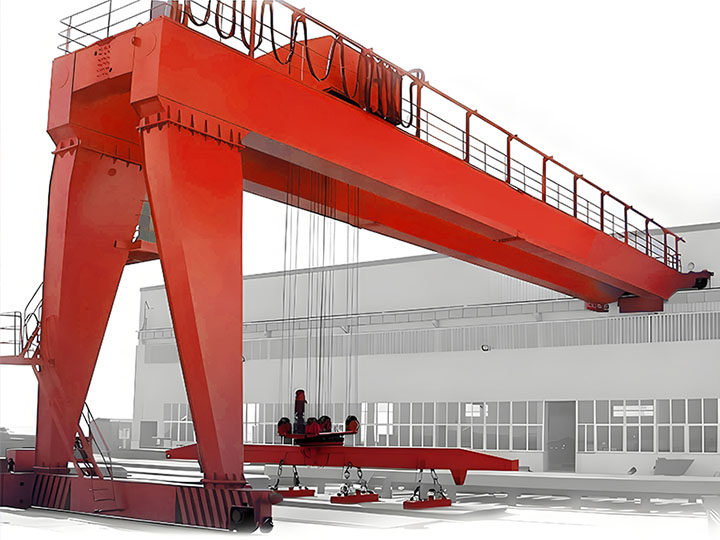
Standard configuration for heavy-duty applications, with spans up to 35-50 meters. The main girder uses Q345B steel and is equipped with a VFD control system and precise positioning functions. Suitable for M5-M8 duty cycle environments such as steel processing, heavy machinery manufacturing, and shipyards. Provides greater lifting height and more stable load control.
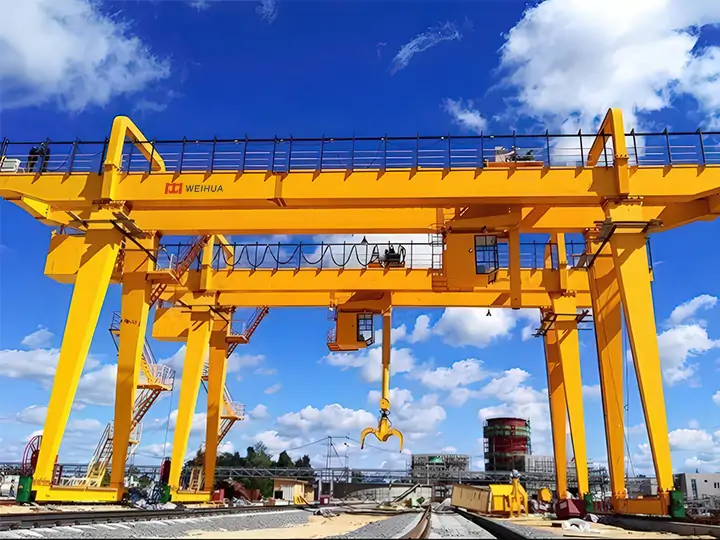
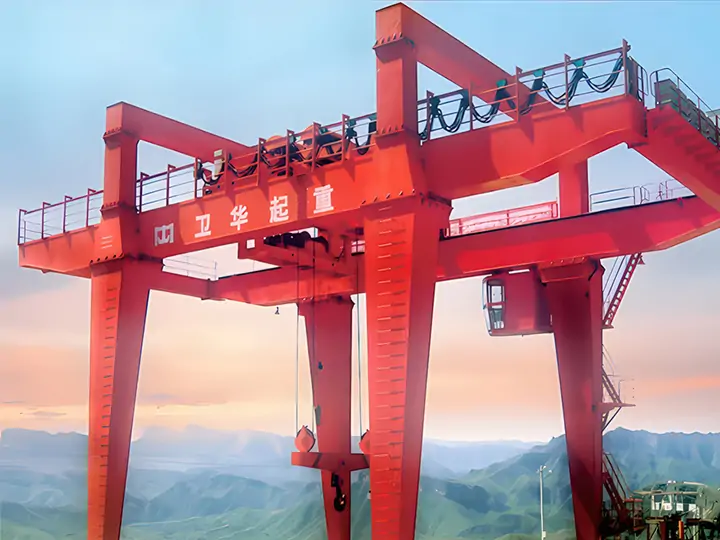

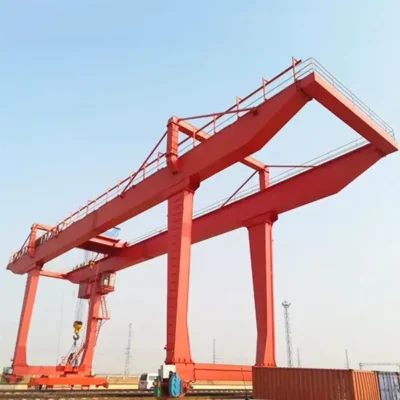
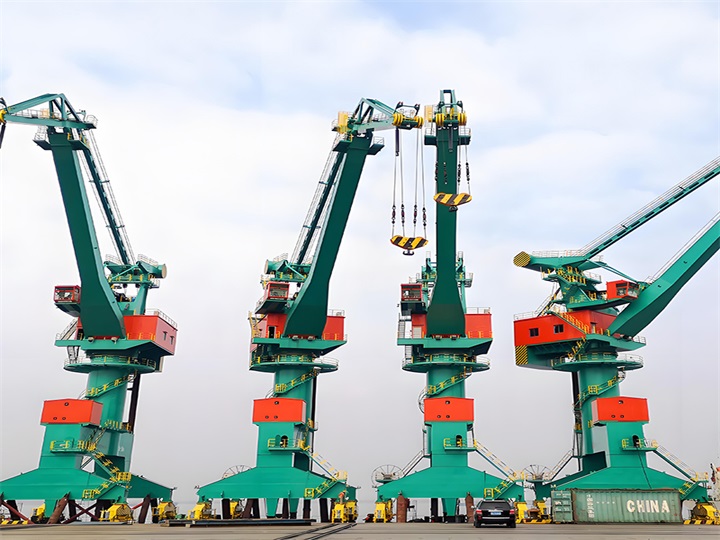
Designed specifically for ports and logistics centers, with wheeled and rail-mounted travel mechanisms for flexible scheduling. Lifting capacity is typically 40-65 tons, covering a span of 6-8 container widths. Equipped with an anti-sway system, precise positioning technology, and container spreaders. Requires corrosion protection treatment (+20-30% cost) and high-reliability components to support 24-hour continuous operation.
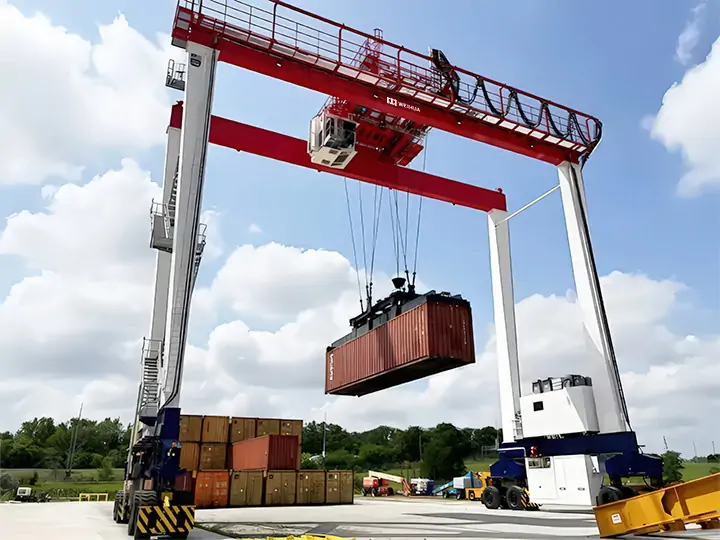
RTG Container Gantry Crane
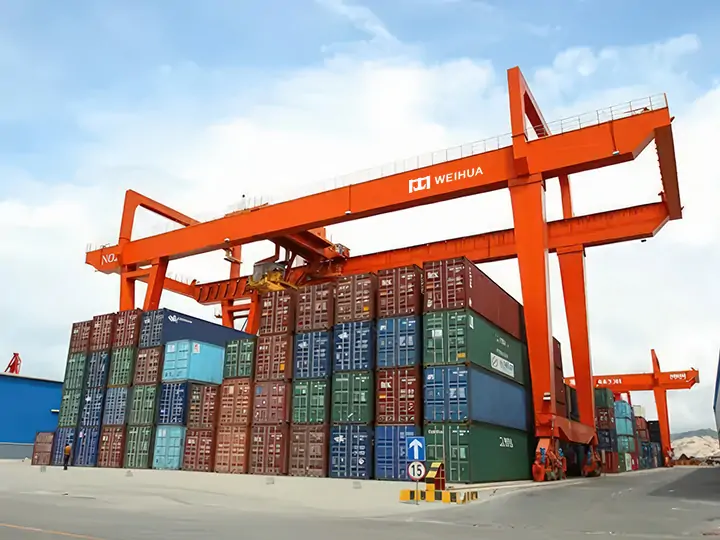
RMG Container Gantry Crane
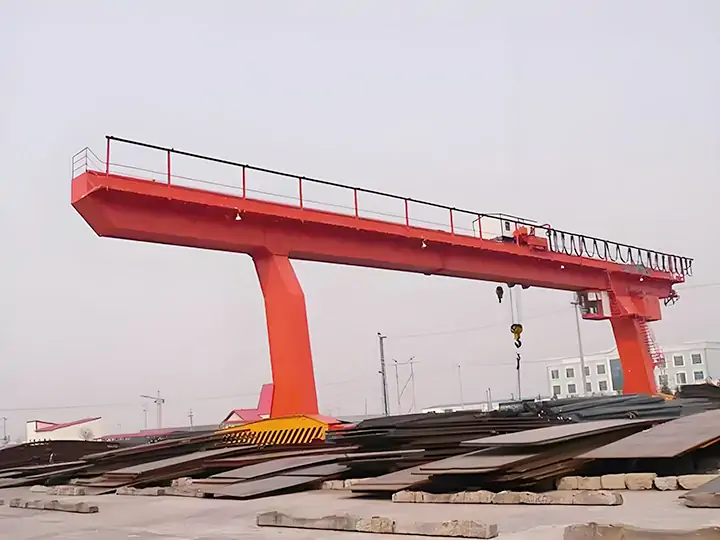
One side runs on ground rails, while the other side runs along factory columns or wall rails. Saves space and infrastructure investment, especially suitable for renovation projects of existing buildings. Spans 10-30 meters, lifting capacity 5-50 tons. Rail height and span configuration need to be customized according to site conditions.
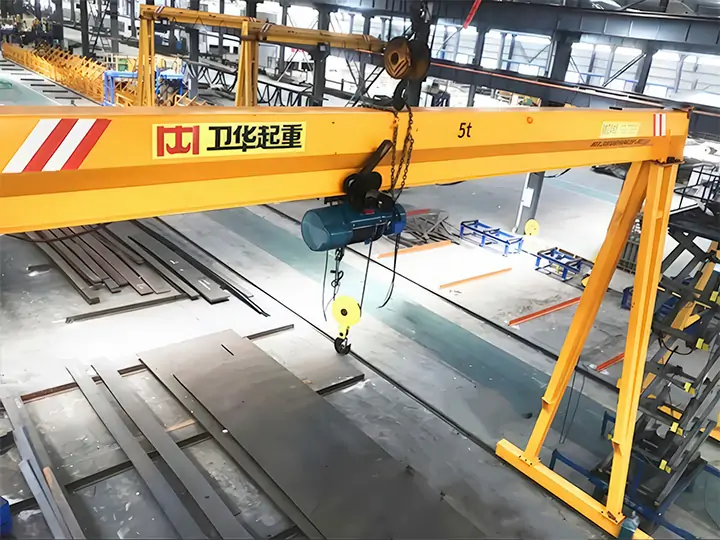
Однобалочный полукозловой кран BMH
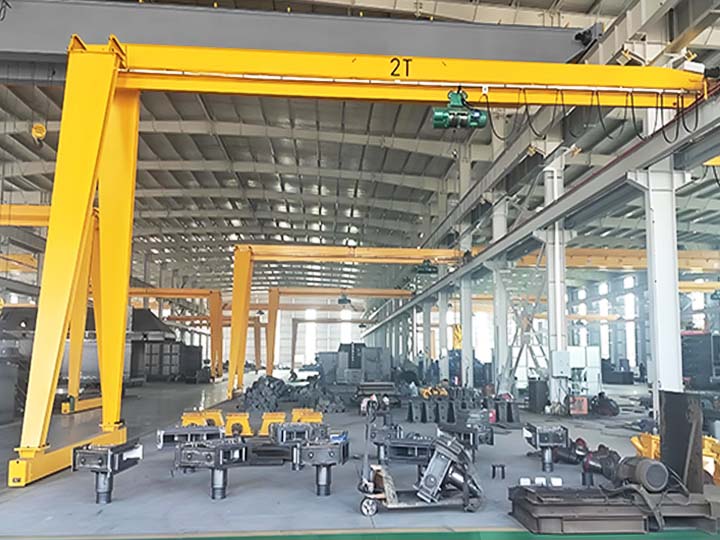
Uses a truss-type main girder structure, which is 15-25% lighter than box-type girders, suitable for large spans (40-60 meters). Commonly used in hydropower stations, large engineering projects, and shipyards. Although the manufacturing process is more complex (cost +10-15%), it offers high convenience in transportation and installation, resulting in good overall economic efficiency.
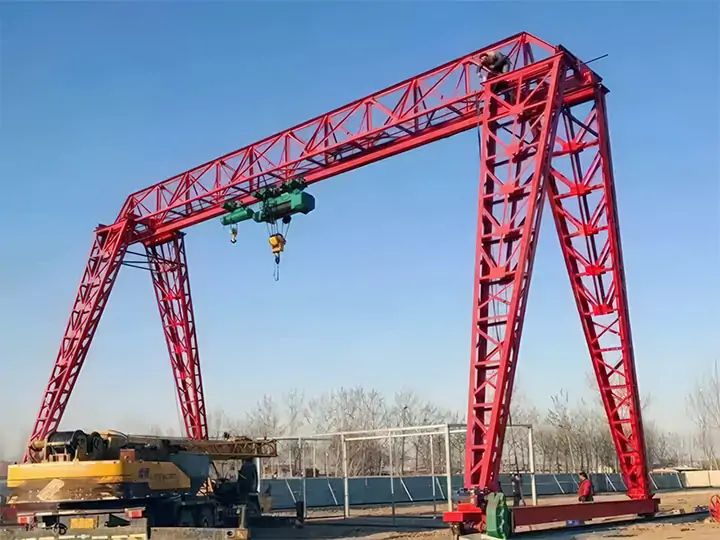
Козловой кран MH с однобалочной ферменной конструкцией
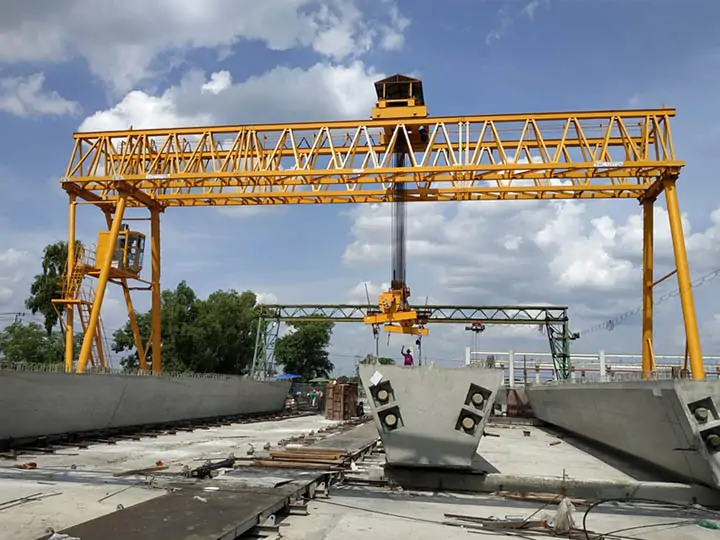
Windproof and anti-overturning devices (+$5,000-15,000), all-weather operation protection, automation integration (+25-40%), anti-corrosion treatment (+20-30%). Marine environments require special coatings and stainless steel components, and AGV docking and remote monitoring systems improve operational efficiency.
High-temperature environment adaptation (+15-25%) including heat-resistant cables and forced cooling systems, dustproof and explosion-proof configurations (+18-28%), casting-specific lifting devices ($8,000-35,000), and heavy-duty reinforced structures. Dual braking systems ensure the safe handling of molten metal.
Detachable transport design facilitates construction in mountainous areas, variable span adjustment (+12-18%) adapts to different construction phases, temporary installation foundations enable rapid deployment, and high-altitude adaptation configurations include motor power compensation and low-temperature starting devices.
Explosion-proof certification ATEX/IECEx (+30-50%), corrosion-resistant 316 stainless steel structure (+35-60%), leak-proof sealing system, and electrostatic discharge grounding device. Meets the strict safety requirements for operation in hazardous areas.
Large-span truss design (50-80 meters), multi-gantry crane synchronous control (+$20,000-60,000), precision positioning system (±5mm accuracy), and special lifting devices including vacuum suction cups and ship plate turning devices.
Price Comparison of Basic vs. Customized Configurations (50-ton Double Girder Gantry Crane):
Standard General Purpose: $50,000 - $110,000 (M4 duty cycle, basic safety features);
Port Container Type: $110,000 - $200,000 (corrosion protection + automation + windproof device);
Metallurgical Casting Type: $75,000 - $130,000 (high temperature resistance + dustproof + special lifting tools);
Explosion-proof Chemical Type: $80,000 - $150,000 (ATEX certification + stainless steel + sealing system);
Shipbuilding Large Span Type: $120,000 - $200,000 (truss structure + synchronous control + precise positioning).
Choosing the appropriate gantry crane type and customized configuration requires comprehensive consideration of actual working conditions, usage frequency, environmental conditions, and future expansion needs. Weihua's technical team can provide the most cost-effective solution based on your specific application scenario, avoiding over-configuration or under-configuration.
Installation and Maintenance: Modular design reduces installation time by 20-30%. Well-designed gantry cranes allow for motor replacement in 2-3 hours, while poorly designed ones require 8-12 hours. Standard components from reputable suppliers avoid the 40-60% price premium of proprietary parts.
Manufacturer Support: Local service centers provide next-day response, while remote suppliers require 3-7 days. Extended warranties of 24-36 months on major components demonstrate manufacturing confidence and reduce buyer risk.
The 10-year total cost analysis includes gantry crane purchase, installation, energy, maintenance, repair, and downtime impact. A high-quality gantry crane with a 35% higher initial cost can achieve a 15-20% lower total cost of ownership through higher efficiency and reliability, with a typical payback period of 3-4 years. Key requirements matching elements:
Weihua recommends using a TCO (Total Cost of Ownership) analysis tool for comprehensive evaluation, choosing the solution with the best overall cost-effectiveness rather than simply the lowest price.
Weihua Group is a renowned Chinese gantry crane manufacturer, and we understand the true value behind price differences. We don't pursue the lowest price; instead, we provide our customers with solutions that offer the optimal total cost of ownership (TCO) over the entire lifecycle.
With our global service network, we provide next-day response support and a 24-36 month extended warranty. From needs assessment and 10-year TCO analysis to customized design and installation and commissioning, the Weihua team provides one-stop service to help you avoid over-investment and maximize long-term value.
Whether you need customized gantry crane solutions, technical consultation, or project planning, the Weihua team is always ready to serve you with professionalism, efficiency, and responsibility. We not only provide equipment but also offer strong support for your long-term operational success.
Feel free to contact us anytime, and let our engineers tailor a truly valuable gantry crane solution for you!
Бесплатное предложение сейчасA: Prices typically range from $15,000 to $35,000, depending on the duty cycle, span, and specifications. A Class C crane for general manufacturing costs $15,000-$28,000, while heavy-duty Class D systems reach $35,000-$45,000. Installation adds $5,000-$15,000 depending on facility requirements.
A: The duty cycle classification (FEM/ISO rating) has the biggest impact. An M6 class crane costs 30-40% more than an equivalent M3 model due to reinforced components, higher-grade motors, and enhanced structural engineering required for intensive operation.
A: Chinese gantry cranes of similar tonnage are 30-50% cheaper than their European counterparts. However, there are significant differences in component quality, certifications, and service support. CE-certified Chinese crane manufacturers offer better value than uncertified suppliers, with prices 20-30% lower than European brands.
A: Variable frequency drives (VFDs) add $3,000-$9,000 to the cost of a gantry crane, depending on capacity. However, VFD systems reduce energy consumption by 15-25%, enable precise control, and extend the lifespan of mechanical components through smooth operation. The payback period is typically 2-4 years.
A: CE marking in Europe, EAC in Eurasia, and OSHA/ASME compliance in North America are essential requirements. These certifications ensure safety standards, legal operation, and insurance validity. Operating uncertified equipment creates liability risks and potential regulatory penalties.
A: A well-maintained crane with the appropriate duty cycle can operate effectively for 20-30 years. Lifespan depends on usage intensity, maintenance quality, and environmental conditions. Overused light-duty gantry cranes may fail within 8-10 years, while properly specified equipment exceeds its design life.
A: Installation complexity, operator training, spare parts availability, ease of maintenance, and energy efficiency significantly impact total cost. Annual maintenance typically accounts for 3-5% of the purchase price. Downtime caused by unreliable equipment often outweighs the price difference between economical and premium options.
A: Structural and duty cycle limitations prevent meaningful upgrades. Converting an M3 crane to M5 specifications requires replacing motors, gearboxes, brakes, and potentially reinforcing structural components. The cost typically exceeds 60-70% of the price of a new gantry crane, making replacement more economical.
A: Installation typically adds 25-40% to the equipment cost. Simple single-girder installations in prepared facilities cost 25-30%, while complex double-girder systems with new runway structures reach 35-40%. Challenging site access or specialized lifting further increases costs.
Дата:
Отправить запрос
