
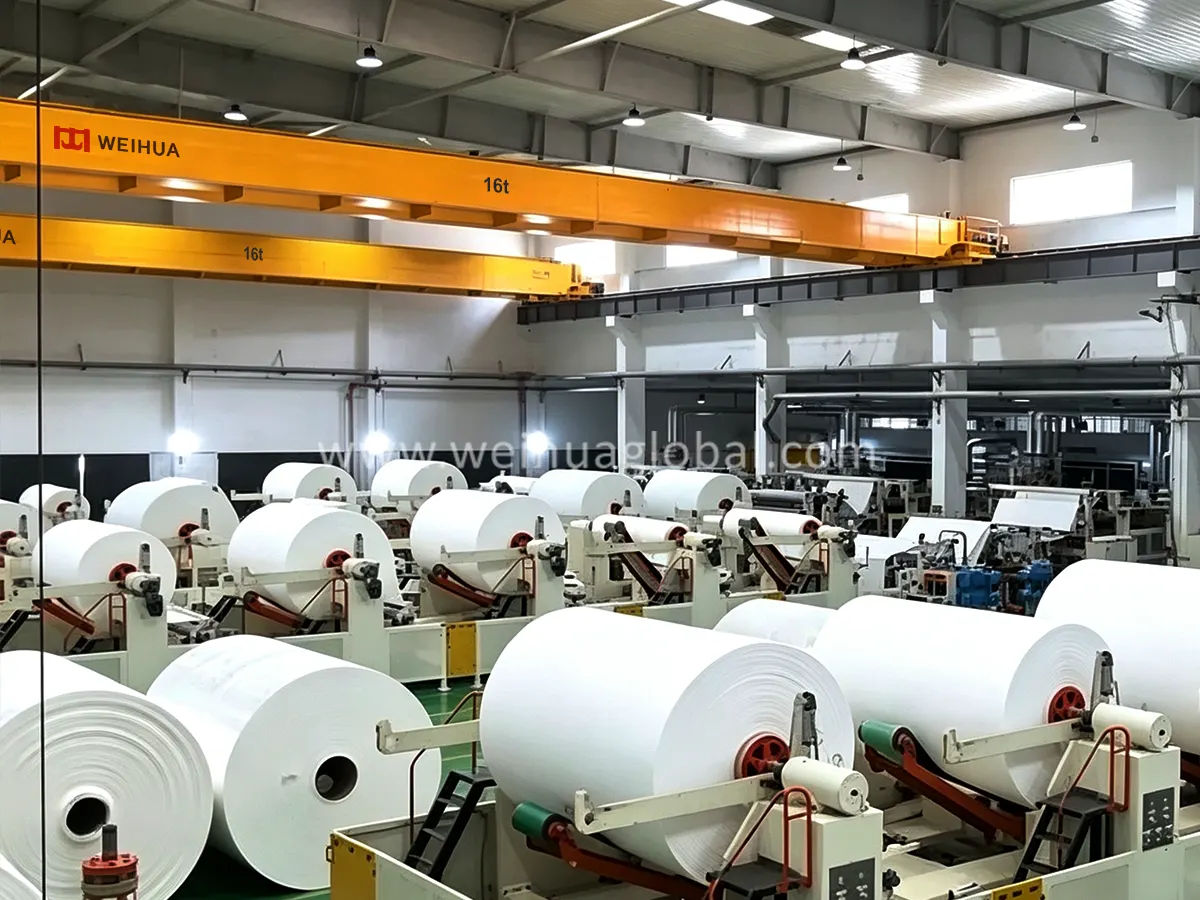
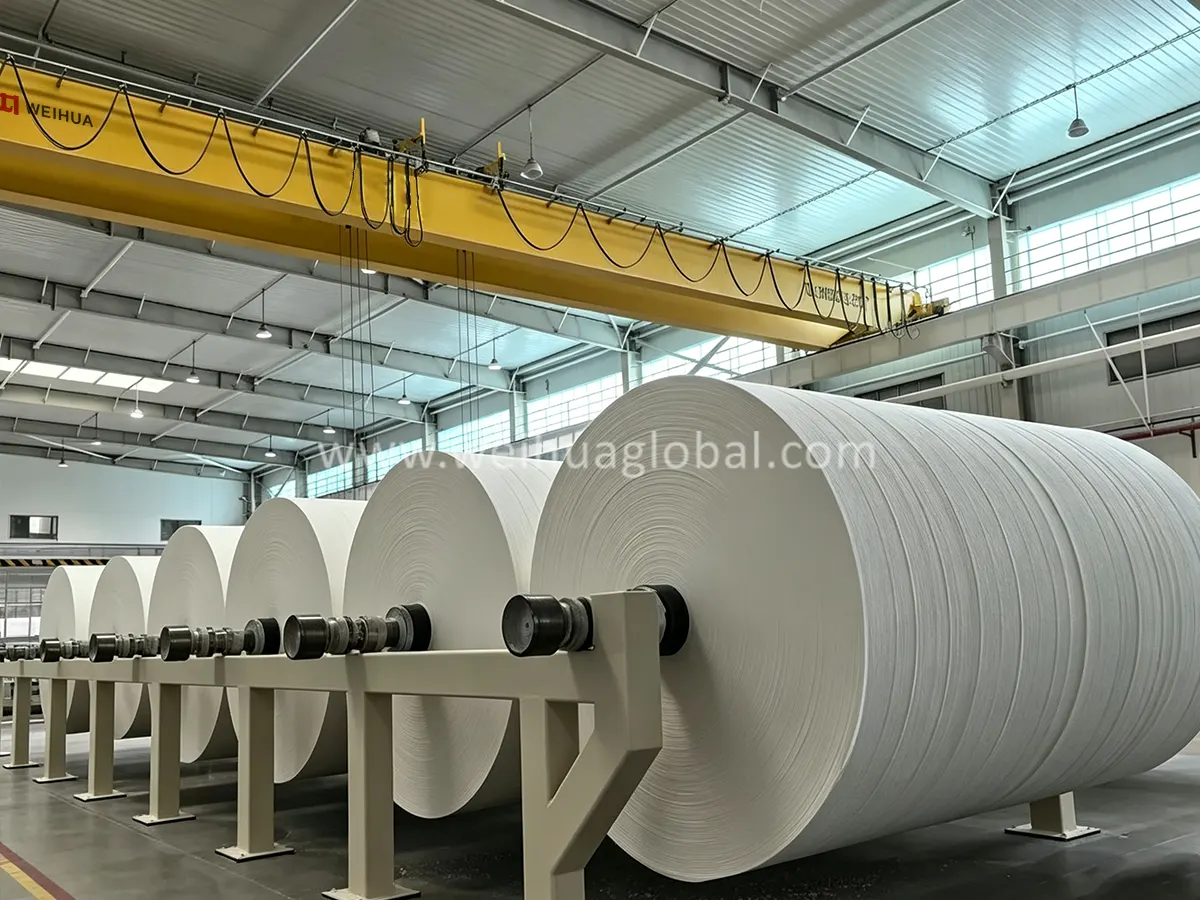
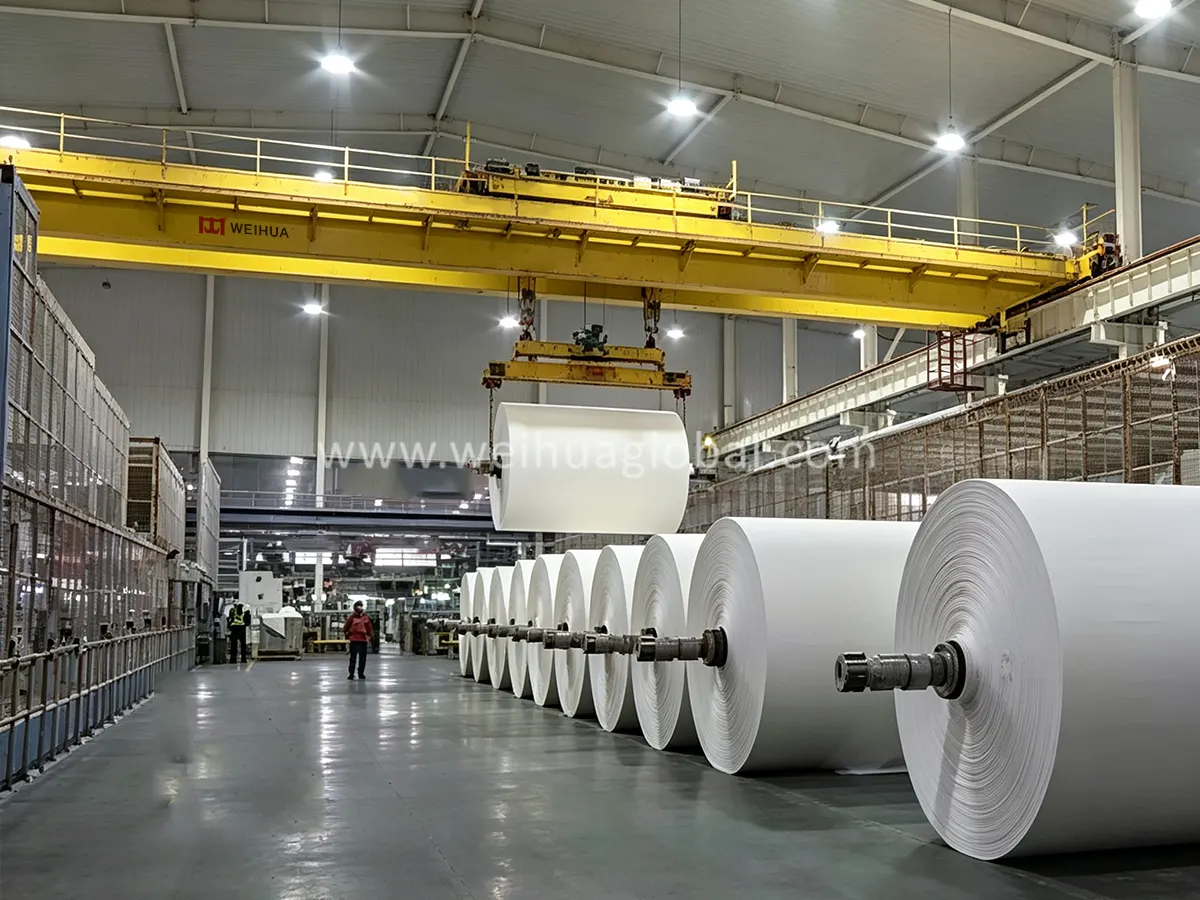
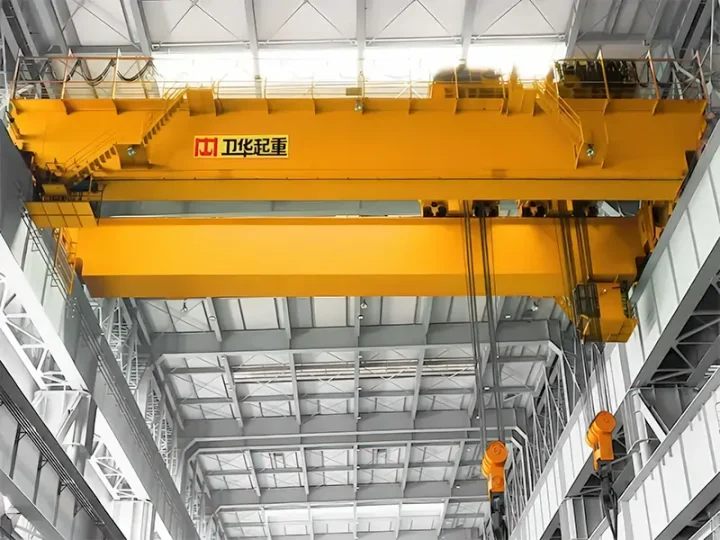
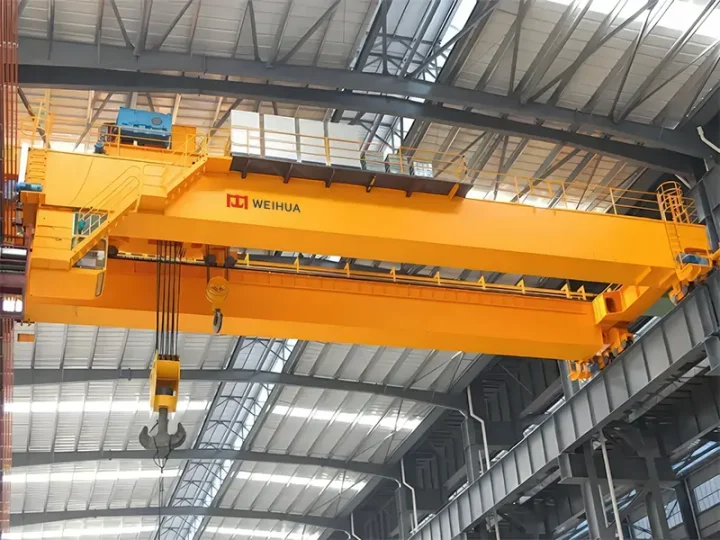
Weihua has exported a 16-ton double girder overhead crane to a paper mill in Australia. The crane lifts, transfers and positions heavy paper rolls between the storage area, the roll stands and the production line, giving the plant a smoother and more controlled material flow.
| Item | Details |
| Equipment | Double girder overhead crane (EOT crane) |
| Capacidade nominal | 16 t |
| Destino | Australia |
| Industry | Paper manufacturing |
| Aplicação | Paper roll lifting, transfer and positioning |
| Control | Wireless remote control and pendant |
Paper rolls are heavy, soft-edged and easy to damage. Shock, swing or an abrupt stop can deform the roll edge or mark the surface, which means lost material and rework. Rolls also have to be set down precisely on roll stands and at unwinding positions, often in tight rows.
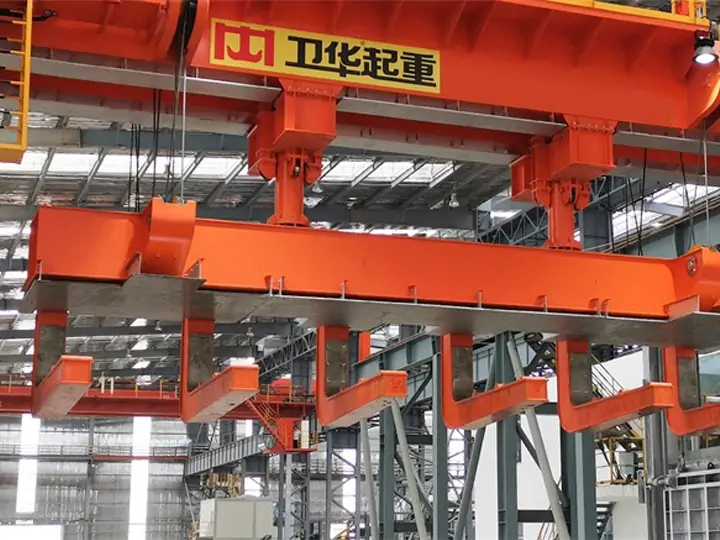
In this project, the crane serves the roll storage zone and the production area. The operator picks up a roll with a lifting beam, carries it along the bay and places it at the target position with minimal swing. Compared with forklifts, overhead handling keeps the aisles clear and lowers the risk of collisions between vehicles and people on the floor.
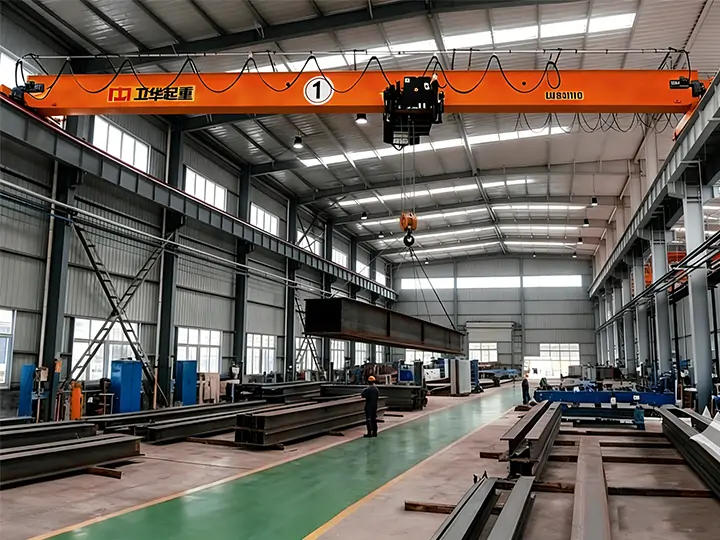
At 16 tons and continuous production duty, a double girder design has clear advantages:
| Fator | Viga dupla | Viga única |
| Typical capacity range | Suits 16 t and above well | Usually lighter loads |
| Hook height | Higher, more room for a lifting beam | More limited |
| Rigidity over long spans | Better | Lower |
| Duty suitability | Continuous, multi-shift operation | Light to medium duty |
| Walkway and maintenance access | Walkway along the girder | Limited |
| Custo inicial | Higher | Lower |
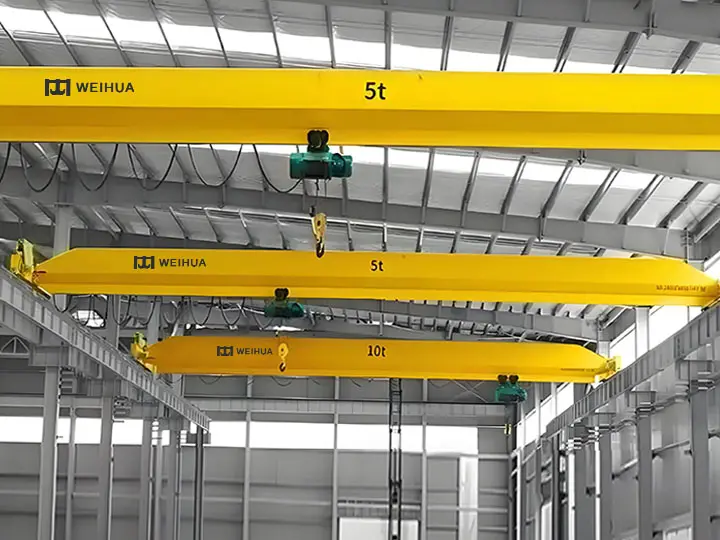
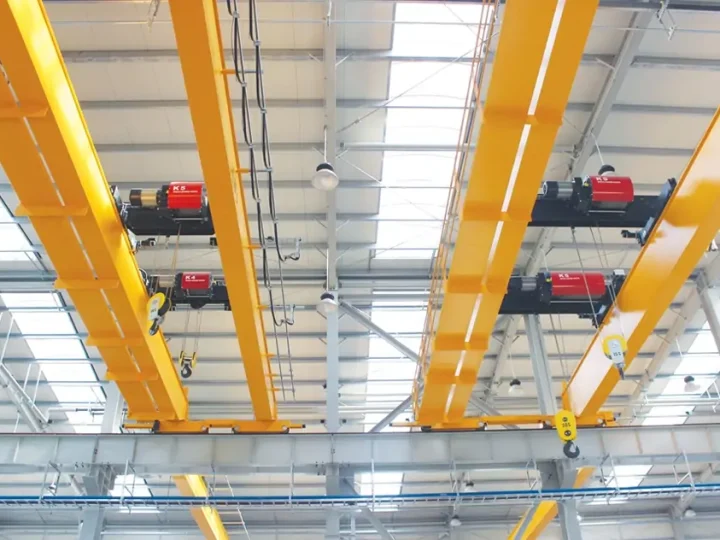
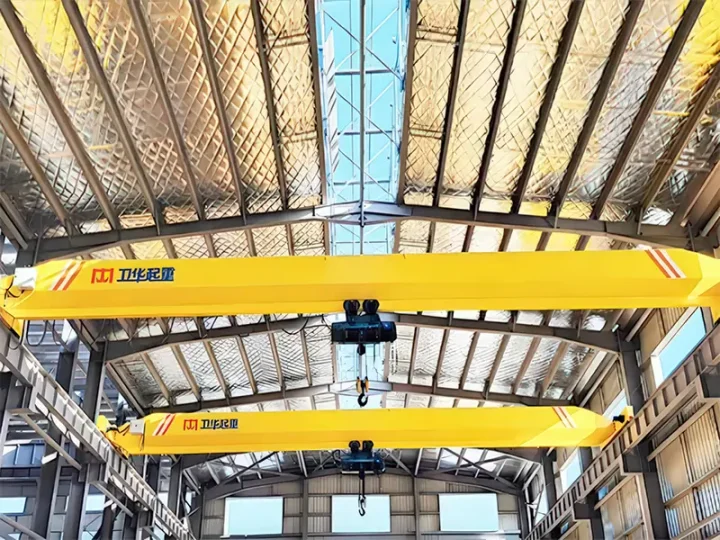
For a 16-ton load with a roll lifting beam and regular production use, a double girder crane is the more dependable choice. A single girder crane can suit lighter rolls, shorter spans and occasional handling.
| Parâmetro | Especificação |
| Capacidade nominal de elevação | 16 t |
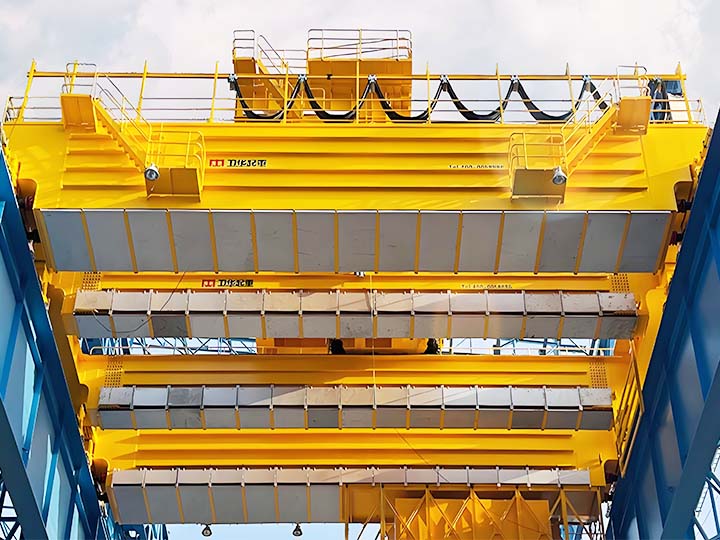
| Crane type | Double girder box-type overhead crane |
| Span | 22,5 m |
| Altura de elevação | 9 m |
| Duty class | A5 (FEM 3m / ISO M5) |
| Velocidade de elevação | 0.8–8 m/min, variable frequency |
| Velocidade de deslocação do carrinho | 2–20 m/min, variable frequency |
| Velocidade de deslocação da grua | 3–30 m/min, variable frequency |
| Método de controlo | Wireless remote control and pendant |
| Alimentação eléctrica | 415 V, 3-phase, 50 Hz |
| Lifting attachment | Lifting beam for paper rolls |
Variable frequency drives on the hoisting, trolley and crane travel motions give soft starting and stopping. This reduces load swing, protects the roll surface and makes fine positioning easier.
The main girders are welded box structures with internal diaphragms, designed to keep deflection within standard limits so the trolley runs steadily under full load.
The open-winch trolley carries the hoist, wire rope and hook block. Matched motor, reducer and brake components provide stable lifting and dependable braking.
The operator can control the crane by wireless remote while walking beside the load, keeping a clear view of the roll, the stand and nearby staff. A pendant serves as a backup.
The crane is only one part of the handling system. The attachment decides how safely a roll is picked up:
The right choice depends on roll diameter, core size, weight and how rolls are stored. It should be confirmed together with the crane's rated capacity and hook height.
The crane is equipped with the protection functions expected in a busy production area:
Paper mills often have high humidity, fine paper dust and continuous operation. A simple routine keeps the crane reliable:
Follow the operation manual and local safety regulations for inspection intervals.
If you are planning a similar project, confirm these points before choosing a crane:
Weihua supplies general assembly drawings, runway and electrical requirements, and an operation and maintenance manual, and can provide remote guidance for installation and commissioning.
A double girder overhead crane with variable frequency drives and a purpose-built lifting beam is a common choice. It combines rigidity, smooth motion and enough capacity for frequent operation.
Variable frequency drives allow soft starting and stopping. This reduces swing and shock, which protects the roll edges and makes precise placement easier.
Span follows the distance between runway rails. Lifting height depends on the roll diameter, the lifting beam height and the highest stacking level. Give your building drawing to the crane supplier so both can be checked together.
Yes, if the lifting attachment is designed for the roll range. Adjustable core shafts or interchangeable attachments help handle different diameters and widths.
Many paper mills choose A5 or above for regular production use. The final choice depends on lifts per hour, working hours per day and load spectrum.
Yes. Span, lifting height, duty class, control method and lifting attachment can be customized to the building layout and roll size.
Please send the roll weight and diameter, span, lifting height, building layout drawing, power supply and working environment.
Tell us your capacity, span, lifting height and building layout, and our team will recommend a suitable overhead crane configuration. Contact Weihua for a free quotation.
Enviar pedido
